Solar Maintenance Services: Costs, Schedule, And Checklist
-
Share
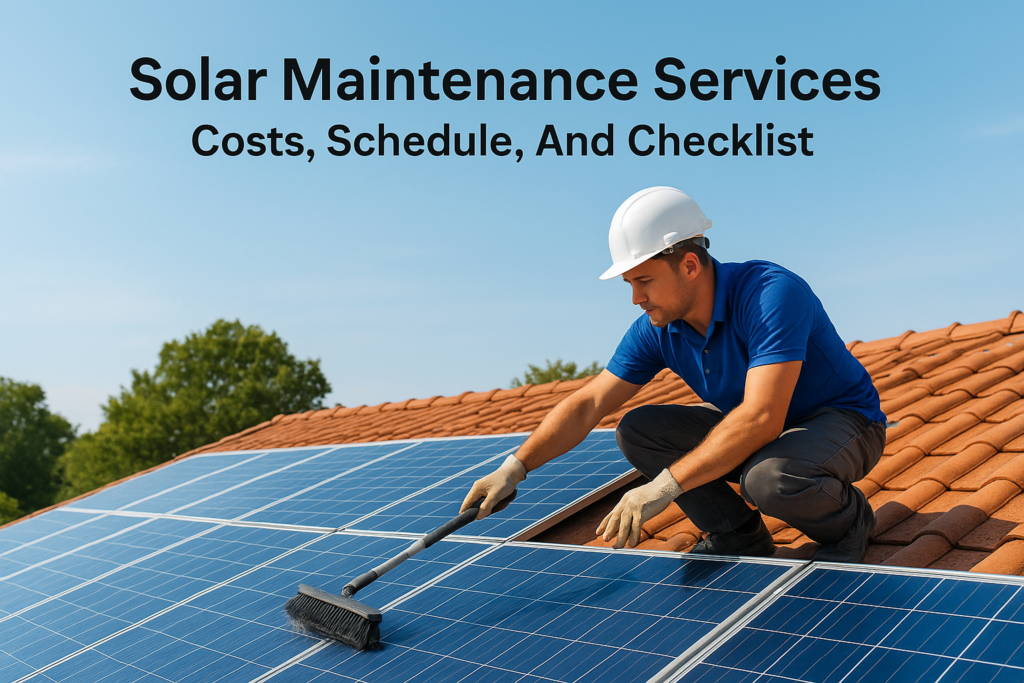
Solar panels are built to last 25 years or more, but only if you actually take care of them. Without routine solar maintenance services, your system’s energy output can drop by 15–25% over time due to dirt buildup, wiring degradation, and component wear. That’s money left on the table every single month.
At Advance Solar & Spa, we’ve installed and serviced over 50,000 solar systems across Florida since 1983. Our in-house team of licensed technicians handles everything from panel cleaning and inverter diagnostics to full system inspections, no subcontractors, no runaround. That hands-on experience has given us a clear picture of what maintenance actually matters, what it should cost, and how often it needs to happen.
This article breaks down the full scope of solar maintenance: the specific tasks involved, a realistic cost range, a recommended schedule based on your system type and environment, and a practical checklist you can use to stay on top of it all. Whether you’re a new system owner figuring out your first year of upkeep or you’ve had panels on your roof for a decade, this guide covers what you need to know.
What solar maintenance services cover
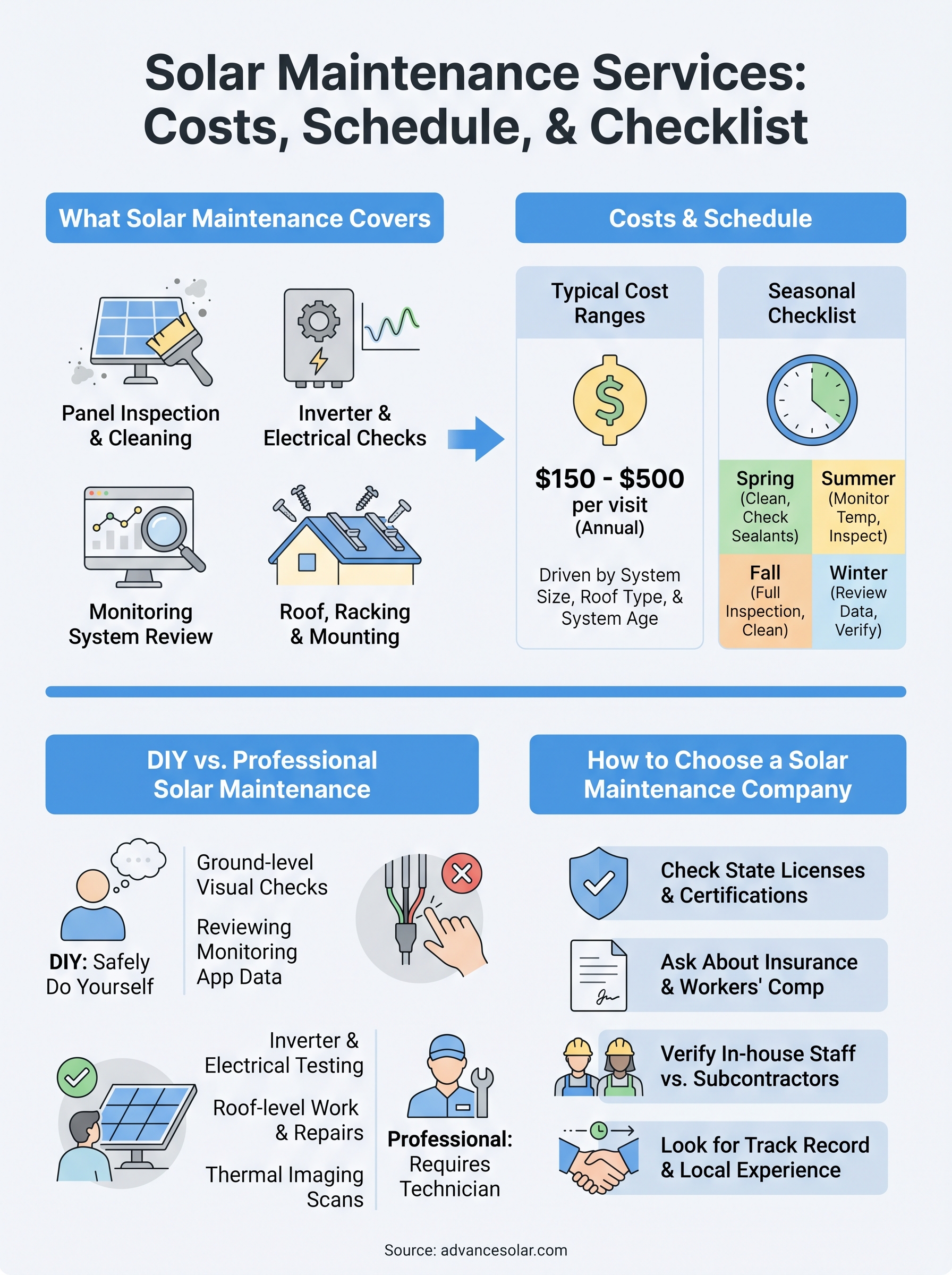
Solar maintenance is broader than most homeowners expect. Most people assume it just means cleaning panels a couple of times a year, but a complete solar maintenance service visit covers the entire system, from the panels on your roof down to the wiring, inverters, mounting hardware, and the monitoring software tracking your output. Each component plays a role in how much energy your system produces, so a problem in any one area can quietly cut into your savings without triggering an obvious alarm.
Panel inspection and cleaning
Your panels take the brunt of everything the environment throws at them. In Florida, that means salt air, bird droppings, pollen, and storm debris all working against your output throughout the year. During a professional inspection, a technician looks for micro-cracks, delamination, discoloration, and hot spots that signal cell degradation. These issues are invisible from the ground but show up clearly during a thermal imaging scan or a hands-on close inspection.
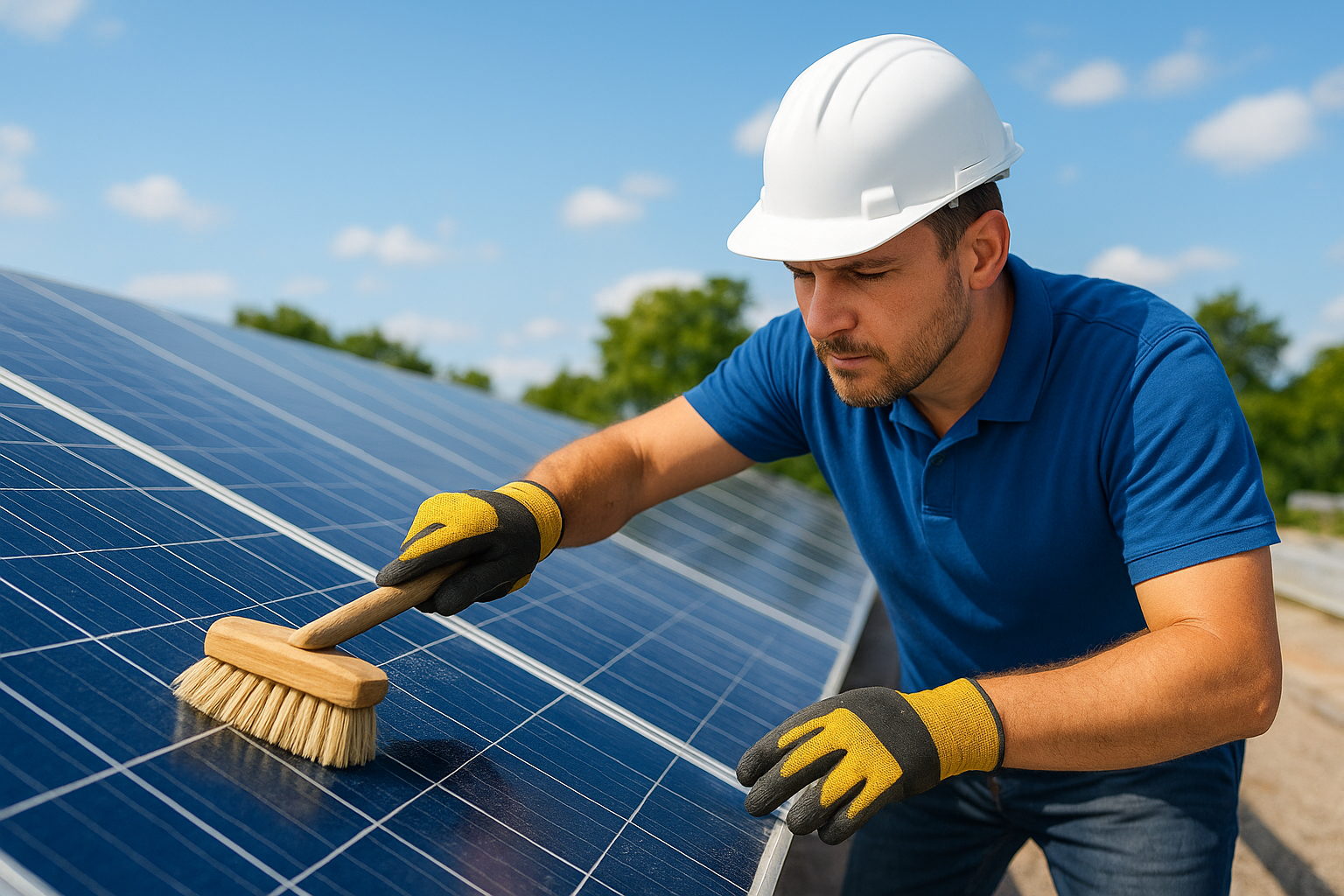
Cleaning goes beyond spraying panels with a garden hose. Technicians use deionized water and soft brushes to remove mineral deposits and biological buildup without scratching the glass. Even a thin film of dust can cut output by 5-7%, and in high-pollen seasons that buildup can happen within a few weeks.
A single dirty panel in a string configuration can reduce the output of every connected panel in that string, not just the one that is coated.
Inverter and electrical system checks
Your inverter converts the direct current your panels produce into the alternating current your home actually uses. It is also the most failure-prone component in a residential solar system. During maintenance, a technician checks for error codes, tests conversion efficiency, and verifies that the unit is cooling properly. Inverters that overheat or run outside their rated range waste energy you should be capturing.
The electrical inspection covers all connections at the combiner box, junction boxes, and the main panel tie-in. Loose or corroded connections create resistance, which generates heat and, over time, becomes a fire hazard. In Florida’s humid climate, corrosion at connection points is one of the most common causes of gradual, hard-to-detect energy loss.
Monitoring system review
Most modern solar systems include a monitoring platform that tracks production in real time. During a service visit, your technician reviews that data to identify anomalies, such as individual panels or strings underperforming relative to the rest of the array. This kind of review catches problems that a basic visual inspection would miss entirely.
Your alert thresholds and software settings also need to stay calibrated correctly. If the parameters are too loose, the system won’t flag a 10-15% output drop as a problem, even though that drop is costing you money every day. A technician can tighten those settings so you receive accurate notifications between scheduled visits.
Roof, racking, and mounting hardware
The hardware holding your panels in place takes continuous stress from wind loads, thermal expansion, and UV exposure. During a maintenance visit, roof penetrations are checked for sealant integrity, and racking components are inspected for corrosion and loosened fasteners. In Florida, where hurricane-force winds are a real seasonal risk, this step carries serious weight.
Flashing and sealant around roof mounts degrade over time, and a compromised seal can lead to water intrusion that damages both the roof structure and the wiring running underneath the panels. Catching a small sealant failure during routine maintenance costs a fraction of what a full roof repair runs later.
Solar maintenance costs and what affects them
A basic annual solar maintenance service visit typically runs between $150 and $300 for a standard residential system. That range covers a visual inspection, panel cleaning, inverter check, and a review of your monitoring data. More comprehensive visits that include thermal imaging, roof-mount hardware inspection, or detailed electrical testing tend to land between $300 and $500 per visit, depending on system size and the scope of work a technician needs to complete.
Skipping an annual maintenance visit to save $200 often leads to repair bills of $800 or more when small, fixable problems compound into larger failures over a single season.
Typical cost ranges
System size is the single biggest driver of what you pay. A 10-panel system costs less to clean and inspect than a 25-panel array, both in labor time and in the complexity of the electrical check. Most solar maintenance companies price by the number of panels, the number of inverters on the system, and whether your installation includes battery storage hardware that requires its own evaluation.
Here is a general breakdown of what you can expect to pay:
| Service Type | Typical Cost Range |
|---|---|
| Annual inspection only | $150 – $250 |
| Cleaning + inspection | $200 – $350 |
| Full maintenance visit (cleaning, inverter check, electrical review) | $300 – $500 |
| Thermal imaging scan | $100 – $200 add-on |
| Battery storage system check | $75 – $150 add-on |
Factors that drive the price up or down
Your roof type and pitch affect what a technician charges for a service call. Steep or tile roofs require additional safety equipment and take longer to navigate safely, which pushes labor costs higher. In Florida, salt air exposure and the annual hurricane season also mean that roof-mount and sealant inspections are more involved because corrosion and seal degradation move faster here than in drier, milder climates.
System age and maintenance history carry real weight in the final bill too. A properly maintained 5-year-old system takes less time to service than a 15-year-old system that has been ignored. If your inverter is approaching end-of-life or your wiring shows visible wear, a routine maintenance visit can expand into diagnostic and repair work, which carries separate labor and parts costs on top of the standard service fee. Staying on a consistent maintenance schedule from the beginning is the most direct way to keep those costs predictable.
Solar maintenance schedule and seasonal checklist
Most residential solar systems in Florida need at least one professional service visit per year, but the right schedule depends on your environment, system age, and what is actually around your home. If you live near the coast, have large trees overhead, or your system is more than ten years old, moving to two visits per year gives your technician a chance to catch seasonal damage before it compounds.
Annual vs. semi-annual service cadence
For newer systems in lower-exposure locations, a single annual solar maintenance services visit in the fall covers the most ground. Fall timing works well because it comes after the summer storm season, when wind-driven debris and heavy rain can stress your mounts and connections, and it positions your system to run cleanly through the high-output winter months when the sun angle changes and your panels work harder.
If your system includes battery storage, a second mid-year visit is worth scheduling specifically to check charge cycling, cell health, and firmware updates before hurricane season starts in June.
Systems near the Gulf or Atlantic coasts deal with accelerated corrosion from salt air and heavier pollen loads in spring. Those conditions push cleaning and inspection needs closer to a twice-yearly rhythm. Your monitoring data can help you decide: if you see unexplained output drops in the spring before any service visit, that is a signal your cleaning interval needs to shorten.
What your seasonal checklist should include
Running through a structured checklist keeps you from overlooking smaller items between professional visits. Below is a practical breakdown by season for Florida homeowners:

| Season | Key Checklist Items |
|---|---|
| Spring | Panel cleaning after pollen season, check roof sealants, review monitoring for output dips |
| Summer | Monitor inverter temperature, inspect wiring for storm damage after heavy rain events |
| Fall | Full professional inspection, clean panels, check racking hardware and roof penetrations after hurricane season |
| Winter | Review annual production data, verify monitoring alert thresholds, inspect inverter cooling vents |
Between professional visits, your own visual checks every 4 to 6 weeks can catch obvious issues like bird nests under panels, cracked glass, or error lights on your inverter. You do not need to get on the roof to do this. A pair of binoculars from the ground covers most of what you are looking for and keeps you safe while the system stays productive.
DIY vs professional solar maintenance
Some solar maintenance tasks are genuinely within reach for a careful homeowner, while others carry real safety and warranty risks if you attempt them without the right training and equipment. Knowing which tasks fall in which category saves you money on what you can handle yourself and protects your system investment on the tasks that require a professional.
What you can safely do yourself
Ground-level monitoring is the most practical form of DIY solar maintenance you can build into your routine. Every 4 to 6 weeks, walk around your property and look at your panels from the ground. Check for obvious debris accumulation, bird nests lodged under the array, cracked or discolored glass, and any visible error indicators on your inverter display. None of this requires getting on your roof, and catching a visible problem early means your technician can address it at the next scheduled visit rather than during a more expensive emergency call.
Reviewing your monitoring app data is another task you can handle on your own schedule. Most systems from Enphase or Tesla provide daily and weekly production summaries that take only a few minutes to review. If you see a consistent dip in output that does not match cloudy weather patterns, flag it before your next professional service visit. That kind of early detection costs nothing beyond the time it takes to check the app, and it gives your technician a concrete starting point when they arrive.
What requires a licensed technician
Any work that involves direct contact with your electrical system needs a licensed professional. Testing inverter connections, inspecting wiring at the combiner box, and checking the tie-in at your main panel all carry live DC current that remains present even when your system appears to be off. Attempting these tasks without proper training and equipment creates a shock and fire risk that no cost savings justifies.
Voiding your equipment warranty is a direct and documented outcome if unlicensed work is discovered during a warranty claim review.
Roof-level inspections, thermal imaging, and sealant repairs also belong firmly in the professional category. A licensed technician has the safety training and gear to work at height on a tile or shingle roof without incident. Beyond safety, professional solar maintenance services rely on calibrated diagnostic tools that consumer-grade equipment cannot replicate, which means a trained technician consistently catches wiring degradation and cell-level failures that a visual check from the ground would never reveal.
How to choose a solar maintenance company
Picking the wrong company for your solar maintenance services costs more than just money. Poor workmanship on your roof or electrical system creates liability, voids warranties, and leaves your system in worse shape than before the visit. The right company holds the licenses, carries the experience, and gives you straight answers before any work starts.
Check licenses and certifications
Florida requires solar contractors to hold a state-issued solar contractor license, and any work that touches your electrical system also requires a licensed electrician. Before you agree to a service visit, ask for the company’s license numbers and verify them directly through the Florida Department of Business and Professional Regulation. A company that hesitates to share that information is not one you want on your roof.
Certification from manufacturers like Enphase or Tesla signals that the technician has completed brand-specific training, which matters when your system uses proprietary hardware and firmware.
Beyond state licensing, confirm that the company carries liability insurance and workers’ compensation coverage. If a technician is injured on your property or causes damage during the visit, those policies protect you from becoming financially responsible for the outcome.
Ask the right questions before you hire
The questions you ask before signing a service agreement reveal more about a company than any review. Ask specifically whether the company uses in-house technicians or subcontractors, since subcontracted labor introduces variable quality and less accountability when something goes wrong. Ask how long the company has been operating and how many systems they have serviced in your specific region.
Here are the core questions worth asking any prospective solar maintenance provider:
- Do your technicians hold current state licenses for both solar and electrical work?
- Do you carry liability insurance and workers’ compensation?
- Do you use in-house staff or subcontractors for service visits?
- What does your standard maintenance visit include, and what is billed separately?
- Can you provide references from customers with systems similar to mine?
Look at track record and local experience
A company with decades of local installations understands Florida-specific conditions like salt air corrosion, hurricane load requirements, and seasonal pollen buildup in ways that a newer or out-of-state provider simply does not. Ask how many systems the company has installed and serviced in your area, and look for consistent long-term reviews rather than a short burst of recent feedback.
Longevity in the local market is one of the clearest signals that a company delivers on what it promises. A business that has operated in Florida for 40 years has stayed accountable to real customers through real problems, and that track record carries more weight than any marketing claim.
Next steps
Your solar system is a long-term investment, and consistent solar maintenance services are what protect that investment year after year. The key takeaways from this guide are straightforward: schedule at least one professional inspection annually, stay on top of your monitoring data between visits, and hire a company that holds the proper state licenses and carries real local experience.
Skipping maintenance does not save you money. It transfers that cost into reduced energy output and repair bills that grow larger the longer small problems go unaddressed. You now have the checklist, the cost benchmarks, and the questions to ask before you hire anyone.
If your system is due for a service visit, or if you want a second opinion on its current condition, contact Advance Solar & Spa to schedule an inspection with our in-house licensed team. We have been servicing solar systems across Florida since 1983, and we are ready to help you get the most out of yours.