Solar Panel Maintenance Cost: Annual Costs, Cleaning, & More
-
Share
Once your solar panels are up and running, they don’t just take care of themselves forever. Like any major home investment, they need some attention to keep performing at their best. The good news? Solar panel maintenance cost is relatively low compared to what you save on electricity, but it’s still important to know what you’re signing up for before and after installation.
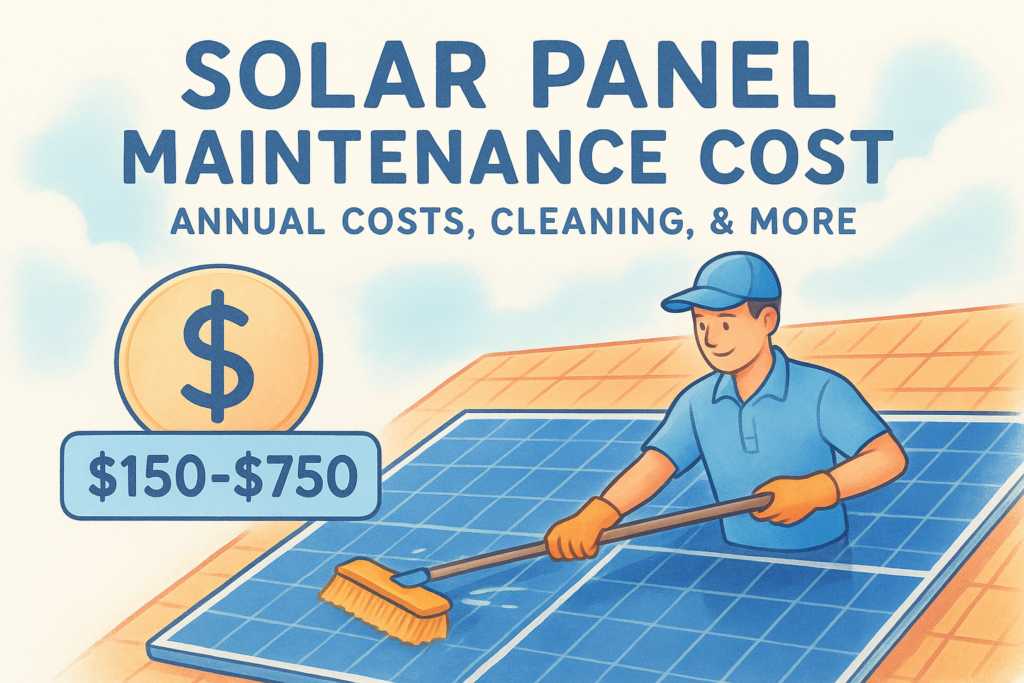
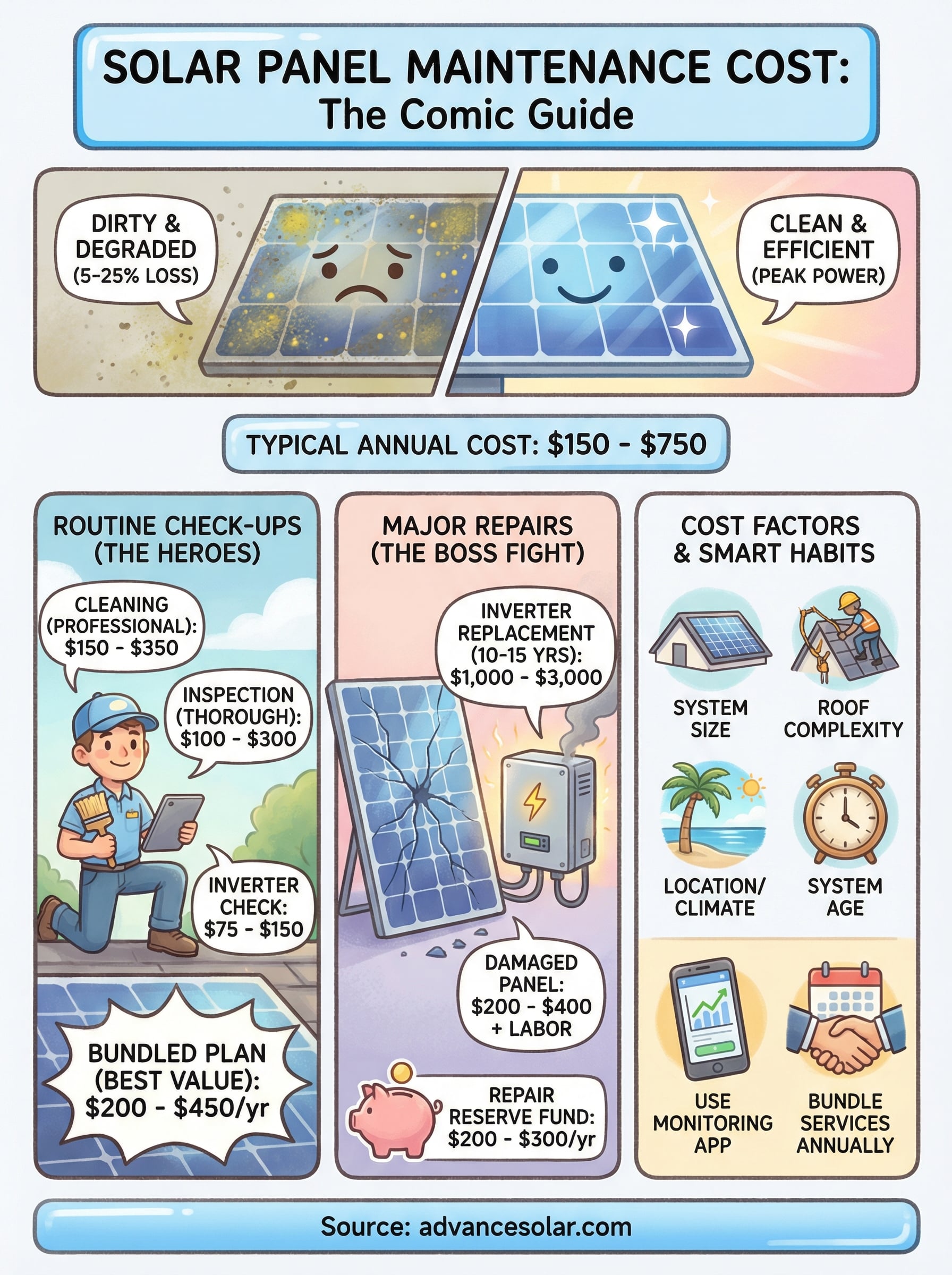
Most homeowners in Florida spend somewhere between $150 and $750 per year on maintenance, depending on the services needed and the size of their system. That range covers everything from basic cleaning to professional inspections and inverter checkups. Several factors, roof pitch, panel accessibility, local weather, and system age, can push costs higher or lower.
At Advance Solar & Spa, we’ve installed and maintained over 50,000 solar systems across Florida since 1983. Our in-house service team handles everything from routine inspections to repairs, so we see firsthand what maintenance actually costs and what’s worth paying for. This article breaks down the real numbers, annual costs, cleaning fees, common repairs, and practical ways to keep your long-term expenses low.
Why solar panel maintenance costs matter
Solar panels are built to last
25 to 30 years, but that lifespan depends on more than just the quality of the hardware. Without regular attention, panels lose efficiency quietly, month by month, until you’re generating noticeably less power than you should be. Understanding solar panel maintenance cost is really about understanding the full picture of what you invested in when you had your system installed.
Performance degrades faster without upkeep
A solar panel’s output declines at roughly 0.5% to 0.8% per year under normal conditions, a process called degradation. But that number assumes you’re keeping your system reasonably clean and functional. Panels coated in pollen, bird droppings, dust, or salt residue from coastal air can lose an additional 5% to 25% of their output on top of that baseline rate. In Florida, where seasonal pollen counts and afternoon storms are part of daily life, buildup happens faster than most homeowners expect.
Dirty panels don’t just look bad – they actively reduce the electricity your system produces, which directly increases how much you pay to your utility company.
Skipping maintenance also means minor issues go unnoticed. A cracked panel or a loose connection can quietly drain your system’s performance for months, and an inverter running outside its normal parameters may not trigger any obvious alarm before you see the difference on your utility bill.
Your warranty depends on proper maintenance
Most solar panel manufacturers and installers include maintenance requirements as part of their warranty terms. If you ignore those requirements and something goes wrong, you may find that the manufacturer considers the warranty void. This is not a small risk given that inverters alone can cost $1,000 to $3,000 to replace out of pocket when coverage lapses.
Keeping a record of your inspections and cleanings protects you if you ever need to make a warranty or insurance claim. A paper trail showing routine care gives you standing when disputes arise and gives any technician useful context about your system’s history before they even get on your roof.
The financial return on a well-maintained system
Your solar system was likely a significant investment, often $15,000 to $30,000 or more for a typical Florida home. Spending a few hundred dollars per year on maintenance to protect that investment is straightforward math. A system producing at 90% efficiency instead of 75% generates meaningfully more electricity and delivers more of the savings you installed it for in the first place.
When you add up what you save on electricity over 25 years against what you spend on maintenance, the numbers strongly favor staying current with upkeep. In Florida’s high-sun environment, every percentage point of efficiency you protect translates directly into lower monthly bills and a faster payback period on your original installation cost.
Typical annual maintenance costs for homeowners
The solar panel maintenance cost for a typical Florida homeowner falls between $150 and $750 per year when you combine routine services. That range covers cleaning, a professional inspection, and any minor adjustments your system needs to stay at peak output. What you actually spend depends on your system size, your roof type, and how frequently services are scheduled.
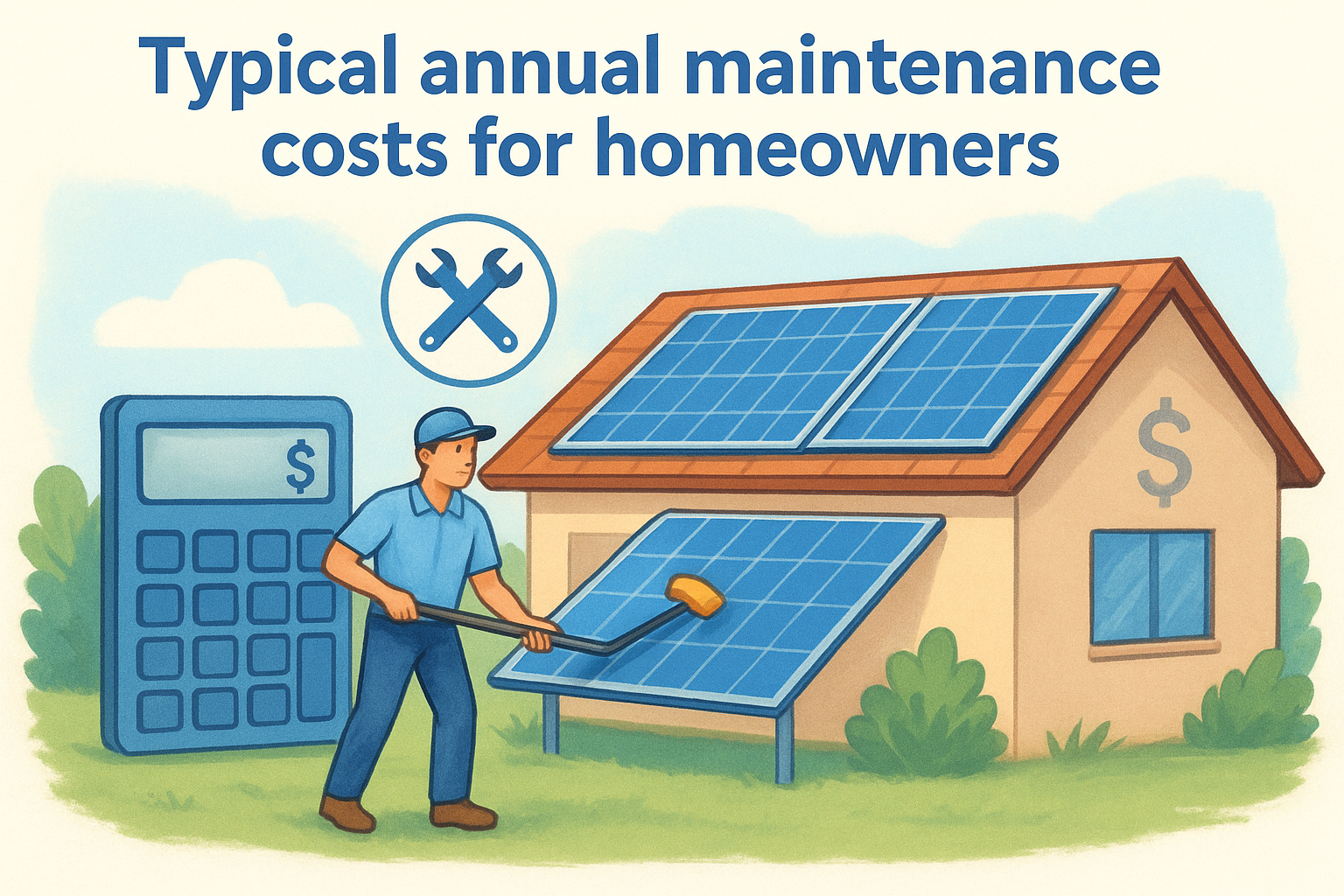
Here is a general breakdown of what individual services typically cost:
| Service | Typical Cost Range |
|---|---|
| Panel cleaning (professional) | $150 – $350 |
| Annual inspection | $100 – $300 |
| Inverter checkup | $75 – $150 |
| Minor repairs / adjustments | $100 – $300+ |
What a standard maintenance plan covers
Most professional maintenance plans bundle cleaning and inspection into one annual visit, which is the most cost-efficient way to handle upkeep. During that visit, a technician cleans the panel surfaces, checks the mounting hardware, inspects the wiring, and reviews your inverter and monitoring data to confirm everything is performing within normal ranges. Bundled plans typically run between $200 and $450 per year depending on system size.
A bundled maintenance plan almost always costs less than booking cleaning and inspection separately, and it ensures nothing gets overlooked between visits.
Some installers, including our team at Advance Solar & Spa, offer multi-year service agreements that lock in your rate and give you priority scheduling. For homeowners who want predictable expenses without thinking about it, this approach makes the most practical sense.
When your annual costs run higher
Larger systems with more panels naturally cost more to clean and inspect because the job takes longer and covers more surface area. Systems mounted on steep or multi-story roofs also carry a small premium since technicians need additional safety equipment to access every panel. If your system includes battery storage like a Tesla Powerwall or Enphase IQ Battery, your maintenance checklist expands to include battery health checks, which adds to the annual total.
Coastal homeowners in areas like Fort Myers or Naples face higher salt and humidity exposure, which means your panels accumulate residue faster and may need cleaning more than once per year. Factoring in two cleaning visits annually can push your total closer to $500 to $750, though the output protection that comes with it is worth the additional spend.
Cleaning costs and how often you really need it
Professional panel cleaning typically runs $150 to $350 for a standard residential system in Florida. The exact price depends on how many panels you have, how accessible your roof is, and whether the cleaning is booked as a standalone service or bundled with an annual inspection. Standalone cleaning tends to cost more per visit, so combining it with your inspection is usually the smarter financial move when you’re calculating your total solar panel maintenance cost for the year.
What professional cleaning actually costs
Most solar service providers charge by the panel or by the job. For a 20 to 25 panel system, a standalone cleaning visit commonly falls between $150 and $250. Larger systems with 30 or more panels can push that closer to $300 to $350, especially if your roof has a steeper pitch or multiple levels that require extra safety rigging and additional labor time on site.
Bundling cleaning with your annual inspection is typically 15% to 25% cheaper than booking each service separately, and it ensures your panels get checked at the same time they’re cleaned.
Some service providers offer semi-annual cleaning packages at a fixed annual rate, which makes sense for coastal Florida homeowners where salt air and humidity accelerate residue buildup between visits. Locking in a package rate also protects you from price increases and keeps your scheduling automatic rather than something you have to remember on your own.
How often your panels actually need cleaning
For most Florida homeowners, once per year is the starting point, but the reality is often more frequent. Florida’s heavy pollen season runs from late winter through spring, and that layer of fine pollen can cut your output noticeably if panels aren’t cleaned shortly after it peaks. Homes near construction zones or in areas with heavy bird traffic may need cleaning two or three times per year to keep output consistent.
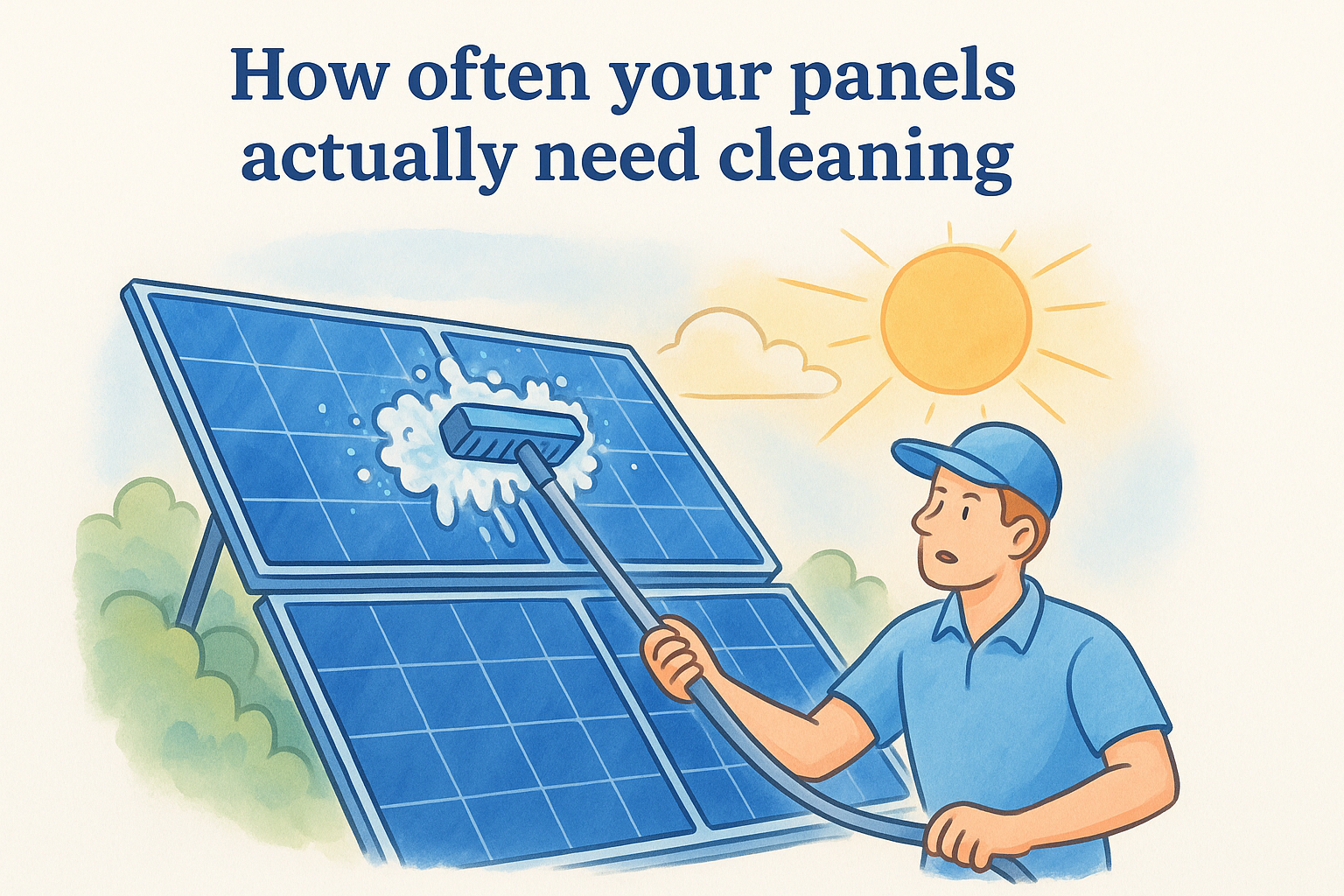
Rainfall helps remove loose surface dust, but it does not replace a proper cleaning. Light rain redistributes debris rather than washing it away, and saltwater mist from coastal air leaves a thin film on your panels after the water evaporates. If your monitoring system shows a dip in production that doesn’t match recent weather or shading, dirty panels are almost always the first thing worth investigating before scheduling a more involved service call.
Inspection costs and what a tech checks
A professional solar inspection typically costs $100 to $300 and is one of the most valuable services in your overall solar panel maintenance cost budget. On its own, that might seem like a lot for a single visit, but what a trained technician catches during that visit can prevent repair bills that run five to ten times that amount. Booking your inspection annually keeps small problems from becoming expensive ones.
What the technician actually examines
A thorough inspection covers far more than just a visual look at your panels. Your technician starts on the roof itself, checking every mounting bracket, rail, and hardware connection for corrosion, loosening, or physical damage from wind and weather. In Florida, where intense summer storms and hurricane-force winds are a real concern, loose mounting hardware is one of the more common findings during inspections on older systems.
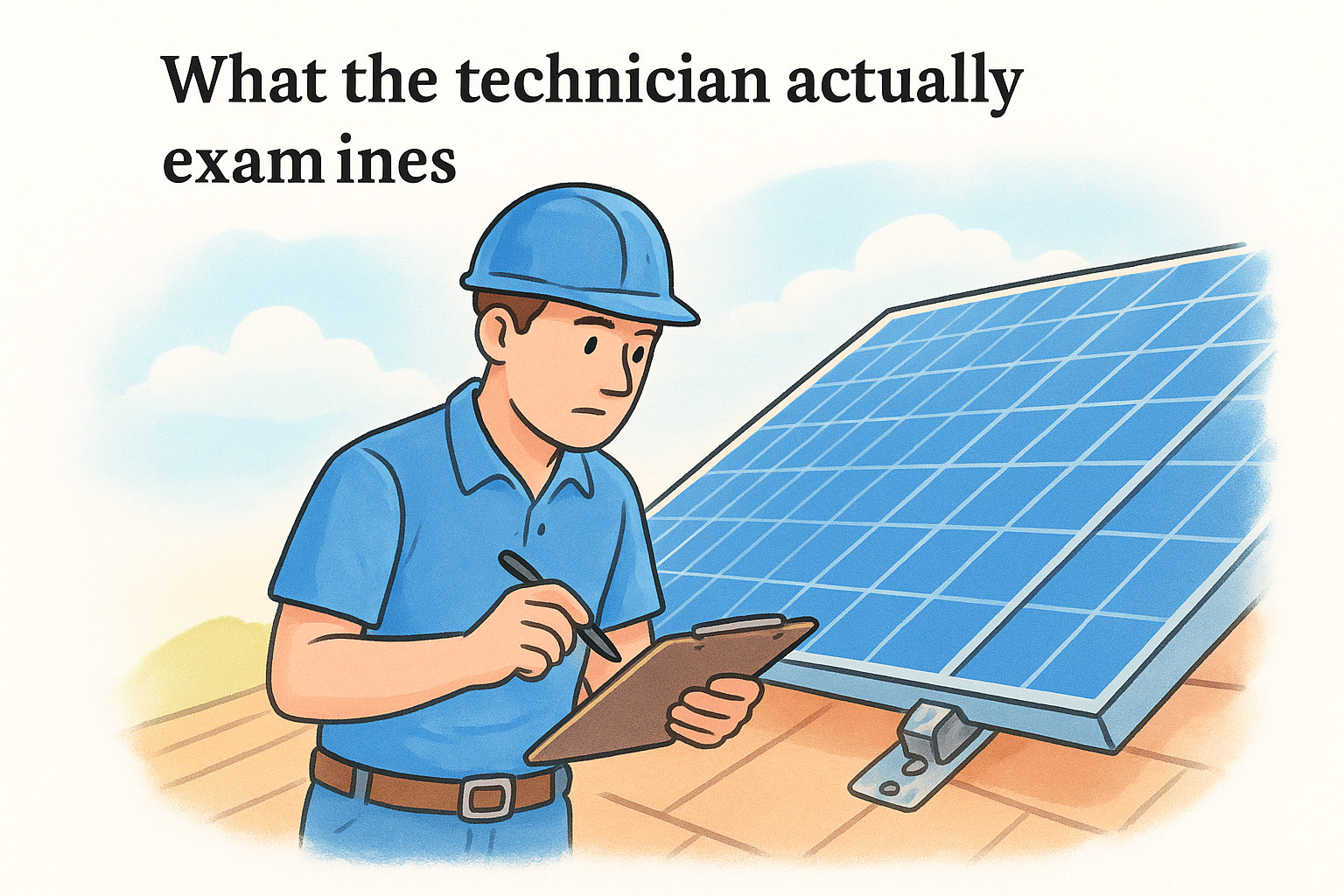
Catching a single loose mount or degraded seal during an annual inspection can prevent water intrusion that damages your roof deck and voids your homeowner’s insurance claim.
From the roof, the technician moves to your wiring and conduit runs, looking for UV degradation, pest damage, or any exposed conductor that could create a safety hazard or performance loss. They also check your junction boxes and DC disconnect for signs of heat damage or moisture entry, both of which can cause slow output losses that your monitoring app may not flag immediately.
What the inverter and monitoring check covers
Your inverter is the most failure-prone component in any solar system, so a good inspection includes a dedicated inverter performance review. The technician reads the inverter’s internal logs to identify error codes, production gaps, or communication failures between your panels and the monitoring system. For systems with microinverters or power optimizers, like those using Enphase equipment, this step also confirms that every individual panel is reporting correctly and producing output within its expected range.
After the inverter review, the technician compares your actual production data against what your system should be generating based on your panel count, orientation, and local irradiance averages. If your output has been drifting downward without a weather-related explanation, the inspection report gives you a documented starting point for any warranty claim or insurance conversation you need to have.
Repairs and big-ticket items to budget for
Routine cleaning and inspections keep your system healthy, but repairs are a separate line item in your solar panel maintenance cost budget and one worth planning for in advance. Most homeowners go years without needing a major repair, but when something does fail, the cost can range from a few hundred dollars to several thousand depending on the component involved. Knowing what the common failure points are helps you set aside the right amount rather than getting caught off guard.
Inverter replacement
Your inverter is the single most likely component to need replacement during your system’s lifetime. String inverters typically last 10 to 15 years, which means most homeowners will replace one at least once before their panels reach end of life. Replacement costs run between $1,000 and $3,000 for most residential systems, depending on the brand and system size. Microinverter systems, like those using Enphase equipment, tend to have longer individual component lifespans, but if a single unit fails, you’ll pay roughly $150 to $300 per microinverter to swap it out.
Keeping your inverter warranty documentation current and stored in a safe place gives you a clear path to cost coverage if your unit fails within the warranty period.
Inverter warranties typically cover 10 to 25 years depending on the manufacturer, so check your paperwork before authorizing any repair. An in-house service team can pull your inverter’s log history and confirm whether a replacement is warranted or whether a firmware update and reset resolves the issue first.
Panel damage and other component failures
Panels themselves rarely fail outright, but physical damage from hail, falling debris, or severe storm events does happen in Florida, especially during hurricane season. Replacing a single damaged panel runs between $200 and $400 for the panel itself, plus labor, which typically adds another $100 to $200 depending on roof access. Cracked panels sometimes continue producing power at a reduced rate, so your monitoring data may flag an output drop before any visible damage is obvious.
Beyond panels and inverters, wiring failures, corroded connectors, and damaged mounting hardware are the other repairs your budget should account for. These smaller fixes usually run between $100 and $400 per incident, and catching them during your annual inspection almost always costs less than waiting until they create a larger system failure.
What changes your solar maintenance cost the most
Your solar panel maintenance cost doesn’t follow a fixed formula. Two homeowners with similar systems in the same state can pay significantly different amounts each year depending on a handful of variables that affect how much labor, how many visits, and how much parts involvement your system actually requires.
System size and roof complexity
The more panels you have, the more time a technician spends cleaning, inspecting, and testing each one. A 10-panel system costs less to service than a 30-panel system for the same reason that painting a larger room takes longer. Most service providers price cleaning and inspections by panel count or by job scope, so larger systems consistently land at the higher end of every cost range.
Roof complexity adds its own premium. Steep pitches, multiple roof planes, or two-story homes require technicians to use additional safety equipment and take longer to move between sections. If your panels are spread across different roof faces to maximize exposure, expect to pay more per visit than a neighbor whose identical number of panels all sit on a single flat or low-pitch surface.
A two-story home with panels on multiple roof sections can add 20% to 40% to your cleaning and inspection labor costs compared to a single-story home with the same panel count.
Location and local climate
Where you live in Florida changes how often your panels need service. Coastal properties in areas like Fort Myers, Naples, or Fort Lauderdale deal with salt air, which deposits a thin film on panels that rainfall doesn’t fully remove. That buildup accumulates faster than in inland areas and often justifies a second cleaning visit per year.
Heavy tree coverage, construction activity nearby, or high bird traffic around your property also accelerates how quickly debris collects on your panels. Homes surrounded by mature oak trees, for example, tend to collect more pollen, sap, and organic matter than properties in open neighborhoods.
System age and installed components
Older systems require closer attention because components like wiring insulation, connectors, and mounting hardware degrade over time. A 15-year-old system needs a more thorough inspection than a 3-year-old one because the list of failure-prone items is longer.
Systems that include battery storage units like a Tesla Powerwall or Enphase IQ Battery also add to your annual maintenance scope, since battery health checks, thermal management reviews, and firmware updates bring additional time and cost to each service visit.
How to cut maintenance costs without cutting output
Keeping your solar panel maintenance cost low doesn’t mean skipping the services that matter. It means being strategic about when and how you schedule them, using tools you already have access to, and avoiding the reactive spending that happens when small issues turn into large ones. A few smart habits each year can shave real money off your maintenance budget without touching your system’s performance.
Use your monitoring system regularly
Most modern solar systems come with a monitoring app or web portal that shows your production data in real time. Checking that data once or twice a month takes less than five minutes and gives you an early warning when something is off. A sudden drop in output on a clear, sunny day is almost always easier and cheaper to fix when caught early than when it goes unnoticed for weeks or months.
Your monitoring system is the cheapest diagnostic tool you have, and most homeowners barely use it after the first month of ownership.
Set a habit of comparing your current week’s production against the same period from the previous year. Most monitoring platforms display this comparison automatically, so you’re not doing any math yourself. If you notice consistent underperformance, you have a documented record to share with your technician before they even arrive, which shortens the service call and keeps labor costs lower.
Bundle services and plan ahead
Booking your cleaning and inspection together in a single annual visit almost always costs less than scheduling them separately at different times of the year. Service providers price bundled visits at a discount because they’re already on your roof with equipment ready, and you save a second trip charge. Calling in the spring, just after pollen season peaks, is ideal because your panels benefit from cleaning right when output matters most heading into the summer months.
Handle basic rinsing between professional visits
On a single-story home with safe roof access, a gentle rinse with a standard garden hose can remove loose dust and pollen between professional cleanings. You don’t need specialized equipment for this, just water and low pressure. Avoid high-pressure sprayers, which can damage panel edges and void some warranties. If your roof is steep, multi-story, or difficult to access safely, leave all physical contact with the panels to a certified technician.
A simple plan to budget and move forward
Start with $300 to $500 as your baseline annual budget for solar panel maintenance cost. That covers one bundled cleaning and inspection visit for a typical Florida residential system. If your system includes battery storage, is older than 10 years, or sits on a coastal property, adjust that number upward to $600 to $750 to account for the additional service scope.
Beyond the annual budget, set aside a separate repair reserve of $200 to $300 per year. Most years you won’t touch it, but having that cushion means an inverter issue or storm-related panel damage won’t catch you off guard when it eventually comes up.
Staying consistent with service is the single most reliable way to protect your investment over the long term. If you’re ready to schedule service or want a professional to review your system’s current performance, contact the team at Advance Solar & Spa. With over 40 years of experience and an in-house service staff, we handle everything from routine maintenance to complex repairs across Florida.