
If you’re a Tampa-area homeowner considering solar, you’ve probably heard about the Tampa Electric solar rebate program and wondered how much you can actually save. TECO offers financial incentives that can significantly offset the upfront cost of going solar, but the application process and eligibility requirements aren’t always straightforward. Understanding exactly what’s available to you, and how to claim every dollar, matters more than most people realize.
At Advance Solar & Spa, we’ve been designing and installing solar energy systems across Florida since 1983. With over 50,000 installations behind us and a team of certified solar consultants on staff, we’ve helped thousands of homeowners navigate utility programs just like this one. We know what TECO expects, what paperwork trips people up, and how to make the process as smooth as possible.
This guide walks you through everything you need to know about Tampa Electric’s solar incentives, from program details and eligibility to the step-by-step application process. By the end, you’ll have a clear plan to maximize your savings and move forward with confidence.
What TECO offers for solar and what it does not
Tampa Electric does not have a traditional cash rebate program for solar panel installations. If you’ve been searching for a "Tampa Electric solar rebate program" expecting a direct check or upfront discount, the reality is more nuanced. TECO’s primary solar incentive is net metering, which lets you earn bill credits for the excess electricity your solar system sends back to the grid. Understanding this distinction upfront saves you time and helps you plan your budget accurately.
Net metering: How TECO credits your bill
When your solar panels produce more electricity than your home uses, TECO credits your account for that surplus energy at the retail rate. Those credits roll over month to month and offset future bills, meaning you can build up a substantial balance during Florida’s sunny summer months and draw it down in the winter. Your credit balance resets annually, so timing your installation and understanding your usage patterns both matter.

Net metering is effectively TECO’s most valuable solar incentive, and it’s available to residential customers with systems up to 2 MW in capacity.
| TECO Solar Program | What You Get |
|---|---|
| Net Metering | Bill credits for surplus electricity sent to the grid |
| Interconnection Agreement | Official approval to connect your system to the grid |
| TECO SolarChoice | Option to buy into shared solar if you cannot install panels |
What TECO does not provide
TECO does not offer upfront cash rebates, equipment discounts, or direct installation subsidies for residential solar. There is no waitlist for a traditional rebate check, and no separate application for a TECO-funded incentive beyond the net metering and interconnection process.
Your financial incentives instead come from three separate sources: federal tax credits, Florida state exemptions, and your net metering credits. Each layer adds up meaningfully, but you need to apply for them separately, which the following steps walk you through in concrete detail.
Step 1. Pick your best option and gather details
Before you touch any application form, you need to decide which TECO solar path fits your situation. Homeowners who own their property and have a suitable roof should pursue standard solar installation with net metering. Renters, condo owners, or anyone with a shaded or structurally limited roof should look at TECO SolarChoice, which lets you buy into shared solar without installing a single panel. Knowing which route you’re taking shapes every step that follows, including the paperwork you gather and the tax credits you can claim.
Choosing the wrong path early is the most common reason homeowners stall out when researching the Tampa Electric solar rebate program options.
Confirm your property qualifies for panels
Your roof needs to face south, east, or west with minimal shading between 9 AM and 3 PM. Check your utility bills from the past 12 months to understand your average monthly kilowatt-hour usage, since your system size depends on this number directly.
Collect the documents you need
Gather these items before moving to Step 2:
- 12 months of TECO utility bills (available in your online account)
- A recent property survey or site plan showing roof dimensions
- Your TECO account number
- Contractor license number if you’ve already chosen an installer
Step 2. Apply for TECO net metering and interconnection
Once you have your documents ready, your licensed solar installer submits the interconnection application to TECO on your behalf through the utility’s online portal. This is the formal step that connects your system to the grid and unlocks your net metering credits, which is the core financial benefit of the tampa electric solar rebate program process.
Submit your interconnection application
Your installer handles most of the technical submission, but you need to review and sign the net metering agreement before TECO processes anything. Make sure the application includes these key items:
- System size in kilowatts (DC and AC)
- Single-line electrical diagram stamped by a licensed engineer
- Equipment specs for your inverter and panels
- Your TECO account number and service address
- Signed interconnection agreement
TECO targets a 20-business-day review window, but complex installations or high-demand periods can extend that timeline, so submit as early as possible.
What to expect after you apply
TECO will review your application and either approve it, request corrections, or schedule a site inspection. Once approved, your Permission to Operate (PTO) letter arrives and you can legally turn your system on. Keep this letter on file, since you will need it when claiming your federal tax credit in the next step.
Step 3. Claim tax credits and Florida solar exemptions
The two biggest financial layers on top of the tampa electric solar rebate program process are the federal Investment Tax Credit and Florida’s state-level solar exemptions. These savings don’t apply automatically, so you need to take deliberate steps to claim each one.
Federal Investment Tax Credit
Your federal ITC delivers a 30% credit on your total solar installation cost, applied directly against your federal income tax liability for the year you place your system in service. To claim it, file IRS Form 5695 with your annual tax return. You’ll need your PTO letter from Step 2 and your installer’s final invoice showing the full project cost. If your tax liability is less than the credit amount, the unused portion rolls forward to the following year.

Keep your signed contract, paid invoices, and PTO letter in a single folder so nothing goes missing when tax season arrives.
Florida solar tax exemptions
Florida provides two automatic exemptions that reduce your ongoing solar costs without a separate application:
- Sales Tax Exemption: Solar equipment purchases are fully exempt from Florida’s 6% sales tax
- Property Tax Exemption: The added home value from your solar installation is excluded from your property tax assessment
Confirm both exemptions appear correctly on your county property records within 90 days of installation.
Step 4. Confirm your bill credits and keep your savings
Once your system is running, you aren’t done. Log into your TECO online account within the first full billing cycle and verify that your statement correctly reflects net metering credits for surplus electricity your panels pushed to the grid. Errors in billing setup do occur, and catching them in month one prevents lost credits from compounding over time.
If your credits don’t appear after your first full billing cycle, contact TECO’s interconnection department directly with your PTO letter and your signed net metering agreement.
Check your monthly statement
Your TECO bill should display net metering credits as a distinct line item separate from your standard charges. Cross-reference that number against your inverter’s production monitoring data, which systems like Enphase report in real time through a mobile app. If the exported energy volume doesn’t match what TECO credited, call their billing team and provide your interconnection approval number.
Track your annual credit balance
Florida’s net metering rules reset your credit balance annually, so consistent tracking prevents you from losing accumulated value. Build a simple monthly log that records your production totals, exported kilowatt-hours, and bill credits side by side. This record documents your ongoing savings and supports any future paperwork connected to the tampa electric solar rebate program process.
Bring your savings plan together
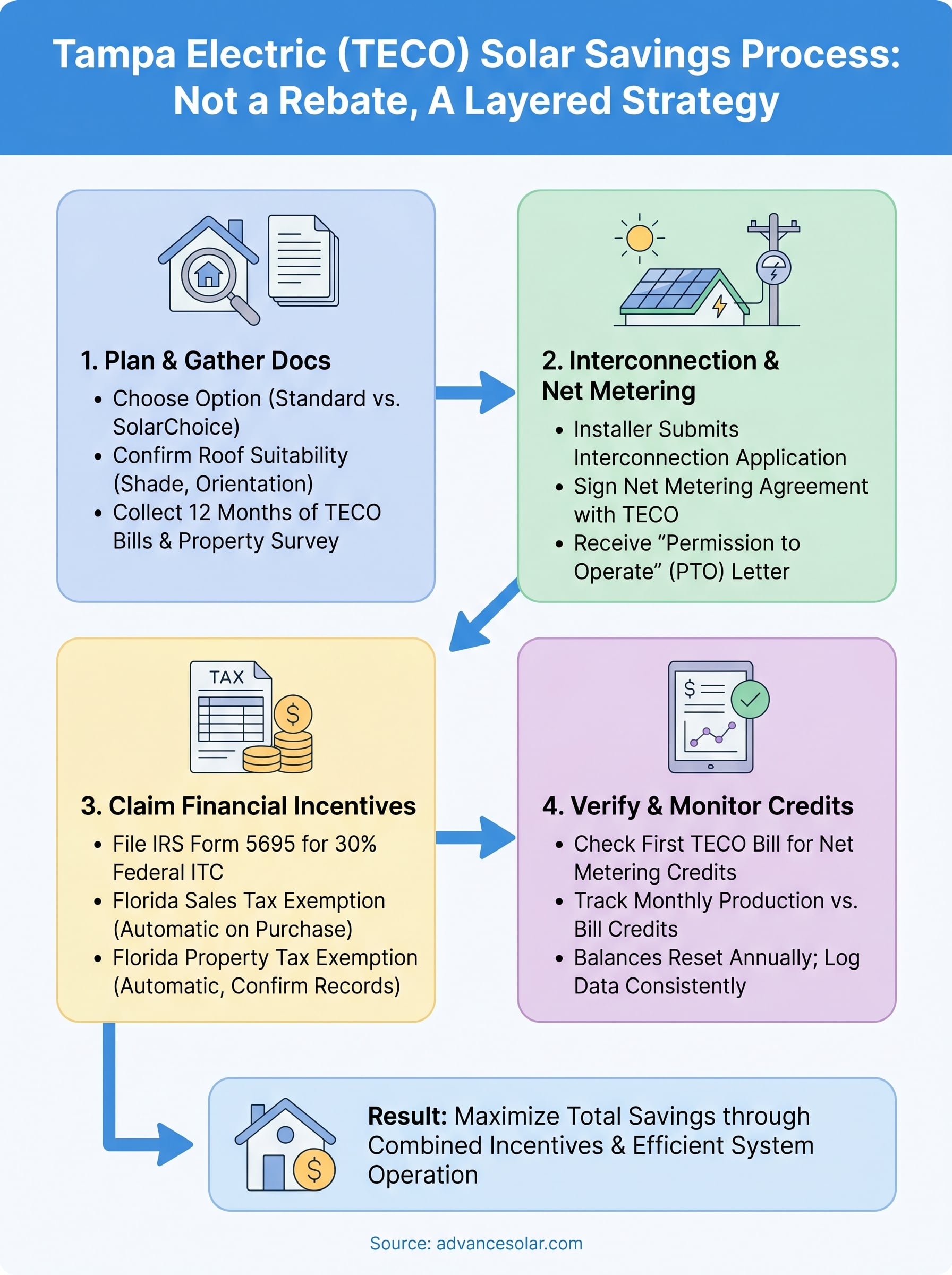
The tampa electric solar rebate program process is not a single form you submit and forget. It combines net metering credits, the 30% federal Investment Tax Credit, Florida’s sales and property tax exemptions, and careful post-installation monitoring into one layered savings strategy. Each piece depends on the one before it, so working through the steps in order keeps you on track and prevents gaps that cost you money.
Your biggest advantage is starting with a qualified, licensed installer who handles the interconnection paperwork and coordinates your Permission to Operate letter correctly. That single document unlocks your federal tax credit and validates your net metering enrollment, so do not let it sit in an inbox unconfirmed. Once your system is live, check your TECO bill every month and log your production data consistently.
Ready to move from planning to installation? Talk to the Advance Solar & Spa team and get a savings estimate built around your specific home and utility usage.