Solar Operations And Maintenance Services: What’s Included?
-
Share

Installing solar panels is a significant investment, but the work doesn’t stop once the system is on your roof. Like any complex piece of equipment, a solar energy system needs regular attention to perform at its best. That’s where solar operations and maintenance services come in. These services cover everything from routine inspections and cleaning to performance monitoring, inverter replacements, and emergency repairs. Without them, system output can quietly drop, and small issues can turn into expensive problems you don’t catch until your electric bill spikes.
At Advance Solar & Spa, we’ve been installing and servicing solar systems across Florida since 1983, over 50,000 installations and counting. Our in-house team of licensed technicians handles ongoing maintenance and repairs for residential and commercial systems alike, so we see firsthand what happens when systems are maintained properly and when they’re not. That experience gives us a clear picture of what good O&M looks like in practice.
This article breaks down exactly what’s included in professional solar O&M services, why they matter for your system’s longevity and return on investment, and what to look for when choosing a provider. Whether you just had panels installed or your system has been running for years, this guide will help you make informed decisions about keeping it in peak condition.
Why solar O&M matters for performance and ROI
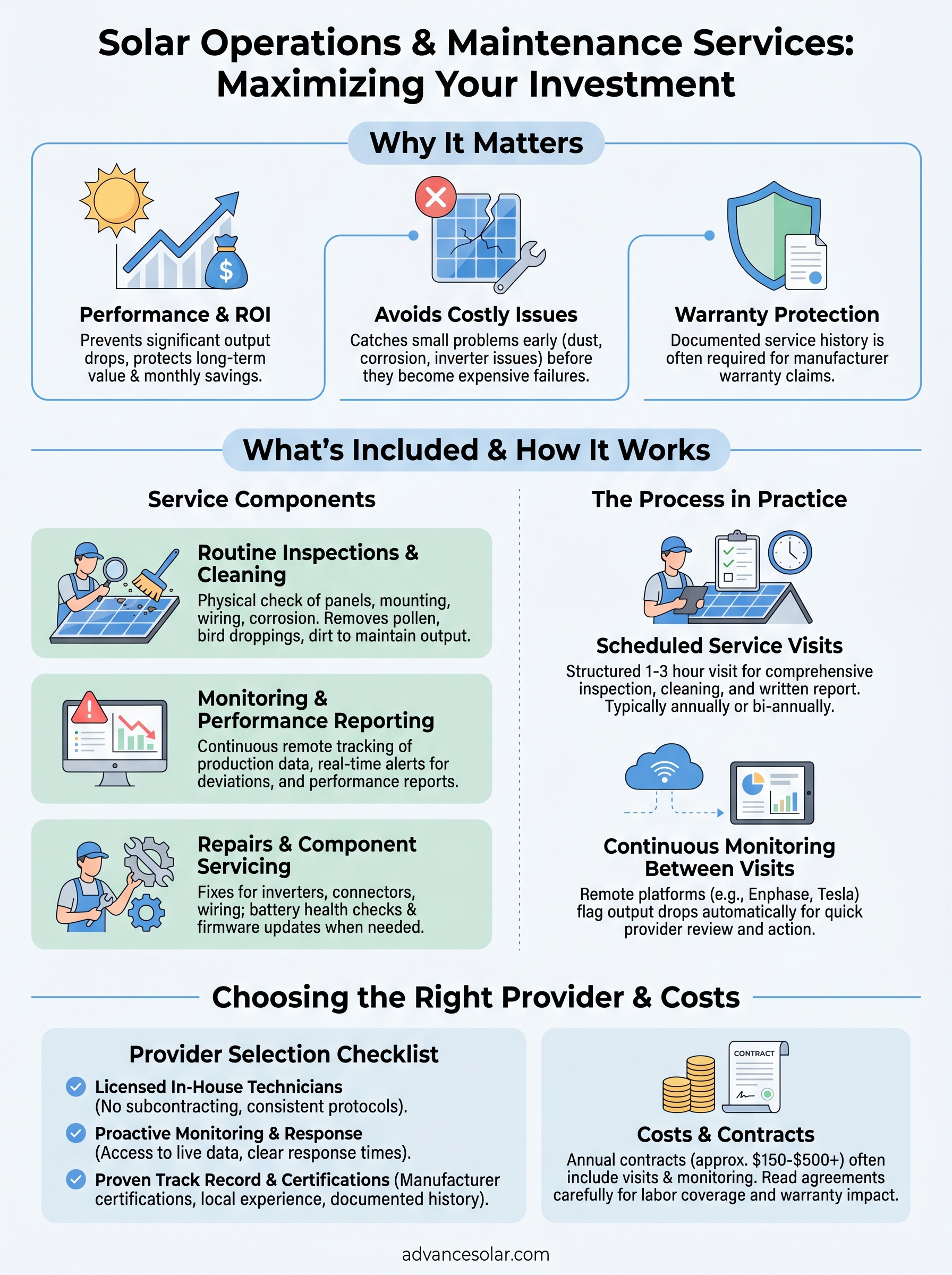
Solar panels are designed to last 25 to 30 years, but that lifespan assumes they receive proper care along the way. A system that goes unmonitored and unserviced will underperform, sometimes significantly, without ever giving you an obvious sign that something is wrong. The gap between a well-maintained system and a neglected one isn’t just a matter of efficiency percentages on paper. It shows up directly in your monthly electricity costs and the long-term value you get from the investment you made.
Solar panel output drops more than most owners expect
Most people assume solar panels just sit on the roof and produce power without any intervention. That assumption is expensive. Dust, pollen, bird droppings, and algae accumulate on panel surfaces and block sunlight from reaching the photovoltaic cells. In Florida’s climate, where humidity is high and pollen counts are intense for much of the year, this kind of surface fouling can reduce output by 10 to 25 percent on its own. Add shading from tree growth, corrosion on connections, or an inverter running below capacity, and those losses compound quickly.
A system producing 20 percent less than its rated output over 10 years means you’ve paid for electricity you should have been generating yourself.
Degradation also occurs naturally at the cell level, typically at a rate of about 0.5 to 0.8 percent per year. Routine maintenance doesn’t reverse that natural process, but it prevents accelerated degradation caused by avoidable issues like cracked cells, poor ventilation, or moisture intrusion. Catching these problems early keeps your system on its expected performance curve instead of falling behind it.
Equipment failures go undetected without active monitoring
A single failed microinverter or a tripped disconnect can cut your system’s output substantially without triggering any visible alarm. If you’re not watching production data closely, weeks or even months can pass before you notice. By then, you’ve already absorbed the financial hit. Professional solar operations and maintenance services include continuous monitoring that flags output deviations in real time, so a technician can investigate before a minor fault becomes a full equipment failure.
String inverters, optimizers, and battery storage components all have failure points that routine inspections can identify early. An experienced technician knows what worn wiring looks like, which connector types tend to corrode in salty coastal air, and how an inverter’s error logs signal a developing problem. That knowledge translates directly into fewer emergency repairs and longer equipment life across the board.
What neglect costs you over time
The financial case for regular maintenance is straightforward. Replacing a failed inverter costs anywhere from $1,000 to $3,000 or more depending on system size, while a routine inspection that catches the same issue early typically costs a fraction of that. Over a 25-year system lifespan, skipping maintenance doesn’t save money. It converts smaller, predictable service costs into larger, unpredictable repair bills.
Your warranty coverage can also take a hit from poor maintenance records. Many manufacturers require documented service history to honor warranty claims on components like inverters and optimizers. Without those records, you may end up paying out of pocket for a repair that should have been fully covered.
What solar O&M services include
Solar operations and maintenance services cover a wide range of tasks, and the specific mix depends on your system type, size, and location. At the core, these services break down into three areas: physical inspection and cleaning, active monitoring and reporting, and on-call repair work. Understanding each category helps you evaluate what any service agreement actually delivers versus what might be missing.
Routine inspections and cleaning
A scheduled inspection covers the full physical condition of your system. Technicians examine panel surfaces, mounting hardware, wiring, conduit, and junction boxes for signs of wear, corrosion, pest damage, or improper sealing. In Florida’s coastal environment, salt air accelerates corrosion on metal components, so connection points need close attention during every visit.
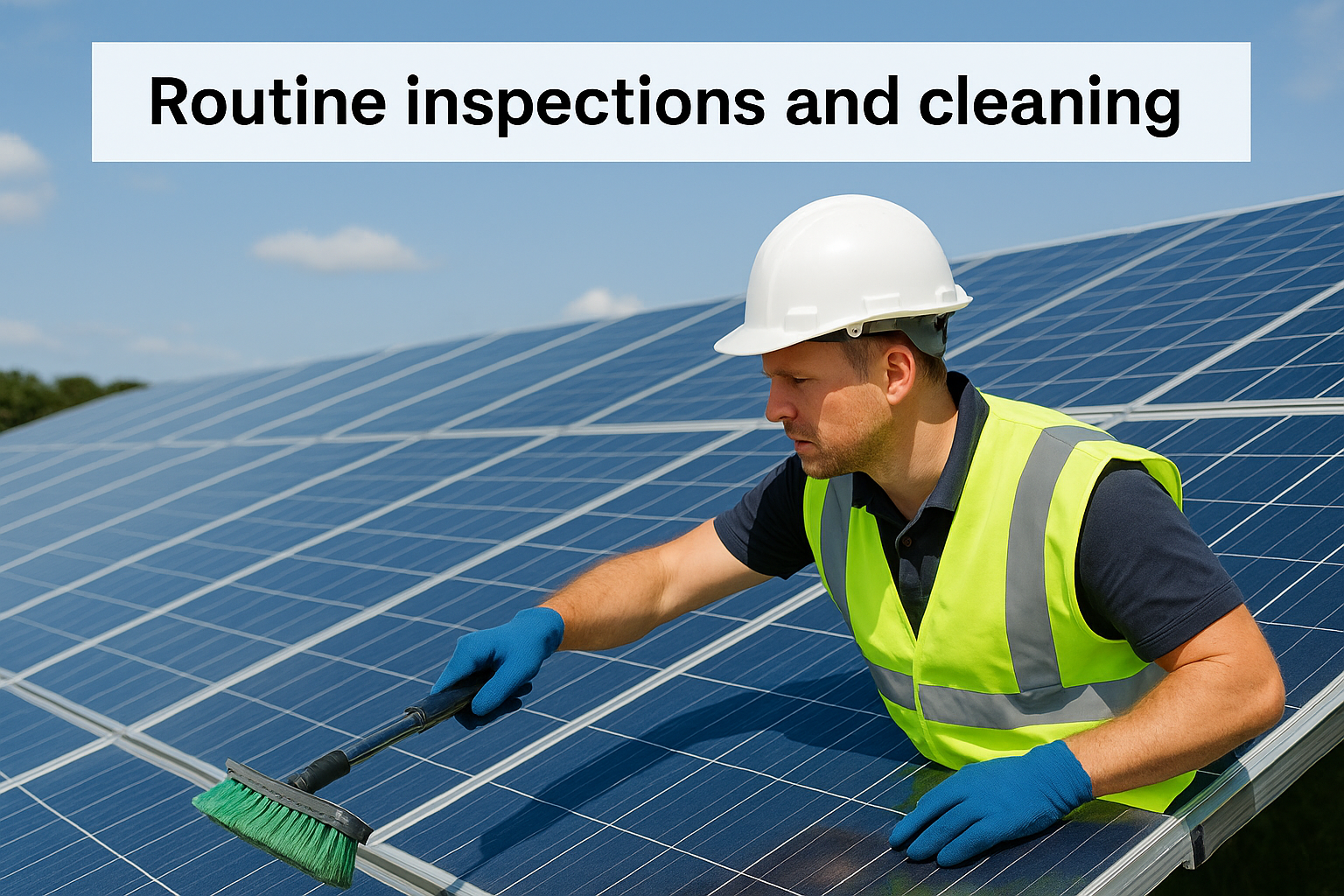
Panel cleaning removes accumulated debris including pollen, bird droppings, dust, and algae that reduce the amount of sunlight reaching your cells. Most residential systems in Florida benefit from cleaning at least once or twice per year, and more frequently if your roof is near trees or high-traffic areas.
Inspections without cleaning, or cleaning without inspections, only solve half the problem. You need both to protect system output.
Monitoring and performance reporting
Continuous monitoring tracks how much power your system produces compared to what it should produce given current weather and sunlight conditions. Automated alerts flag output drops, so your service provider can identify whether the cause is a dirty panel, a failed component, or a wiring issue before it compounds.
Performance reports give you a clear record of system health over time, which matters both for your own awareness and for warranty documentation. Inverter logs, production graphs, and degradation trends are all part of what a thorough monitoring service tracks.
Repairs and component servicing
When monitoring or an inspection surfaces a problem, repair services handle inverter replacements, wiring fixes, connector replacements, and panel swaps. For systems with battery storage, O&M also covers battery health checks and firmware updates to keep backup power ready when you need it.
Keeping a documented service record for every repair protects your warranty coverage and supports your system’s resale value if you ever sell your home.
How solar O&M works in practice
Understanding what solar operations and maintenance services include is one thing. Seeing how that work actually unfolds over the life of your system gives you a better sense of the real-world rhythm of professional maintenance. In most cases, O&M involves a combination of scheduled site visits, continuous remote monitoring between those visits, and a clear process for handling any issues that come up along the way.
What a service visit looks like
When a technician arrives for a scheduled inspection, the visit follows a structured checklist that covers every major component of your system. They will walk the roof to check mounting hardware and panel condition, inspect all electrical connections and conduit runs, verify that inverters and optimizers are operating within normal parameters, and test any battery storage systems for capacity and firmware status. The inspection typically takes one to three hours depending on system size, and a written report documents every finding before the technician leaves.
Cleaning happens during the same visit in most service plans. The technician removes surface debris with appropriate tools and checks that drainage paths around panel frames are clear. This combination of inspection and cleaning in a single visit keeps your system in good shape without requiring you to schedule multiple separate appointments.
How monitoring happens between visits
Remote monitoring runs continuously in the background through your inverter’s communication system. Platforms from manufacturers like Enphase and Tesla Energy push live production data to a monitoring dashboard that your service provider can access at any time. When output drops below expected levels for a given weather condition, the system flags the deviation automatically.

Catching a 15 percent output drop through remote monitoring on day two is far less costly than discovering it on your next utility bill six weeks later.
Your service provider reviews these alerts and contacts you if an issue requires a site visit or part replacement. Between scheduled inspections, this layer of oversight keeps a watch on your system even when no one is physically on-site, which is where most real problems first surface.
How to choose a solar O&M provider
Not every solar company that installed panels also offers strong ongoing service. Choosing the right solar operations and maintenance services provider requires looking beyond who gave you the best installation price. You want a team that will still be reachable in five years, holds the licenses to do electrical and roofing work legally, and keeps your system’s service history documented in a way that protects your warranty coverage.
Look for licensed in-house technicians
A company that subcontracts its service work has less control over who shows up on your roof and what they document. In-house technicians follow consistent protocols and carry the company’s full accountability when something goes wrong. In Florida, solar service work touches electrical, roofing, and sometimes pool systems, so confirm that your provider holds the relevant state licenses for every type of work they may need to perform on your system.
Ask specifically whether the people who perform inspections are the same people who handle repairs. That continuity matters when a technician needs to recognize patterns across multiple visits rather than approaching your system fresh every time.
Check their monitoring platform and response process
Find out which monitoring platform your potential provider uses and whether they can access your system’s data without waiting for you to report a problem first. Manufacturers like Enphase and Tesla Energy provide certified installers with dealer-level monitoring access, which allows a qualified provider to catch anomalies before they escalate. Get a clear answer on their typical response time when monitoring flags an issue, and request that commitment in writing.
A provider with no real-time monitoring capability is essentially waiting for you to notice a problem and call them.
Confirm their track record and certifications
Certifications from inverter and battery manufacturers, such as Enphase Platinum or Tesla Certified Installer status, signal that a provider has met specific training standards set by the equipment you already own. Years in business and total installations completed also tell you whether a company can handle less common failures. A long service history in coastal Florida matters especially, since salt air and humidity create conditions that technicians from other regions rarely encounter.
Solar O&M costs, contracts, and warranties
Understanding what you’ll pay for solar operations and maintenance services helps you budget accurately and compare providers without getting caught off guard. Costs vary based on system size, location, and the scope of services included, but knowing the typical ranges gives you a baseline before you sign anything.
What you can expect to pay
Annual O&M contracts for residential systems typically range from $150 to $500 per year, depending on whether the plan includes cleaning, monitoring, and a set number of site visits. Systems with battery storage or larger commercial arrays carry higher service fees because they require more technician time and more complex monitoring. Some providers charge per visit instead of an annual flat rate, which can cost more over time if your system needs multiple calls in a single year.
A flat-rate annual contract gives you predictable costs and removes the temptation to skip a service visit to save money.
What to look for in a service contract
Read every service agreement carefully before signing, and pay close attention to what triggers a covered visit versus what counts as a billable repair. A solid contract clearly defines response time commitments, which components are covered, and what happens if a technician cannot resolve the issue on the first visit. Vague language around labor coverage is where most surprise charges originate.
Confirm whether monitoring is included or billed separately. Some providers bundle monitoring into the contract price, while others treat it as an add-on. Knowing the full cost upfront prevents billing disputes down the road and makes it easier to compare competing service agreements on equal terms.
How warranties connect to your maintenance records
Most inverter and panel manufacturers require documented service history to process a warranty claim. Without records of regular inspections and cleanings, a manufacturer may deny a claim even on a component still within its warranty period. Keeping organized service records protects the full value of the equipment warranties you received at installation and gives you clear documentation if you ever decide to sell your home.
Next steps
Your solar system represents a major financial commitment, and how well you protect that investment depends directly on the quality of ongoing care it receives. Solar operations and maintenance services are not optional extras. They are the practical mechanism that keeps your system producing at the level you paid for, protects your warranty coverage, and catches problems before they cost you significantly more than a routine service visit would.
If your system has been running without professional attention, now is a good time to schedule an inspection and get a clear picture of where things stand. A qualified technician can identify output losses, corrosion, and equipment issues that remote monitoring alone will not reveal without a physical check. For Florida homeowners and businesses looking for a licensed, experienced team with over 40 years of local service history, contact Advance Solar & Spa to discuss a maintenance plan that fits your system and your budget.