Florida Net Metering Statute: Rules, Credits, And Updates
-
Share
If you generate solar power in Florida, the florida net metering statute directly affects how much value you get from every kilowatt-hour your panels produce. This law governs how utilities credit you for excess electricity sent back to the grid, and understanding it is essential before signing any solar contract.
Florida’s net metering rules have gone through changes over the years, with ongoing legislative debates that could shift how credits are calculated and what solar owners actually save. Whether you’re looking at Section 366.91 of the Florida Statutes or the administrative code that implements it, the details matter. Eligibility thresholds, billing methods, and credit rates all vary depending on your utility and system size.
At Advance Solar & Spa, we’ve been designing and installing solar energy systems across Florida since 1983, with over 50,000 installations to date. Our in-house team of certified solar consultants helps homeowners and businesses navigate exactly these kinds of policy questions before a single panel goes on the roof. This article breaks down the current statute, explains how credits work in practice, covers recent legislative updates, and outlines what Florida solar owners should be watching for next.
Why Florida net metering law matters
Florida gets more sunshine than almost any other state, which makes solar a strong investment for homeowners and businesses alike. But solar panels alone don’t determine your savings – the rules governing how your utility credits excess power play an equally important role. The florida net metering statute sets the legal framework that utilities must follow when calculating what you earn for the electricity you push back to the grid.
The financial impact on your electric bill
When your solar system produces more electricity than your home uses, that surplus flows to the grid. Under net metering, your utility tracks that surplus and credits your account at a set rate. Those credits directly reduce or eliminate the electricity charges on your next bill. Without a clear statutory requirement, utilities could compensate you at a fraction of the full retail rate, which would significantly extend the payback period on your solar investment.
The difference between receiving a retail-rate credit and a wholesale-rate credit can add up to thousands of dollars over the life of a solar system.
In Florida, residential and commercial solar owners have historically received credits at the full retail rate for excess energy, making net metering one of the most valuable policy levers available to solar adopters in the state.
Why recent legislative changes deserve your attention
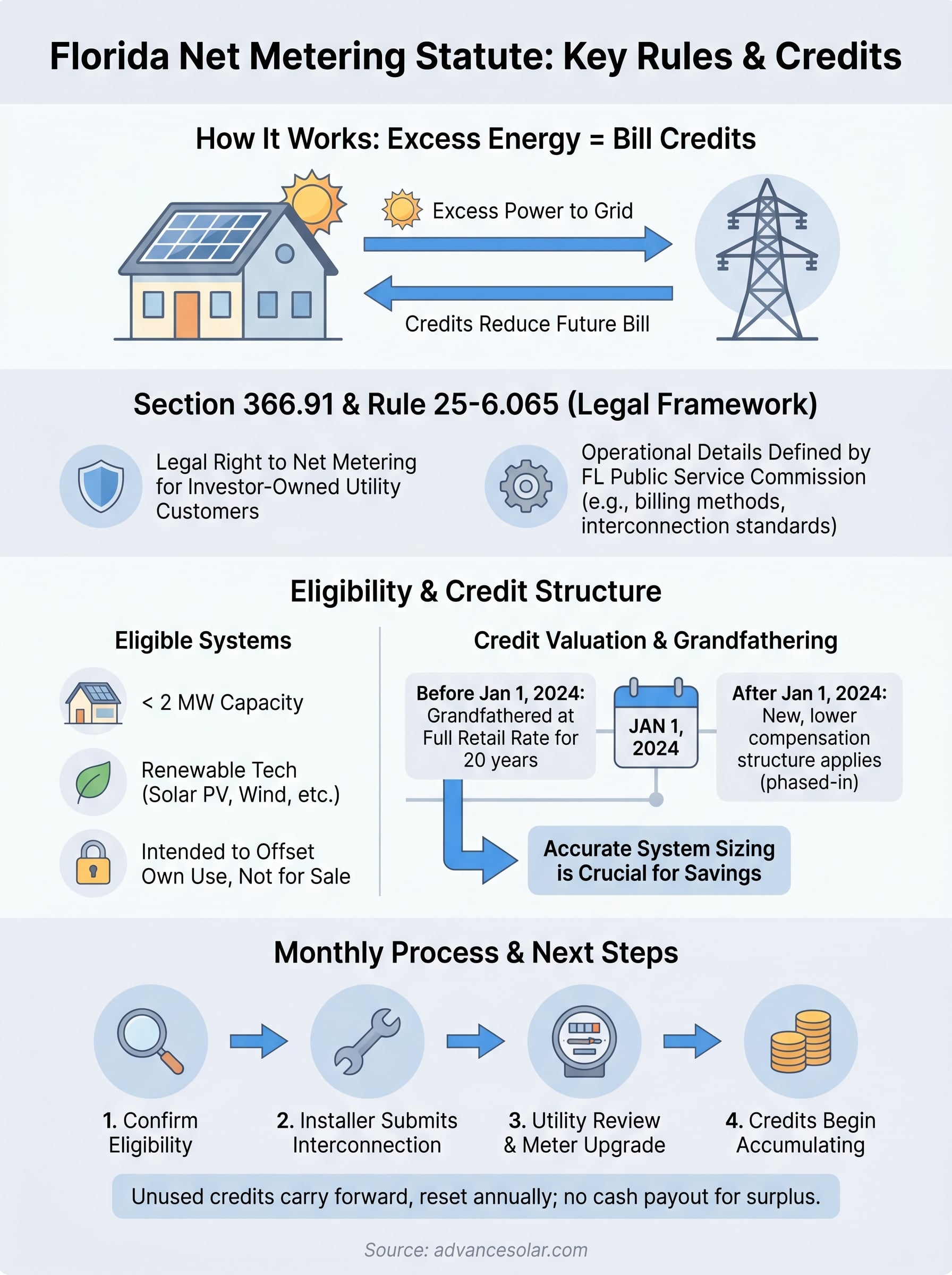
Florida’s legislature actively debated changes to net metering compensation starting in 2022, when it passed HB 741. That bill directed the Florida Public Service Commission to develop new net metering rules, which gave utilities the authority to reduce net metering credits below the full retail rate on a phased timeline. Customers who installed solar before January 1, 2024, were grandfathered into the full retail-rate credit for 20 years from their interconnection date, but new customers face a lower compensation structure going forward.
Understanding where you fall in this timeline directly affects the total financial return on a solar investment. If you installed before the cutoff, your savings projections stay intact. If you’re evaluating solar now, knowing which credit rate applies to your specific utility and system size helps you build accurate, realistic savings estimates before signing any installation agreement.
What Section 366.91 requires
Section 366.91 of the Florida Statutes is the primary legal authority that requires investor-owned utilities to offer net metering to qualifying customers. The statute defines net metering as a billing arrangement that allows customers with renewable energy systems to receive credits for electricity they supply to the grid, measured against the electricity they consume during the same billing period.
Core utility obligations
Under this section, every investor-owned utility in Florida must make net metering service available to any eligible customer-generator who requests it. The utility cannot deny interconnection to a qualifying system, and it must apply the credit structure as defined by the Florida Public Service Commission rules. This creates a binding legal floor for how utilities treat solar customers, regardless of which company serves your area.
Section 366.91 gives you the legal right to interconnect and receive credits – utilities cannot simply opt out of offering net metering to eligible customers.
System size limits and eligible technologies
The florida net metering statute sets a maximum system capacity of 2 megawatts for eligible customer-generators, which covers the vast majority of residential and commercial solar installations. Your system must be located on premises you own or lease, and it must be intended primarily to offset your own electricity consumption rather than generate power for sale.

Eligible renewable technologies under Section 366.91 include:
- Solar photovoltaic (PV) systems
- Wind turbines
- Hydroelectric power systems
- Biomass systems
- Landfill gas systems
What Rule 25-6.065 requires
While Section 366.91 establishes the legal right to net metering, Florida Administrative Code Rule 25-6.065 is where the operational details live. This rule, administered by the Florida Public Service Commission, translates the statute into specific technical and billing requirements that utilities must follow when setting up and maintaining net metering service for eligible customers.
How the rule defines billing and measurement
Rule 25-6.065 requires utilities to measure the net difference between the electricity your system produces and the electricity you consume within each billing cycle. If your solar system generates more than you use in a given month, the utility calculates the surplus and applies a credit to your account. Critically, the rule specifies how utilities must set up metering equipment to track both the energy flowing into your home and the energy flowing back to the grid accurately.
The billing methodology under Rule 25-6.065 determines exactly how much credit you carry forward, which makes it one of the most consequential parts of the florida net metering statute framework.
Utility compliance and interconnection standards
The rule also sets interconnection standards that utilities must follow before activating your net metering service. Your system must pass a utility inspection and meet technical safety requirements before credits begin accumulating. Utilities cannot impose unreasonable delays or excessive fees during this interconnection process. The rule holds utilities accountable to consistent timelines and procedures, which protects you from arbitrary roadblocks when activating a new solar installation.
How Florida net metering credits work
Under the florida net metering statute, credits operate on a monthly billing cycle that compares what your solar system produces against what your home or business consumes. When production exceeds consumption, the utility applies the surplus as a kilowatt-hour credit to your account, reducing what you owe on the next bill.
Monthly credit calculation
Your utility measures two separate flows of electricity: the power your panels generate and the power you draw from the grid. At the end of each billing period, the utility nets those two numbers. If your system produced 900 kWh and you consumed 700 kWh, you receive a 200 kWh credit applied to your next billing cycle. The rate at which that credit is valued depends on when you interconnected and which utility serves your property.
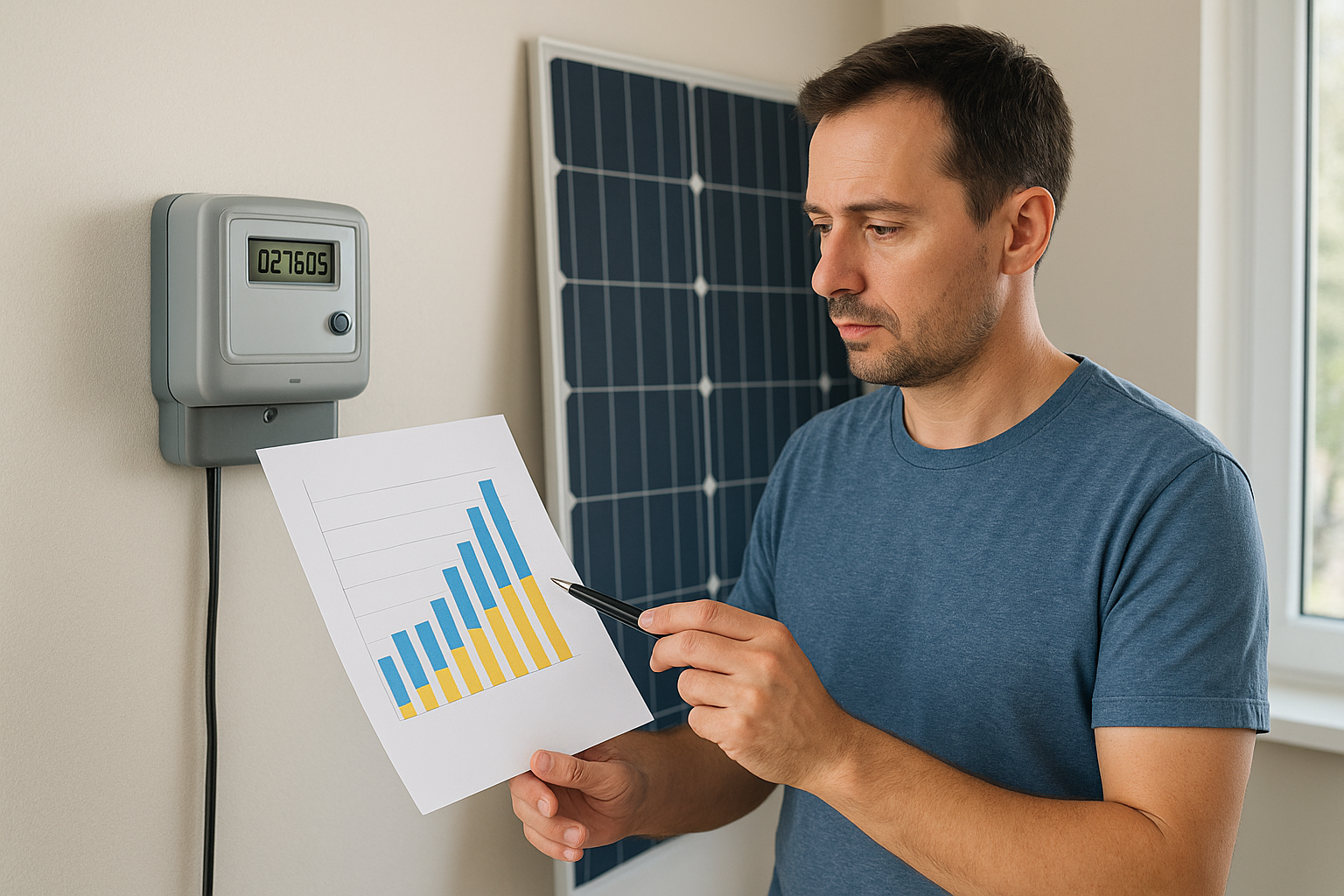
Customers who interconnected before January 1, 2024, receive credits at the full retail rate, while newer customers receive compensation under the revised schedule set by the Florida Public Service Commission.
Carrying credits forward
Any unused credits carry forward to the following month, so strong production in sunny months can offset higher usage during peak summer cooling season. Florida utilities are not required to pay out cash for any remaining credit balance at the end of a 12-month period, meaning that surplus typically resets, which makes accurate system sizing critical from the start.
Sizing your system to match your annual consumption pattern rather than your peak monthly usage gives you the best chance of maximizing credit value without over-generating. A certified solar consultant can model your historical electricity bills against projected output to find the right fit for your property.
How to qualify and apply in Florida
Qualifying for net metering in Florida requires meeting a straightforward set of criteria, but skipping any step can delay the process by weeks. The florida net metering statute applies to customers of investor-owned utilities, so your first check is confirming your utility provider falls under that category. Customers of municipal utilities or electric cooperatives operate under separate frameworks and should contact their provider directly.
Eligibility requirements
Your solar system must sit on property you own or lease, and its primary purpose must be offsetting your own electricity consumption rather than selling power commercially. System capacity must stay at or below 2 megawatts, which covers virtually every residential and small commercial installation. You also need a standard grid-tie inverter that meets your utility’s technical specifications, which your installer should confirm during the design phase.
Confirming eligibility before installation starts saves you from costly equipment changes or interconnection rejections down the line.
The application and interconnection process
Your solar installer typically handles the interconnection application on your behalf, submitting it directly to your utility before or shortly after installation. The utility reviews your system specs, inspects the installation, and upgrades your meter to a bidirectional model that tracks both incoming and outgoing electricity flows. Most utilities in Florida target a 20 to 45 business day review window, though timelines vary.
Once the utility approves interconnection and activates your meter, credits begin accumulating immediately. Keeping copies of your interconnection agreement and approval letter gives you documentation if any billing disputes arise later.
Next steps for Florida solar owners
The florida net metering statute gives you legal protection and a clear credit structure, but making the most of it depends on acting with accurate, current information. If you installed before January 1, 2024, verify that your interconnection agreement reflects the grandfathered retail-rate credit so your savings projections stay on track. If you’re evaluating solar now, get a system sizing analysis that accounts for the current credit rate your utility applies, not the older full retail rate.
Your next move is connecting with a solar installer who knows Florida’s interconnection rules, utility timelines, and system sizing standards inside out. Advance Solar & Spa has handled over 50,000 installations across Florida since 1983, and our in-house team of certified consultants can walk you through exactly how net metering applies to your property, your utility, and your annual consumption pattern. Getting that detail right from the start is what separates accurate savings estimates from ones that fall short after installation.