FPL Net Metering: How It Works, Rates, And Application
-
Share
If you’re a Florida homeowner with solar panels, or considering going solar, understanding FPL net metering is essential. It’s the program that determines how you get credited when your solar system sends excess electricity back to Florida Power & Light’s grid. Get it right, and your monthly electric bill drops significantly. Miss the details, and you could leave money on the table.
At Advance Solar & Spa, we’ve helped homeowners across Florida navigate FPL’s net metering process for over 40 years. With more than 50,000 solar installations behind us and a team of certified in-house engineers, we handle the interconnection paperwork and system design so our customers get the full financial benefit of their solar investment from day one.
This guide breaks down exactly how FPL’s net metering program works, what the current rates and credit tiers look like, and how to apply. Whether you’re sizing a new system or trying to make sense of your first post-solar FPL bill, you’ll find straightforward answers below.
What FPL net metering is and who qualifies
FPL net metering is a billing arrangement where Florida Power & Light measures both the electricity your solar panels export to the grid and the electricity you draw from it. At the end of each billing cycle, FPL calculates the net difference between those two figures. You pay only for what you consumed beyond what your system produced, or you receive a credit when you generated more than you used.
How the grid connection works
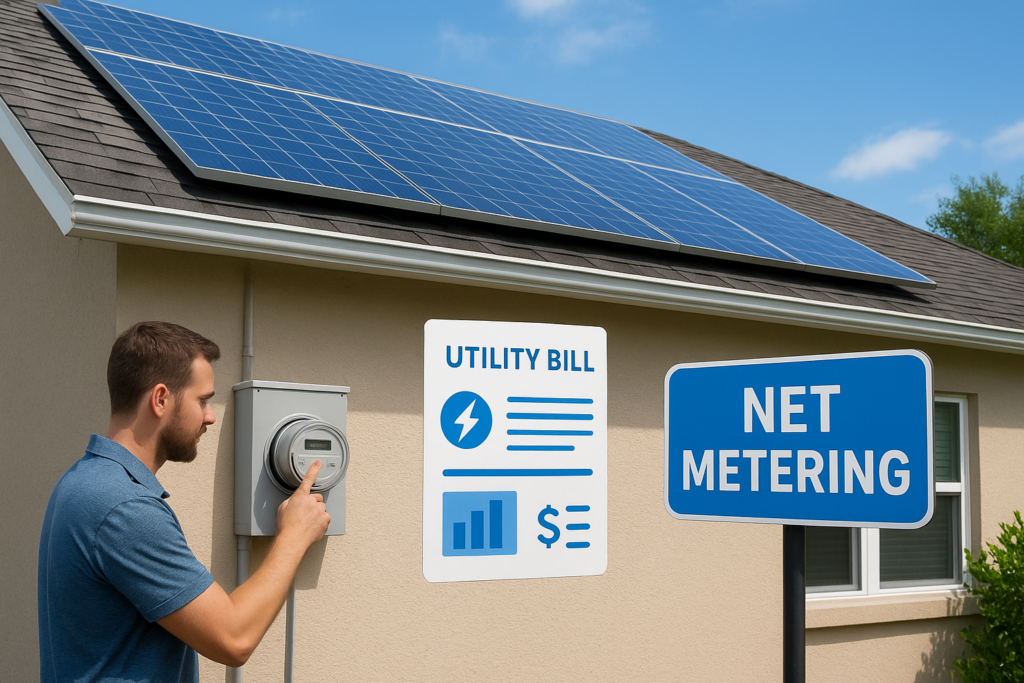
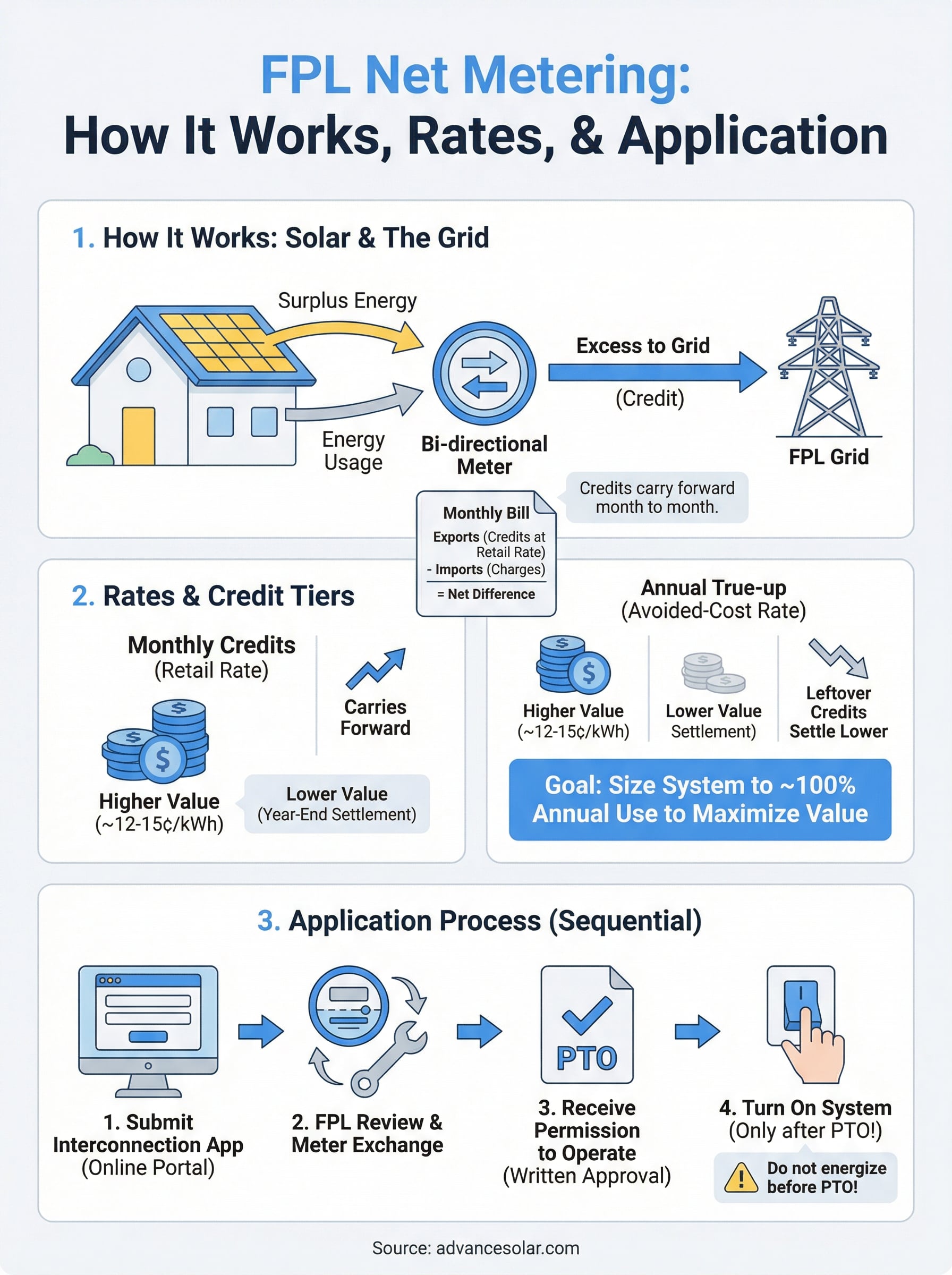
When your solar system produces more electricity than your home needs at any given moment, the surplus flows back through your utility meter and onto FPL’s grid. Your meter runs in both directions, tracking energy consumed from the grid and energy exported to it. Both flows get logged separately, and FPL applies a credit to your bill at the retail electricity rate for every kilowatt-hour you send out.

This means each kilowatt-hour your system exports is worth the same as one you avoid purchasing, which is what makes net metering valuable for Florida solar owners.
Who qualifies for the program
FPL extends net metering eligibility to residential and commercial customers who meet a defined set of conditions. Your system must generate electricity from a renewable energy source, which for most homeowners means rooftop solar photovoltaic panels. FPL also requires:
- System capacity at or below 2 megawatts for most customer classes
- A bi-directional utility meter installed at your property
- A signed interconnection agreement with FPL before your system powers on
- Equipment that meets FPL’s published technical and safety standards
Customers who lease their solar systems through a third party can also participate, provided the system is installed at the customer’s billing address and satisfies the same technical requirements as owner-installed systems.
Why FPL net metering matters for solar owners
FPL net metering directly affects the financial return on your solar investment. Without it, any electricity your panels send to the grid would go uncompensated, leaving you to absorb the full cost of whatever you draw back at night or on cloudy days. With net metering in place, your system offsets those purchases at the retail electricity rate, which is what makes the math work in your favor.
The retail rate credit means you are not just reducing your bill on sunny days; you are banking energy value that carries forward month to month.
The real-world impact on your electric bill
Florida homeowners on FPL’s standard residential rate pay roughly 12 to 15 cents per kilowatt-hour for electricity. Every kilowatt-hour your solar system exports earns you a credit at that same rate. Over a full year, a properly sized system can eliminate most or all of your electric bill, with surplus credits rolling forward to offset charges in months when your usage climbs or production dips.
Your system size and energy consumption are the two biggest factors determining how much net metering benefits you. A larger system on a home with moderate usage can bank enough credit through Florida’s peak sunshine months to cover cooler, lower-production periods entirely.
How FPL net metering billing and credits work
FPL tracks your energy imports and exports separately each billing cycle under the FPL net metering program. At the end of the month, your utility bill reflects the net difference between what you drew from the grid and what your solar system sent to it. If you consumed more than you produced, you pay for the difference at the standard retail rate. If you produced more, you receive a credit.
Monthly billing cycle and credit calculation
When your solar system exports more than you consume in a given month, FPL applies the surplus as a kilowatt-hour credit to your account. That credit reduces your next bill automatically.
Your credits carry forward month to month, so peak production periods can offset higher-usage months later in the year.
Your monthly statement from FPL will show both the energy you imported and the energy you exported, making it straightforward to track your net metering performance over time.
How the annual true-up works
Each year, FPL performs a reconciliation of your net metering account. Any leftover kilowatt-hour credits at the 12-month mark settle at the avoided-cost rate, which sits lower than the retail rate applied during the year.
Size your system to cover roughly 100% of your annual consumption and you avoid generating surpluses that settle at the lower avoided-cost rate.
FPL net metering rates, tiers, and key rules
Understanding the specific rates and rules governing FPL net metering keeps you from surprises on your bill. FPL applies two distinct rates depending on when and how your credits are used, so knowing the difference before you size your system is worth your time.
The retail rate and avoided-cost rate
Credits you earn during each monthly billing cycle apply at the retail electricity rate, currently around 12 to 15 cents per kilowatt-hour. This is the same rate you pay when drawing from the grid, which makes the monthly exchange straightforward and predictable.
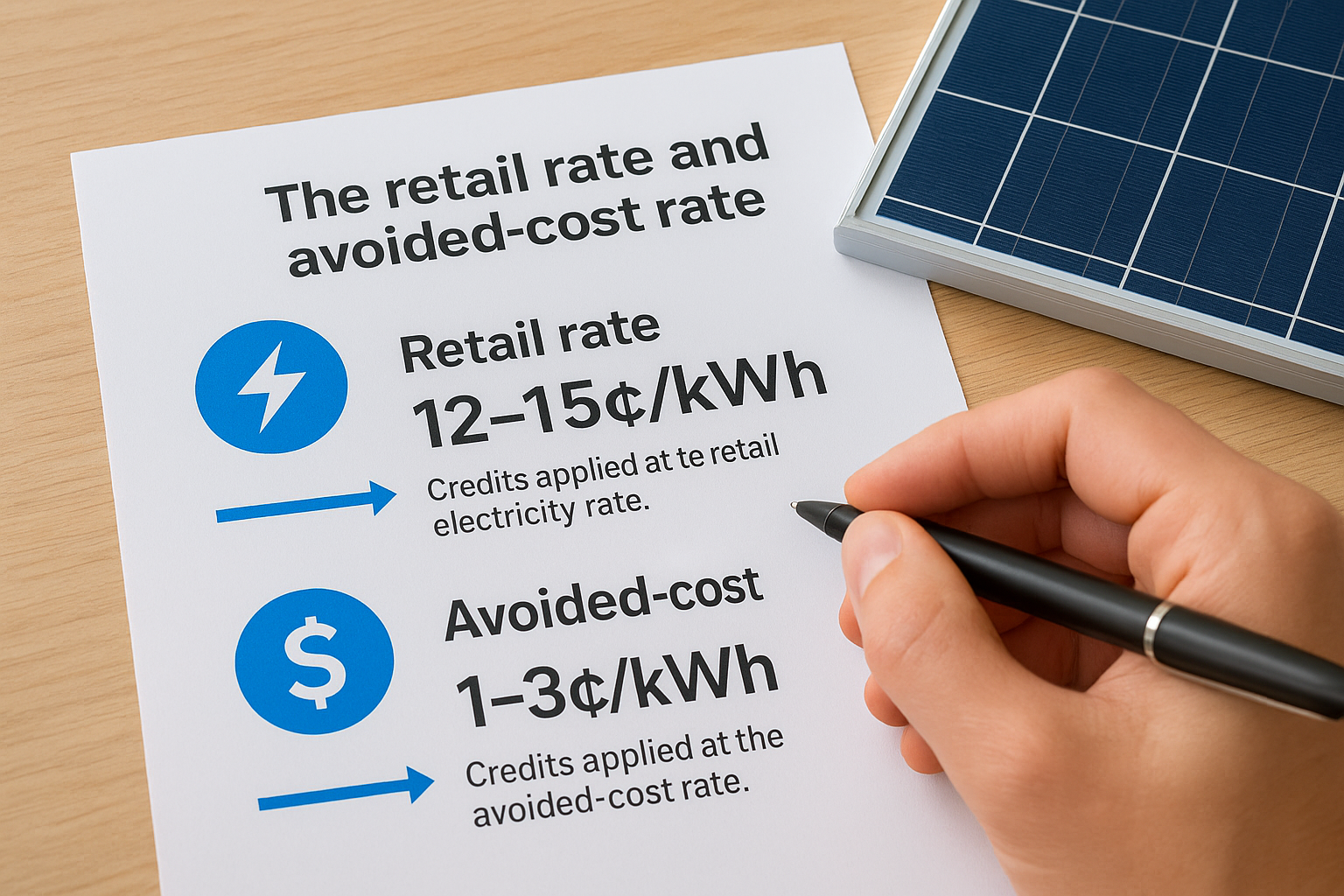
Any surplus credits left at your annual true-up settle at the lower avoided-cost rate, so sizing your system to match your actual consumption protects your overall return.
Key program rules to know
FPL enforces several non-negotiable requirements that every solar customer must follow. Staying compliant protects your interconnection status and keeps your credits flowing without interruption.
- Your system cannot exceed 2 megawatts in capacity for standard residential accounts
- You must maintain a valid interconnection agreement with FPL at all times
- Equipment must pass FPL’s technical review before your system energizes
- Ownership or lease arrangements must be documented with FPL before activation
How to apply and get permission to operate
Getting connected to FPL net metering starts with submitting an interconnection application to Florida Power & Light before your system turns on. FPL does not allow solar systems to energize without prior written approval, so completing this step before installation wraps up is essential.
Steps to submit your interconnection application
You submit your interconnection request through FPL’s online customer portal, where you provide your system specifications, equipment details, and installer credentials. FPL typically reviews residential applications within 10 to 15 business days, though complex systems or grid capacity constraints can extend that timeline.
Here are the key items you need to submit:
- System capacity in kilowatts
- Equipment specifications for inverters and panels
- Installer license numbers and contact information
- A single-line electrical diagram of your system
What happens after you apply
Once FPL approves your application, they schedule a meter exchange to install your bi-directional meter. After the meter swap, FPL issues your Permission to Operate (PTO), which is the formal authorization to turn your system on. Do not energize your system before receiving PTO in writing, as doing so violates your interconnection agreement and can result in service interruption.
Your installer handles most of this paperwork, but confirming PTO receipt before startup protects you from compliance issues down the road.
Final takeaways
FPL net metering gives Florida solar owners a straightforward way to reduce their electric bills by crediting excess energy at the retail electricity rate throughout the year. Your credits roll forward monthly, and any remaining balance settles at the avoided-cost rate after the annual true-up. Sizing your system to match your actual annual consumption keeps your credits working at full value and prevents settling for the lower year-end rate.
The application process follows a clear sequence: submit your interconnection application, pass FPL’s technical review, receive your bi-directional meter, and wait for written Permission to Operate before you turn the system on. Following those steps protects your billing credits and keeps your account in good standing from the start.
If you want a team with over 40 years of experience handling your system design and FPL paperwork, contact Advance Solar & Spa and get your solar installation done right.