Solar Pool Heater Pump Requirements: GPM, Head & HP Sizing
-
Share
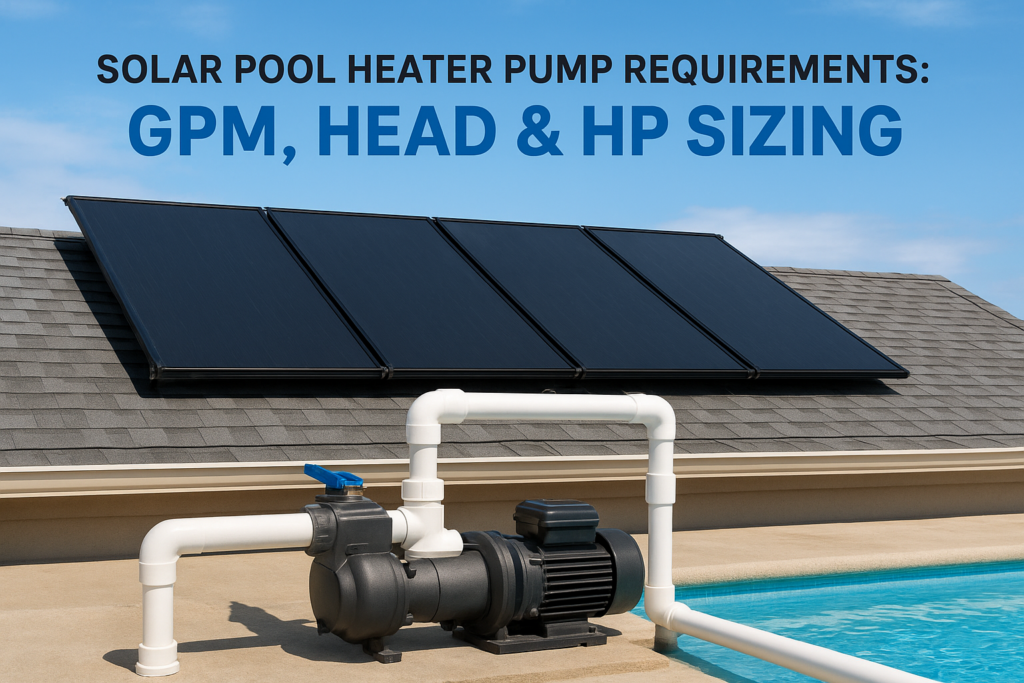
Your solar pool heating system is only as effective as the pump pushing water through it. If the pump can’t deliver enough flow or overcome the added resistance of rooftop panels, you’ll end up with lukewarm water and wasted investment. Understanding solar pool heater pump requirements, specifically GPM (gallons per minute), head pressure, and horsepower, is the difference between a system that performs and one that underheats your pool all season long.
Most homeowners already have a pool pump running their filtration system. The real question is whether that pump can handle the extra demand of solar collectors. In many cases it can, but not always. Factors like panel elevation, total pipe run distance, and collector square footage all influence what your pump needs to deliver. Getting the sizing wrong means restricted flow, increased wear on equipment, and panels that never reach their heating potential.
At Advance Solar & Spa, we’ve designed and installed solar pool heating systems across Florida since 1983, over 50,000 installations and counting. Our in-house engineering team evaluates pump compatibility on every project, so we see firsthand what works and what falls short. This article breaks down the technical sizing guidelines you need to evaluate your current pump or choose the right one, covering flow rates, head pressure calculations, and HP recommendations for common residential setups.
Why solar pool heater pump requirements matter
A pool pump has one job in a standard filtration setup: pull water through the filter and return it to the pool. Add a solar heating system, and that same pump now has to push water up to rooftop collectors, through dozens of feet of additional pipe, and back down again. That extra work changes everything about what your pump needs to deliver. Understanding solar pool heater pump requirements before you install anything saves you from buying a system that never hits the temperature you want, or discovering mid-summer that your existing pump isn’t up to the job.
Solar collectors add real hydraulic resistance
Every foot of pipe, every elbow fitting, and every vertical rise your water travels creates friction that the pump must overcome. Solar panel arrays typically add 10 to 30 feet of head pressure to your system, depending on roof height and total collector square footage. A pump that handled your filter loop without any problem can struggle or stall once you route water through rooftop panels. The longer and higher the collector run, the harder your pump works to keep water moving at an adequate rate.
If your pump cannot maintain the correct flow rate through the collectors, water sits in the panels too long, overheats, and may trigger the system’s automatic bypass valve to shut the collectors off entirely.
Insufficient flow kills heating efficiency
Solar collectors are engineered to operate within a specific flow rate window, measured in gallons per minute per square foot of collector. Too little flow and water lingers in the panels, picking up surface heat but losing efficiency across the full array. Too much flow and water rushes through before it absorbs meaningful solar energy. Both extremes leave you with a pool that falls short of your target temperature no matter how many panels you installed, because the collectors are never running in their optimal range.
An undersized pump wears out faster
Pushing a pump beyond its design capacity creates mechanical stress that shortens its lifespan significantly. Motor windings, shaft seals, and impellers all degrade faster when the pump fights constant resistance it was not built for. That means premature repairs or full replacements on top of poor heating performance, a combination that makes the whole system cost more than it should. Choosing the right pump for your solar setup from the start protects both the pump and the collectors, keeps maintenance costs predictable, and ensures your system delivers reliable heat through Florida’s long swimming season.
The three numbers that determine pump fit
Evaluating solar pool heater pump requirements comes down to three measurable values: flow rate in gallons per minute (GPM), total dynamic head (TDH) in feet, and motor horsepower (HP). Each one tells you something different about whether your pump can handle a solar heating loop. Miss any one of them and you’re guessing.
Flow rate (GPM)
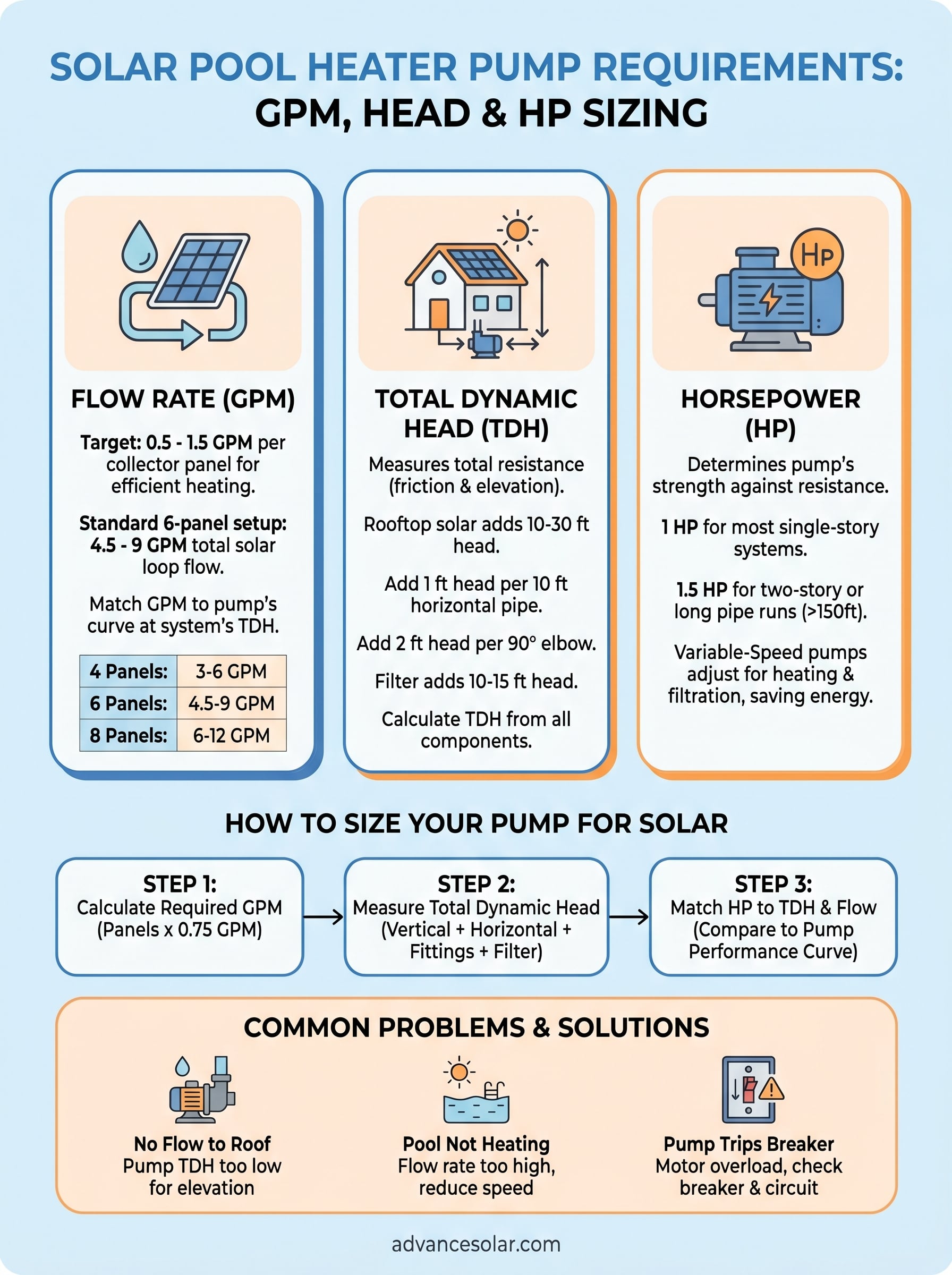
Solar collectors need water moving through them at a rate of 0.5 to 1.5 GPM per collector panel to heat efficiently. A standard residential installation with six 4×10 panels (240 square feet of collector area) typically requires 20 to 30 GPM through the solar loop during heating cycles. Your pump’s performance curve, usually printed on the pump label or available from the manufacturer, shows you exactly what GPM it delivers at different resistance levels.
Match your required GPM to the pump’s actual output at your system’s head pressure, not just its maximum rated flow at zero resistance.
Total dynamic head (TDH)
TDH measures the total resistance your pump must overcome to circulate water through the entire system, filter, solar collectors, and all the pipe in between. Every foot of vertical rise adds roughly 1 foot of head, and friction from pipe length and fittings adds more. A rooftop solar installation on a single-story Florida home typically adds 15 to 25 feet of head on top of your existing filter system’s resistance.
Horsepower (HP)
Horsepower determines how much energy your pump motor can apply to move water against resistance. A 1 HP pump handles most single-story residential solar installations comfortably, while 1.5 HP pumps become necessary when collectors sit on two-story roofs or when total pipe runs exceed 150 feet. Variable-speed pumps add flexibility here because you can dial the speed up during solar heating cycles and reduce it during filtration-only periods, cutting energy costs without sacrificing performance.
How to size your pump for solar step by step
Sizing a pump for solar correctly takes less time than most people expect, but you need real numbers from your specific setup rather than rough estimates. Grab a tape measure, note your collector count, and walk through these steps before you buy or replace anything.
Step 1: Calculate your required GPM
Start by counting your total number of solar panels and multiplying by 0.75 GPM, which sits in the middle of the 0.5 to 1.5 GPM per panel range and works well for standard 4×10 or 4×12 collector sizes. A six-panel system needs roughly 4.5 to 5 GPM through the solar loop at minimum, though targeting 6 to 8 GPM gives you a comfortable performance buffer. Use these quick reference targets as your starting point:
- 4 panels: 3 to 6 GPM
- 6 panels: 4.5 to 9 GPM
- 8 panels: 6 to 12 GPM
Step 2: Measure your total dynamic head
Walk the full pipe route from your pump to the roof and back. Count every vertical foot your water climbs, then add 1 foot of head for every 10 feet of horizontal pipe run. Each 90-degree elbow fitting adds roughly 2 feet of head. Add your filter’s rated head drop, typically 10 to 15 feet for a standard cartridge or DE filter, and you have your total dynamic head figure.
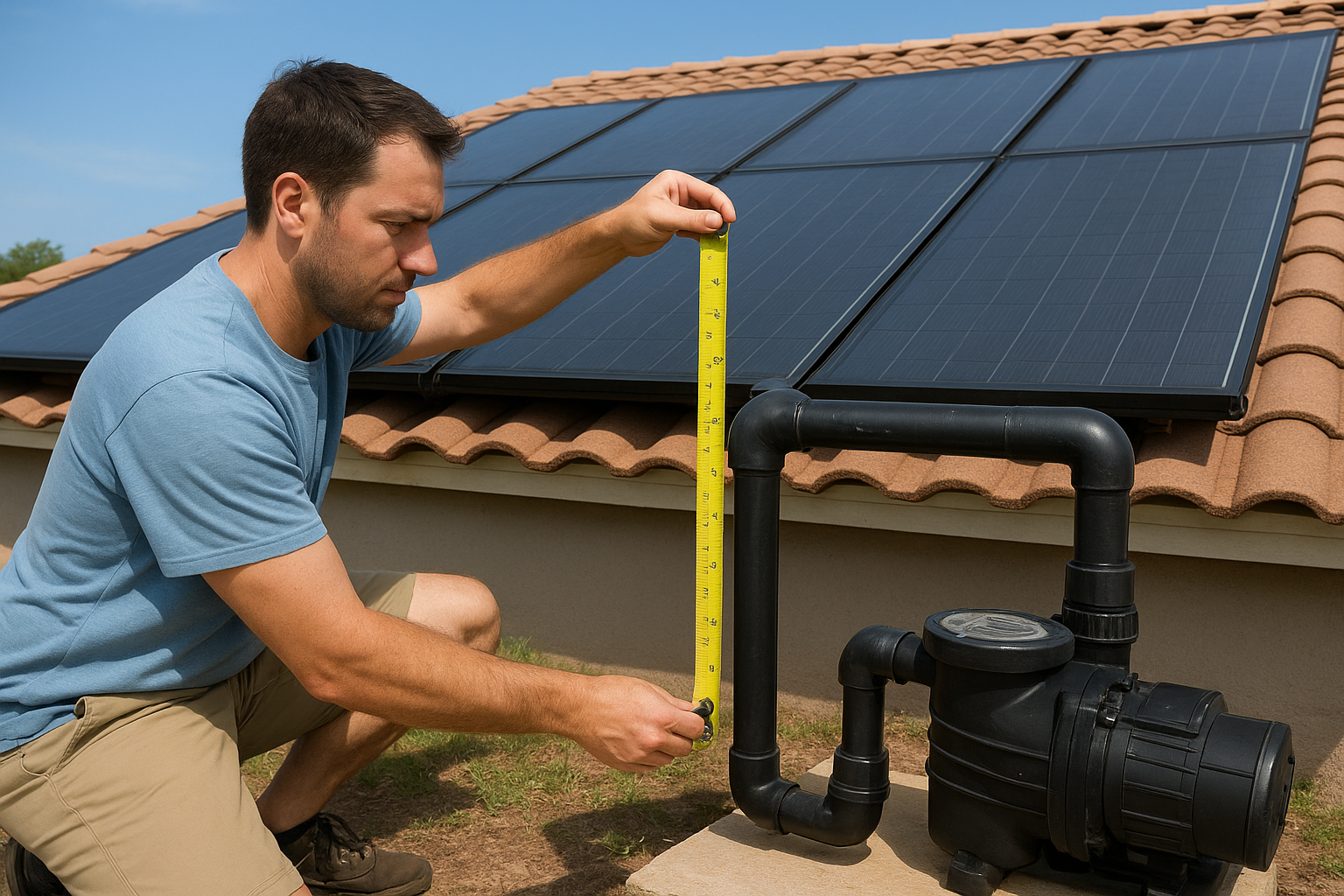
Write this number down before you look at any pump specs, because buying based on horsepower alone without knowing your TDH is one of the most common solar pool heater pump requirements mistakes our engineers see on retrofit jobs.
Step 3: Match HP to your TDH and flow
Take both numbers, your required GPM and your TDH, and compare them against the pump’s published performance curve from the manufacturer. A 1 HP pump running at a TDH of 40 to 50 feet typically delivers 40 to 55 GPM total, which covers most single-story Florida installations.
If your TDH exceeds 55 feet or your collector array tops 300 square feet, move up to a 1.5 HP variable-speed model. Variable-speed options let you run higher speeds during solar heating cycles and lower speeds during filtration-only periods, which reduces energy consumption without sacrificing collector performance.
Plumbing and controls that affect pump needs
Pump sizing does not happen in isolation. The pipe diameter, total run length, and automated components in your system all change what your pump needs to deliver. Two pools with identical collector arrays can have very different solar pool heater pump requirements simply because one uses 1.5-inch pipe and the other uses 2-inch pipe throughout the solar loop.
Pipe diameter and run length
Pipe diameter directly controls how much friction your water fights at any given flow rate. 1.5-inch PVC pipe is standard for most residential solar loops, but when your collector array exceeds 400 square feet or your total pipe run stretches beyond 150 feet, upgrading to 2-inch pipe cuts head loss substantially and lets a smaller motor do the same job more efficiently. The difference matters more than most homeowners expect.
Reducing friction losses through wider pipe is often cheaper than buying a larger pump motor, and it keeps your long-term electricity costs lower.
Run length compounds this effect. Each additional 10 feet of pipe adds roughly 1 foot of head to your TDH calculation, so a long rooftop run on a larger Florida home can add 15 to 20 feet of head before you account for elevation or fittings. Measure your actual pipe runs before committing to any equipment.
Automated valves and controllers
Most solar systems use a 3-way diverter valve controlled by a differential thermostat to route water through the collectors when the roof is warmer than the pool. That valve introduces additional head loss, typically 2 to 4 feet, that your sizing calculation must include. If your controller also operates a check valve to prevent reverse flow at night, add another foot or two.
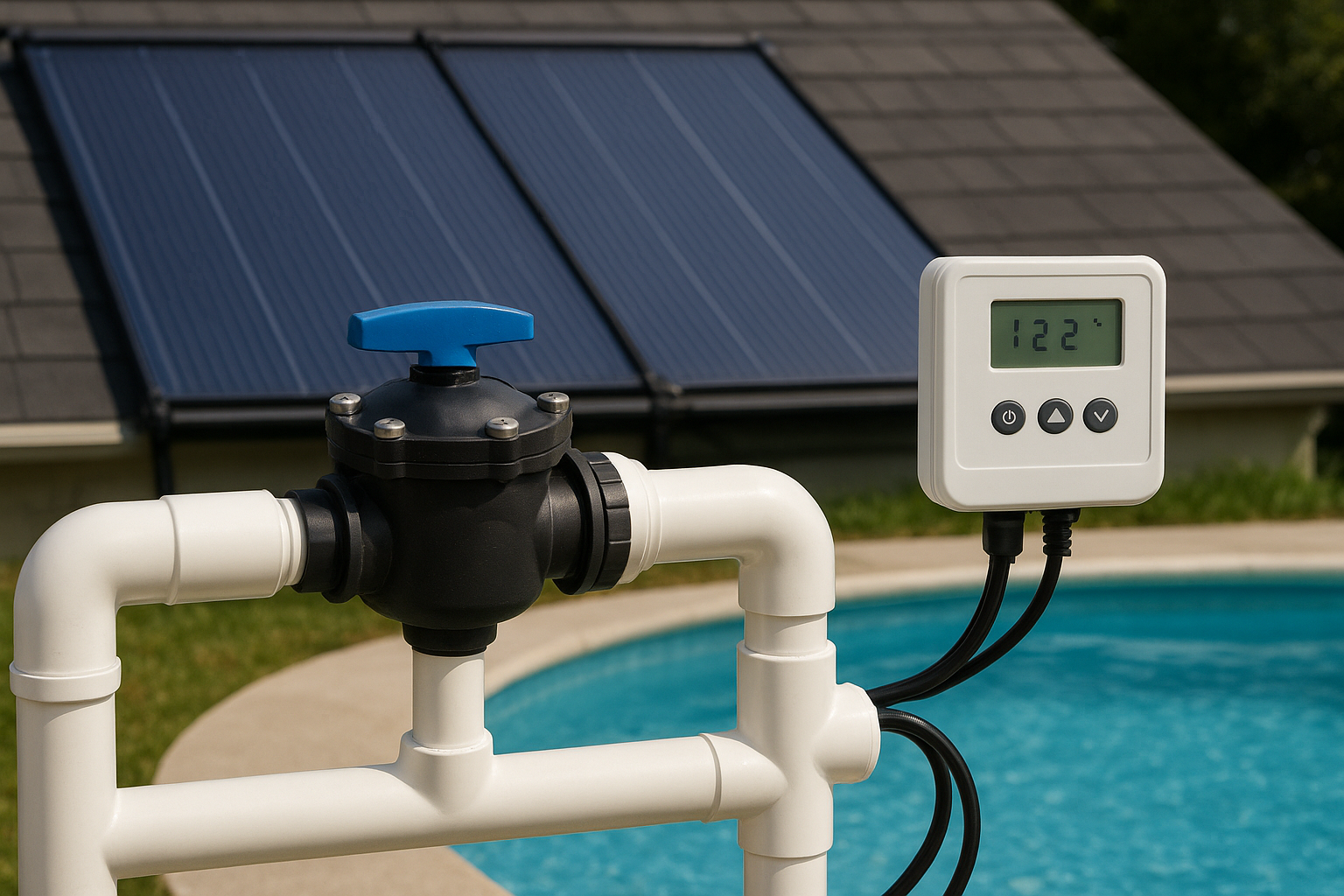
Variable-speed pumps pair particularly well with automated controllers because the controller can ramp pump speed up during peak solar hours and reduce it during filtration-only cycles, stretching the life of both the motor and the diverter valve simultaneously.
Common problems and straight answers
When solar pool heating systems underperform, the cause almost always traces back to a pump that isn’t matched to the actual solar pool heater pump requirements of the installation. The three issues below come up repeatedly, and each one has a clear fix once you know where to look.
The pump runs but water never reaches the roof
Your pump is running, but the collectors stay dry. This typically means your pump’s TDH rating is lower than the actual resistance in your system, so the motor spins without moving enough water to climb the full elevation. Check the pump’s performance curve against your measured TDH. If the numbers don’t align, your pump needs an upgrade rather than a repair.
A pump operating above its rated head pressure will draw excess current, run hot, and fail months earlier than its rated service life suggests.
Adding a booster pump dedicated to the solar loop is an alternative when replacing the main pump is not practical, particularly on properties where the collectors sit on a two-story roof or over a long horizontal run from the equipment pad.
The collectors heat up but the pool temperature stays flat
If the collectors are clearly getting hot but the pool barely moves, your flow rate is likely too high rather than too low. Water rushing through the panels too fast absorbs minimal heat per pass, so even a fully functional array contributes little. Reduce pump speed on a variable-speed model or verify your diverter valve is calibrating correctly during solar cycles.
The pump trips the breaker after solar installation
Adding a solar loop increases the mechanical load on the pump motor, which draws more amperage. If your breaker is tripping, check that the breaker rating matches the pump’s maximum amp draw under load, and confirm your electrical panel’s circuit is sized correctly for the upgraded demand.
Final checklist before you change anything
Before you swap out your pump or schedule any solar installation work, run through these key verification steps to confirm you have the right information in hand. Check your existing pump’s performance curve and compare its GPM output at your system’s actual TDH against the flow targets for your collector count. Measure your pipe runs, count your fittings, and calculate total dynamic head using real numbers from your specific setup, not estimates. Confirm your pipe diameter supports the flow rate you need without excess friction loss. Verify that your diverter valve, controller, and any check valves are included in your head calculation. If your current pump falls short on any of these solar pool heater pump requirements, you now know exactly which number is the problem and what to fix first. Ready to move forward with confidence? Talk to the solar pool heating team at Advance Solar & Spa and get a system that’s sized correctly from day one.