6 Tips: How To Choose A Solar Panel Installer For Your Home
-
Share
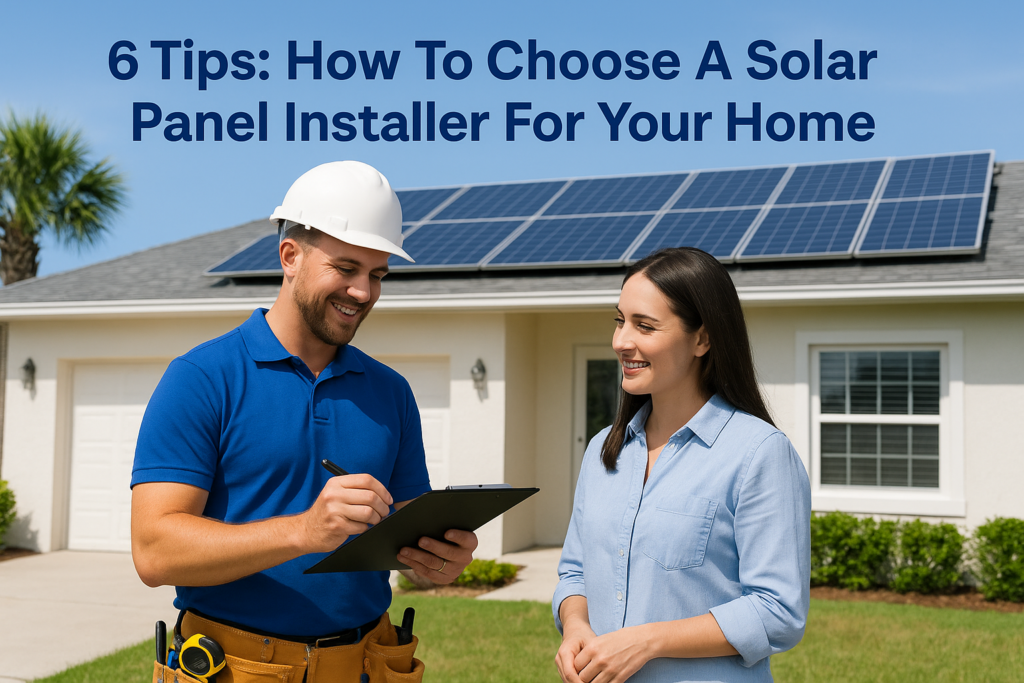
Going solar is a big decision, and picking the wrong company to install your system can turn a smart investment into an expensive headache. Knowing how to choose a solar panel installer matters just as much as deciding to go solar in the first place. The wrong crew can mean shoddy roof work, underperforming panels, or a company that disappears when you need warranty support years down the road.
At Advance Solar & Spa, we’ve completed over 50,000 installations across Florida since 1983, so we’ve seen what separates a quality installer from a fly-by-night operation. We’re sharing that knowledge here because an informed homeowner makes better decisions and gets better results, whether they choose us or someone else.
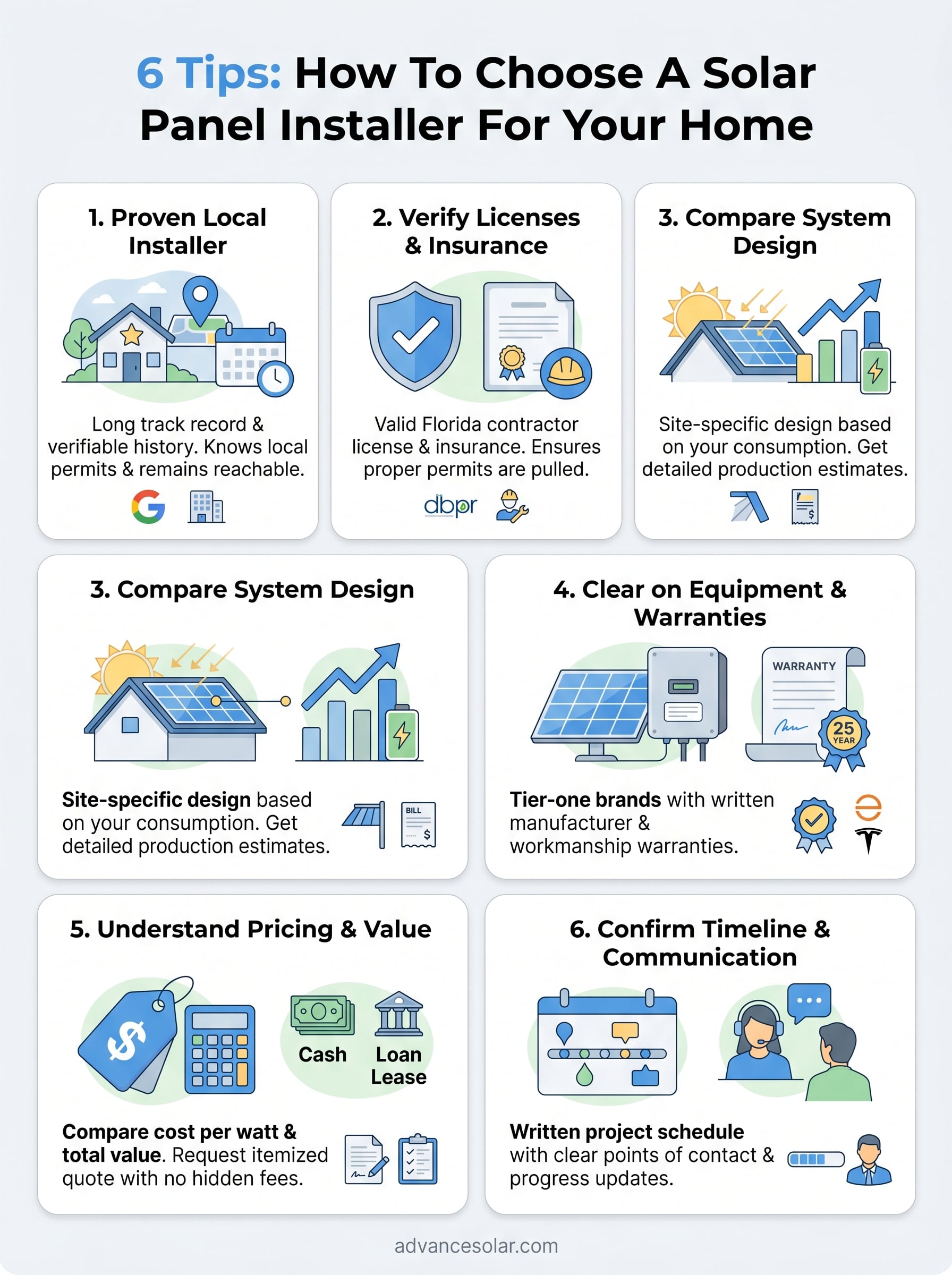
Below, you’ll find six practical tips to help you evaluate any solar installer before signing a contract. Each one covers a specific factor, from licensing and equipment to financing and reviews, so you can compare companies with confidence and protect your investment.
1. Start with a proven local installer in Florida
A local company with a long track record has real skin in the game. They’ve built their reputation in your community, they understand Florida’s permitting process, and they’ll still be reachable when you need service five years from now. National aggregators often hand your job off to a subcontractor you’ve never vetted, which removes a key layer of accountability from the process.
What to check
Look for an installer with verifiable years in business and a physical office in Florida. Check their review history on Google and the Better Business Bureau. A company that has completed thousands of installations locally has the hands-on experience to handle Florida-specific challenges like high humidity, hurricane wind load requirements, and utility interconnection rules that vary by county.
Questions to ask
Before you commit to any company, ask these three questions directly:
- How long have you been operating in Florida?
- Do you use in-house crews or subcontractors for installation?
- Can you provide references from customers in my county or city?
The subcontractor question is worth pressing on. Some companies win contracts and immediately hand off the physical work to third parties, which can affect installation quality and your warranty coverage down the road.
A company that staffs its own installation crews is directly responsible for the quality and safety of every job.
Documents to request
- Proof of a physical Florida business address
- A list of recent local installations with verifiable customer contact information
- Contractor license number for independent state verification
Confirming these documents before signing takes less than 30 minutes and can protect you from a costly mistake.
Red flags
Walk away if the company cannot provide local references or if their only business address is a P.O. box. Be cautious of installers who launched in the past year with no installation history in your area. When you think about how to choose a solar panel installer, longevity and local presence are two of the clearest indicators that a company will still be accountable long after your panels go live.
2. Verify licenses, insurance, and permits
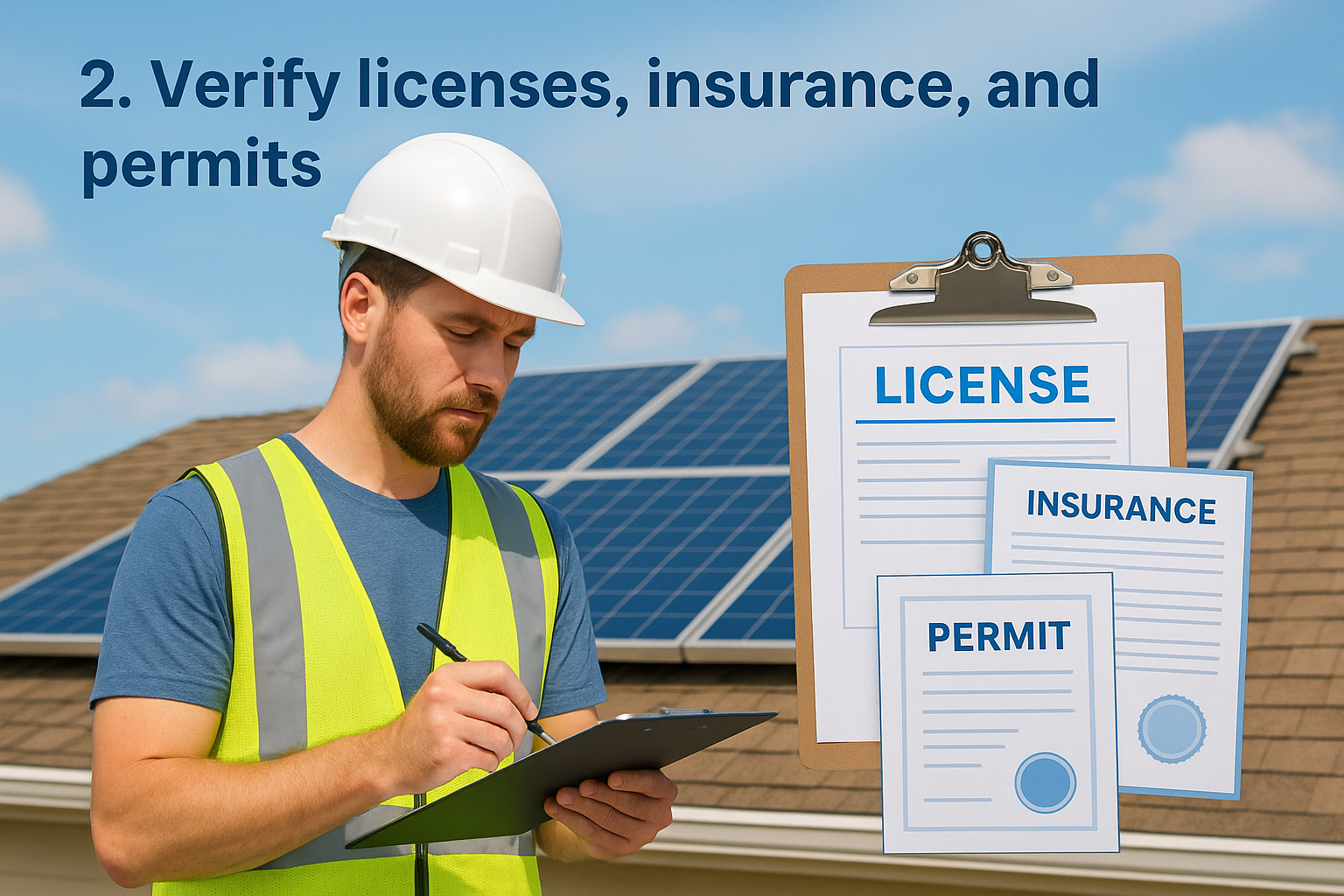
Licenses and insurance are not formalities you can skip. In Florida, solar installers must hold specific state-issued contractor licenses, and the company you hire must pull the correct permits for your local jurisdiction. Skipping this step puts your roof, your home, and your ability to collect on homeowner’s insurance claims at serious risk.
What to check
Florida requires solar contractors to hold a state-certified electrical or solar contractor license issued by the Florida Department of Business and Professional Regulation (DBPR). You can verify any license number directly on the DBPR website in minutes. Also confirm the company carries general liability insurance and workers’ compensation coverage, so you are not held responsible if someone is injured on your property.
Questions to ask
- What is your Florida contractor license number?
- Does your company carry workers’ compensation for all installation crew members?
- Will you pull the required permits for my county before work begins?
Documents to request
Ask for a current certificate of insurance naming you as an additional insured, and request the actual permit application before installation starts. A reputable installer handles permitting as a standard part of the job, not an afterthought.
If a company discourages you from pulling permits, treat that as a serious warning sign.
Red flags
Be cautious of any installer who offers a cash discount to skip permits or who cannot produce a valid DBPR license number. When thinking about how to choose a solar panel installer, proper licensing is a baseline requirement, not a bonus feature.
3. Compare system design, not just panel wattage
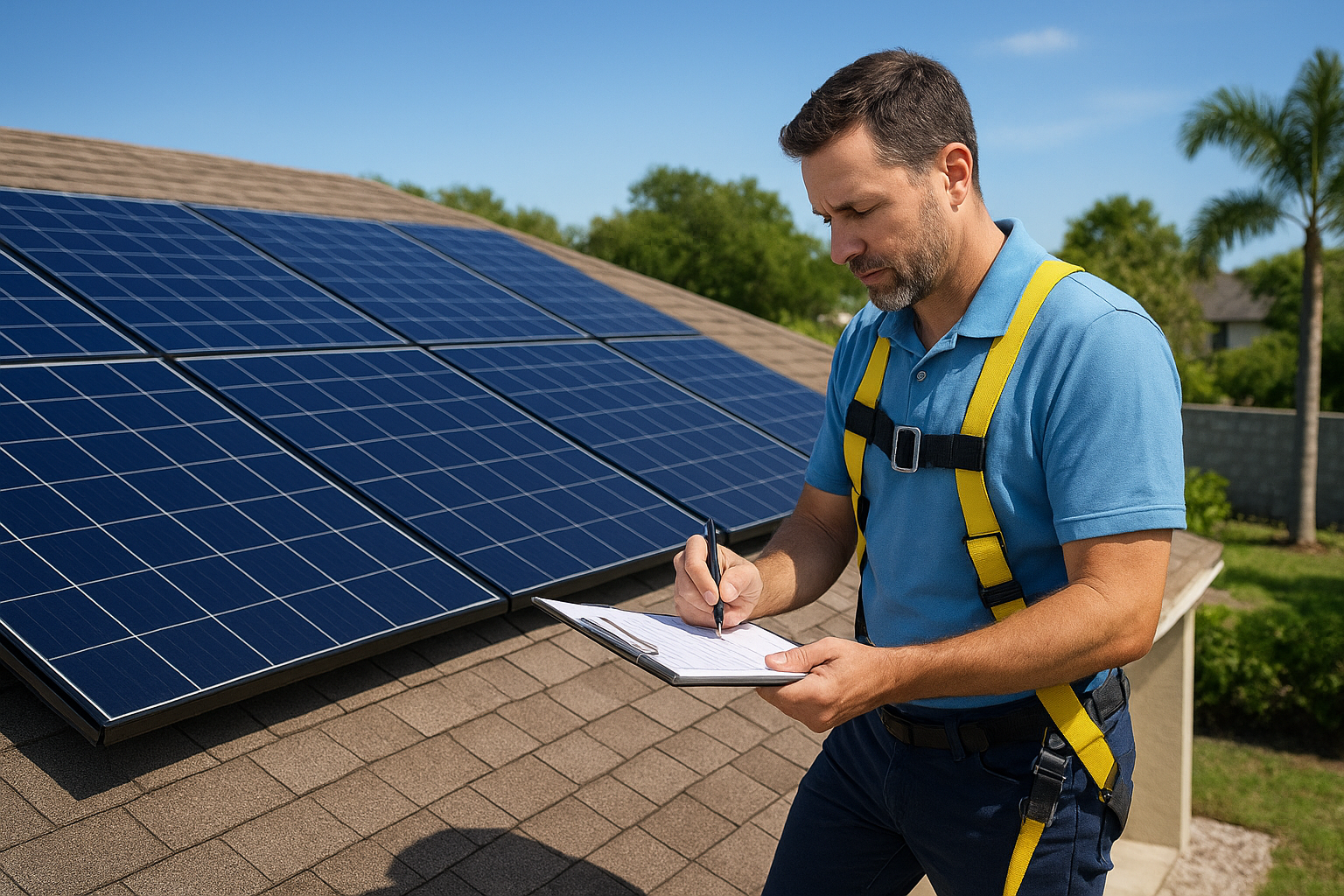
A high wattage panel means nothing if the system is poorly sized for your actual energy use. The right installer will analyze your electricity bills and design a system that matches your real consumption patterns, roof orientation, shading, and local utility rate structure rather than just pushing the biggest panels available.
What to check
Ask to see a detailed production estimate that shows projected annual kilowatt-hour output based on your specific roof and location. Florida’s solar irradiance varies between the Gulf Coast and the Atlantic side, so a site-specific design matters more than a generic quote built on average numbers.
Questions to ask
Press every installer for specifics on how they sized your system. Vague answers here often mean the proposal is a template, not a custom plan built around your home and energy habits.
- How did you calculate my system size?
- What shading analysis tools did you use?
- Does your design account for future energy needs like an EV charger or pool pump?
Documents to request
Request a written system design proposal that includes a shading report, roof layout diagram, and a year-by-year production estimate. These documents confirm whether the installer actually evaluated your property or just filled in a standard template.
A proper system design should be specific to your home, not recycled from a previous job.
Red flags
Watch out for installers who quote you a system based only on your square footage or who cannot explain why they chose a specific number of panels. When thinking about how to choose a solar panel installer, a vague design process is a reliable sign that real-world performance results will disappoint.
4. Get clear on equipment, warranties, and service
The panels and inverters on your roof will be there for 25 years or more, so the equipment quality and the warranty backing it up matter as much as the installation itself. When thinking about how to choose a solar panel installer, ask specifically which brands they use and whether they have a certified relationship with those manufacturers.
What to check
Confirm that the installer uses tier-one solar panels and inverters from manufacturers with established track records. Certifications like Tesla Certified Installer or Enphase Platinum Installer signal that the company has met manufacturer standards for training and installation quality, which often translates to stronger warranty support.
Questions to ask
Put these questions to every installer you evaluate:
- What panel and inverter brands do you install, and why?
- Who handles the warranty claim if my equipment fails: you or the manufacturer?
- Do you offer a workmanship warranty separate from the equipment warranty?
Documents to request
Ask for the written manufacturer warranty documents for both panels and inverters before signing. Also request a copy of the installer’s own workmanship warranty in writing, which covers defects in installation rather than equipment failure.
An installer who can hand you both documents on the spot is one who stands behind their work.
Red flags
Be cautious of companies that cannot name their equipment brands upfront or that bundle all warranty terms into vague contract language. Separate, clearly written warranties protect you if problems surface years after installation.
5. Understand pricing, financing, and total value
Solar quotes are hard to compare because system size, equipment quality, and financing terms all affect the final number. The cheapest bid is rarely the best value, and the most expensive one is not automatically the safest choice. When thinking about how to choose a solar panel installer, your goal is to understand what you are actually paying for before you sign.
What to check
Look beyond total system cost and compare cost per watt across competing quotes. This single figure normalizes pricing so you can make a direct comparison. Also evaluate your financing options, since a cash purchase, solar loan, or lease each carry different long-term cost profiles that affect your return on investment.
Questions to ask
Direct questions reveal whether a quote is complete or carries hidden charges:
- What is the cost per watt for this system?
- Does the quoted price include all permits, interconnection fees, and installation labor?
- What financing rates and loan terms do you offer, and are there prepayment penalties?
Documents to request
Request a written itemized quote that breaks down equipment costs, labor, permits, and any dealer fees attached to financing. This lets you compare each line item across multiple bids rather than just the bottom-line price.
A detailed itemized quote protects you from hidden fees that only surface after you sign.
Red flags
Walk away if a company refuses to itemize costs or pressures you to sign before reviewing competing bids. Vague pricing structures and high-pressure tactics are reliable signs that the total cost of ownership will be higher than the number they quoted you.
6. Confirm timeline, communication, and workmanship
A solar installation affects your home, your roof, and your daily schedule for weeks. Knowing exactly when work will start and finish and having a clear point of contact throughout the project keeps you informed and gives you real grounds to hold the installer accountable if something goes wrong.
What to check
Confirm that the installer provides a written project timeline that covers permit submission, equipment delivery, installation date, and utility interconnection. Florida utility interconnection alone can add several weeks to the process, so a realistic schedule protects you from surprises.
Questions to ask
Pin down the specifics before the contract is signed, because vague commitments on timeline and communication are hard to enforce later.
- What is the expected timeline from contract signing to system activation?
- Who is my dedicated point of contact during the project?
- How do you handle delays in permitting or equipment delivery?
Documents to request
Request a written project schedule with milestone dates and a clear description of the workmanship standards the crew will follow. This document gives you a concrete reference point if the project falls behind or if installation quality falls short of what was promised.
A company that cannot provide a written schedule before signing is one that has not planned your project carefully.
Red flags
When figuring out how to choose a solar panel installer, poor communication during the sales process almost always predicts poor communication during installation. Walk away from any installer who deflects timeline questions or cannot name a single dedicated contact for your project.
Make your choice with confidence
Knowing how to choose a solar panel installer comes down to asking the right questions and requiring written answers before you sign anything. The six factors covered here, from local track record and licensing to equipment warranties and project timelines, give you a reliable framework to compare any installer on the same terms.
You do not need to take a company’s word for their quality. Request documents, verify licenses, and contact references to confirm that a company’s claims hold up under basic scrutiny. The installers worth hiring will welcome that process because they have nothing to hide.
If you are ready to work with a Florida-based team with over 40 years of experience and more than 50,000 completed installations, contact Advance Solar & Spa to get a site-specific system design and a detailed quote. Your investment deserves a company that stands behind every panel they install.