
If you’ve had solar panels on your roof for a while, or you’re thinking about getting them, you’ve probably wondered: do solar panels need to be cleaned? The short answer is yes, but the longer answer depends on where you live, what’s around your home, and how much energy loss you’re willing to accept. Here in Florida, a mix of pollen, dust, bird droppings, and humidity can build up on panels faster than most homeowners expect.
At Advance Solar & Spa, we’ve installed and maintained over 50,000 solar systems across Florida since 1983. That hands-on experience has given our team a clear picture of how panel cleanliness affects real-world energy production, and when it actually makes financial sense to act on it. We’re not guessing here. We see the performance data from systems in Fort Myers, Naples, Sarasota, and Fort Lauderdale every day.
This guide covers everything you need to know: how dirty panels affect output, how often to clean them, what it costs, and whether you should DIY or hire a professional. We’ll also share Florida-specific tips that account for our unique climate and common mistakes that can void your warranty or damage your system.
Do Florida solar panels need cleaning?
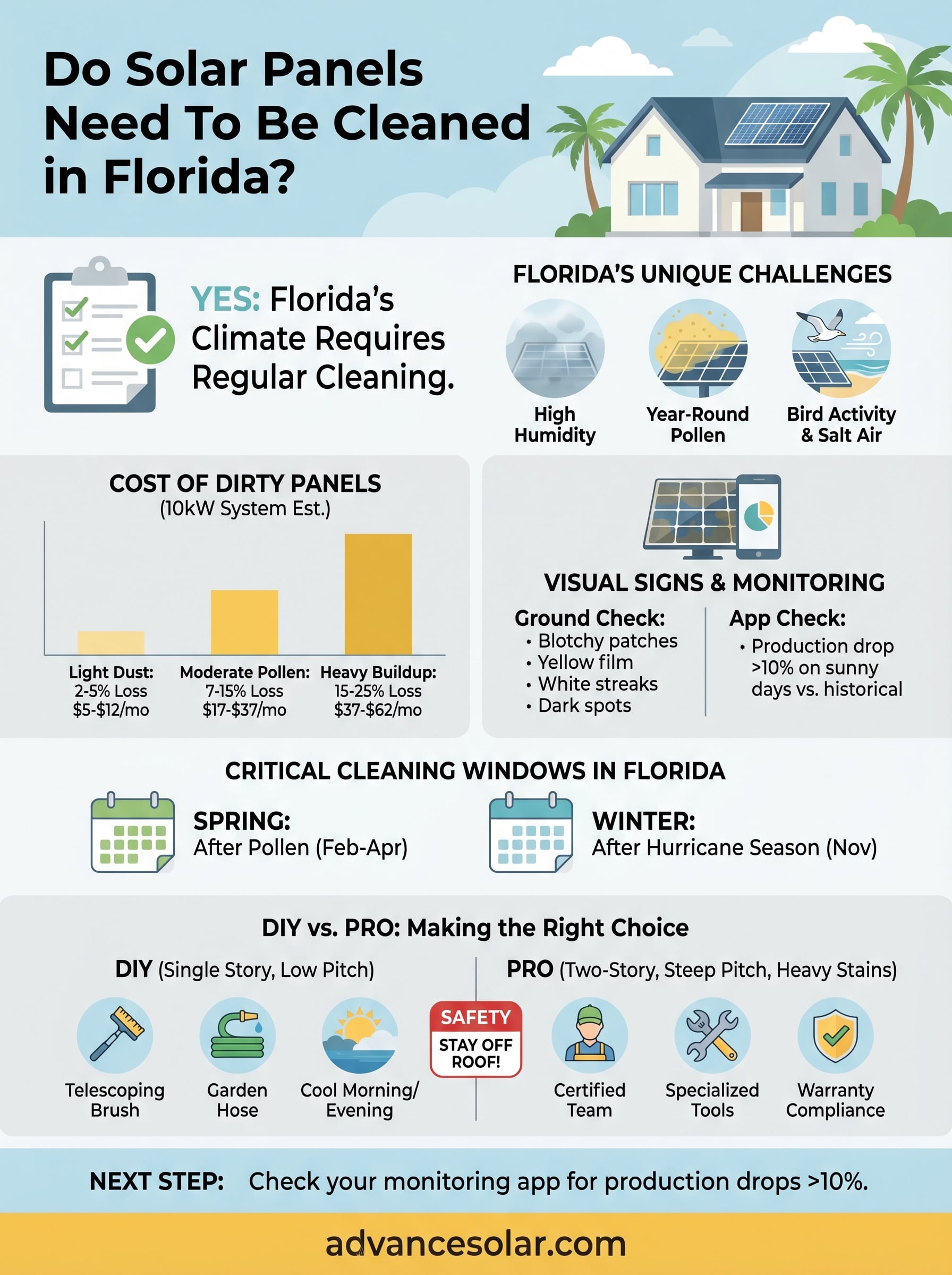
Yes, solar panels in Florida need to be cleaned, but the reason isn’t just general dirt. Florida’s specific climate creates a combination of factors that accelerate buildup on panel surfaces faster than in most other states. High humidity, year-round pollen seasons, and frequent bird activity all contribute to a layer of grime that reduces the amount of sunlight reaching your solar cells.
In Florida, panel soiling can reduce energy output by anywhere from 5% to 25%, depending on how long it’s been since the last cleaning and what has accumulated on the surface.
What Florida’s climate does to your panels
Florida homeowners deal with a unique mix of soiling sources that make panel maintenance more pressing here than in drier states like Arizona, where low humidity means less organic buildup. In Florida, the combination of salt air near the coast, pine pollen that coats surfaces in a thick yellow layer each spring, and bird droppings from large populations of osprey, ibis, and starlings creates a stubborn film on glass surfaces that light rain rarely washes away completely.
Humidity makes the problem worse. When moisture combines with pollen and dust, it bakes onto the panel surface in Florida’s heat and forms a harder residue than dry dust alone would create. Panels with a low tilt angle (under 10 degrees) shed water poorly and allow more debris to sit on the surface between rain events, which is a common setup in Florida where roofs are often closer to flat than steep.
How much output can dirty panels cost you?
This is where the question of whether do solar panels need to be cleaned becomes a financial one. A light dusting from a dry week might cut your output by 2-5%, which is barely noticeable. But a full season of pollen, bird droppings, and salt residue can drop your production by 15-25%, which adds up fast when you’re reviewing your utility bill.
Here’s a simple breakdown of what that looks like for a typical Florida system:
| Soiling Level | Estimated Output Loss | Approximate Monthly Cost Impact (10kW system) |
|---|---|---|
| Light dust | 2-5% | $5-$12 |
| Moderate pollen/grime | 7-15% | $17-$37 |
| Heavy buildup (droppings, salt) | 15-25% | $37-$62 |
Your actual numbers depend on your system size and local utility rate, but even at the lower end of that table, consistent soiling means you’re producing less power than you paid for every single month.
How to tell your panels need cleaning
You don’t need to climb on your roof to figure out whether your panels have crossed the line from "could use a rinse" to "losing real money." Most of the signals are visible from the ground or available on your phone. Knowing what to look for saves you from cleaning on a fixed schedule when the panels are actually fine, or skipping it when they really aren’t.
Visual signs to check from the ground
Stand at a distance and look at your array during the early morning or late afternoon when sunlight hits the panels at a low angle. Clean glass reflects light evenly with a consistent sheen. If you see blotchy patches, yellow or brown film, or obvious white streaks from bird droppings, those areas are blocking sunlight from reaching the cells below.
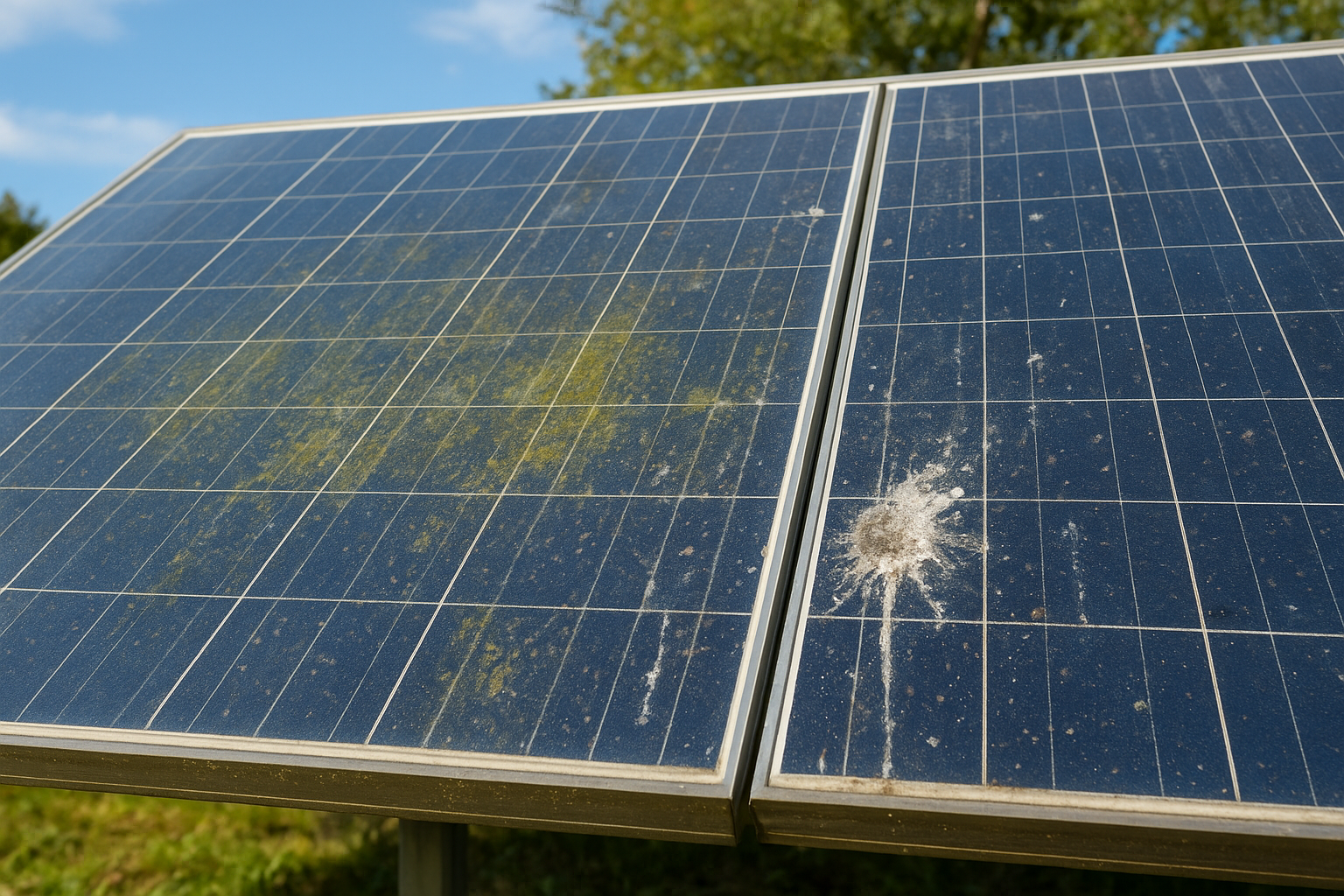
A single large bird dropping sitting over a cell can disproportionately reduce output for that entire panel string, not just the cell it covers.
Look specifically for these common warning signs:
- Yellow or greenish coating across a large portion of the panel (pollen or algae)
- White mineral streaks running down from the top edge (hard water deposits from rain runoff)
- Dark spots or clusters that don’t move with the angle of light (bird droppings or leaves)
- Visible dust accumulation along the bottom frame edge where debris settles
Check your monitoring app
If you have an Enphase or Tesla monitoring system, pull up your production history and compare your recent daily output to the same period from last year. A steady downward trend on sunny days with no equipment alerts points directly to soiling.
Flag any day where production dropped 10% or more below your historical baseline without a corresponding weather reason. That gap tells you it’s time to ask do solar panels need to be cleaned before you lose another month of output.
How often to clean solar panels in Florida
Florida’s climate means a one-size-fits-all cleaning schedule won’t work for your system. Most Florida homeowners get the best results by cleaning their panels two to three times per year, timed around the events that cause the heaviest buildup. That said, your specific location, roof pitch, and nearby vegetation may push that number up or down.
Florida’s two critical cleaning windows
The most important cleaning window in Florida is right after spring pollen season, which typically runs from late February through April. During this stretch, pine and oak pollen coat panel surfaces with a thick yellow film that rain doesn’t fully remove. Your second priority window is after hurricane season ends in November, when wind-driven debris, salt spray, and residue from storms accumulate across your array.
If you only clean your panels once a year, schedule it in May, right after pollen season, and you’ll recover the majority of output lost from the most damaging soiling period.
Coastal homeowners in areas like Fort Myers, Naples, or Fort Lauderdale often need an additional cleaning mid-summer because salt air deposits build faster near the water. Inland properties surrounded by trees may also need more frequent attention due to sap, seeds, and bird activity from roosting.
Adjusting your schedule based on your setup
Use this quick reference to figure out where your system falls:
| Your Situation | Recommended Cleanings Per Year |
|---|---|
| Flat or low-pitch roof, inland | 3 times |
| Steep pitch roof, inland | 2 times |
| Coastal location (within 5 miles of water) | 3-4 times |
| Near large trees or heavy bird activity | 3-4 times |
Check your monitoring data every 30 days to catch any unexpected production drops between scheduled cleanings. If you notice output falling before your next scheduled date, treat it as a signal to act early rather than waiting.
DIY cleaning steps and safety rules
Cleaning your own panels is straightforward if you follow the right process and stay off the roof when conditions are unsafe. Most residential systems can be cleaned from the ground or from a ladder at the eave, which reduces your risk significantly. Before you decide whether do solar panels need to be cleaned on your schedule, make sure you have the right tools and a clear understanding of what can damage the glass.
What you need before you start
Gather your supplies ahead of time so you’re not improvising on a ladder. Using the wrong tools is one of the most common ways homeowners scratch panels or leave residue that accelerates future buildup.
Here’s what you need:
- Soft-bristle brush or squeegee with a long telescoping handle (at least 10 feet for one-story roofs)
- Bucket of plain water or a garden hose with a gentle spray nozzle
- Mild, non-abrasive soap only if needed for heavy buildup (dish soap at one drop per gallon works)
- Clean microfiber cloth for frame edges if accessible
Never use abrasive scrubbers, metal tools, or high-pressure washers on your panels. These scratch the anti-reflective coating and cause permanent output loss.
Step-by-step cleaning process
Pick a cool morning or evening to clean. Panels heated by midday sun can crack when cold water hits them, and soapy water dries too fast in direct sunlight, leaving streaks.
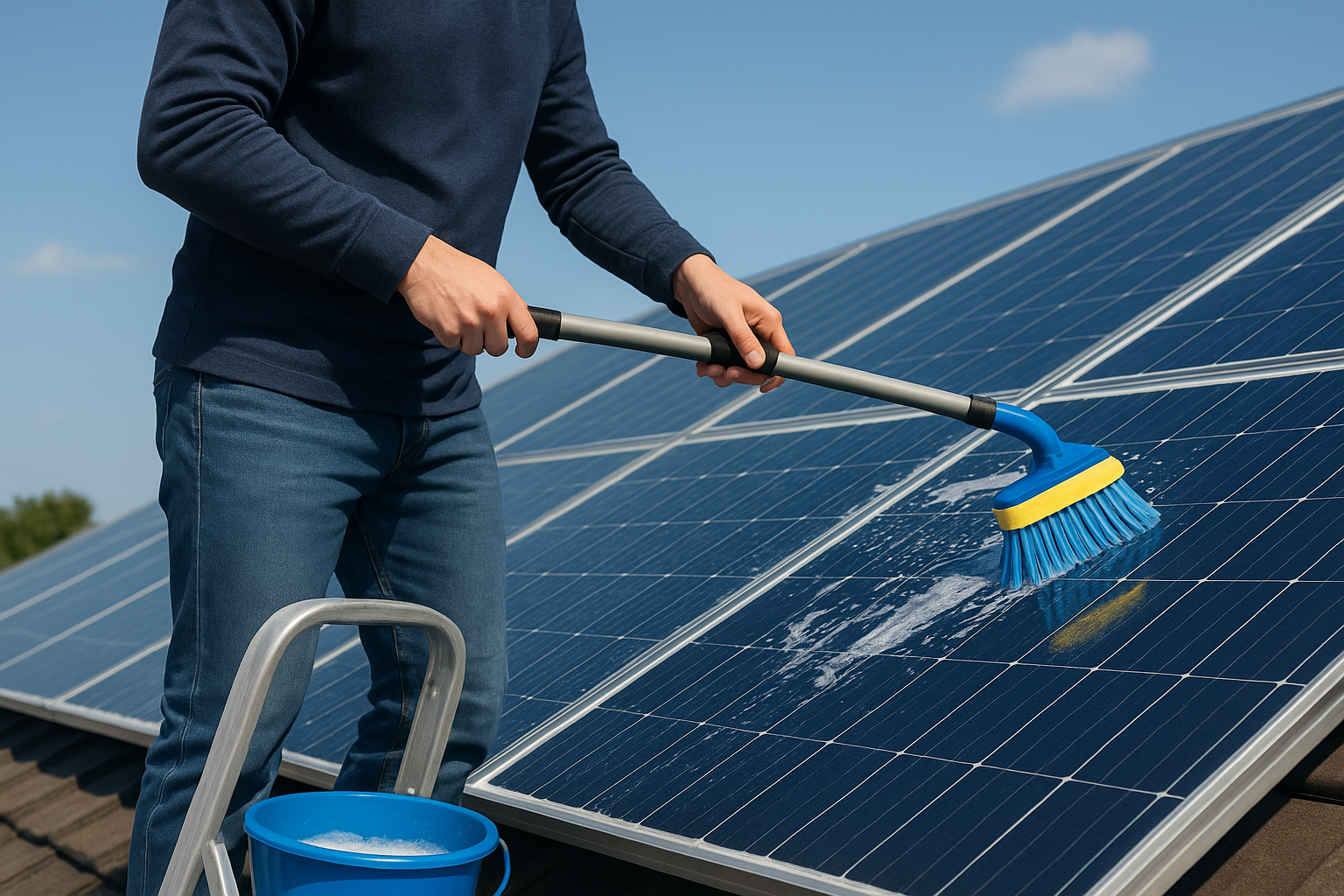
Follow these steps in order:
- Rinse the panels with a gentle stream of water to loosen surface debris
- Apply soapy water with your soft brush using light, circular strokes
- Rinse thoroughly from top to bottom to push debris off the lower edge
- Squeegee off excess water if streaking is a concern
Safety rules to follow every time
Never step onto your roof to clean panels unless you have fall-arrest equipment and experience working at height. Most Florida roofs have a low-enough pitch that a telescoping handle reaches the full panel surface from a ladder at the gutter line.
Check the weather forecast before you start: avoid cleaning before rain (wasted effort) and never work on a wet roof or during high winds. Turn off your solar system at the inverter before applying any water near electrical connections.
When to hire a pro and what it costs
DIY cleaning works well for single-story homes with accessible rooflines, but certain situations make hiring a professional the safer and smarter choice. If your system is underperforming despite a recent cleaning, or if you have panels on a second-story roof with a steep pitch, the risk of injury or panel damage outweighs the savings from doing it yourself.
Signs DIY isn’t the right call
Some soiling types require more than a brush and garden hose to clear properly. Hard water mineral deposits, bird dropping stains baked on through a full Florida summer, and algae growth all resist standard rinsing and need targeted treatment to remove without scratching the glass.
If you notice white calcium streaks or dark algae patches that don’t respond to gentle scrubbing, stop and call a professional before you cause permanent surface damage.
Watch for these situations where professional service makes sense:
- Two-story roof or pitch above 4:12 where ladder access is unsafe
- Warranty language in your panel documentation that requires certified cleaning
- Visible algae or lichen growth that needs chemical treatment
- Output still 10% or more below baseline after a DIY cleaning
What professional cleaning costs in Florida
Professional solar panel cleaning in Florida typically runs $100 to $300 for a standard residential system, depending on system size, roof height, and soiling severity. Most cleaning companies charge per panel or per kilowatt of system capacity, so a 20-panel system averages around $150 to $200 for a full service visit.
Ask your provider whether the quote includes a post-cleaning production check to confirm output has recovered. At Advance Solar & Spa, our service team reviews your monitoring data before and after cleaning to verify the panels are performing where they should. Whether you need to answer do solar panels need to be cleaned or you already know they do, scheduling service around Florida’s pollen and storm seasons gives you the best return on that investment.
Next steps for your system
Now that you know do solar panels need to be cleaned and exactly how to handle it in Florida, the next move is simple: check your monitoring app today and pull up your last 30 days of production data. Compare your output against the same period from last year and look for any gap that doesn’t line up with weather. If you see a drop of 10% or more on clear days, your panels need attention before that loss compounds another month.
Your cleaning schedule, the right tools, and knowing when to call a pro are all covered in this guide. Put your first cleaning on the calendar now, before spring pollen season peaks and costs you another month of reduced output. If your system needs a professional inspection, a production review, or full service support, contact the Advance Solar & Spa team to get your system back to full performance.