Tesla Powerwall Vs Backup Generator: Which Wins In Florida?
-
Share
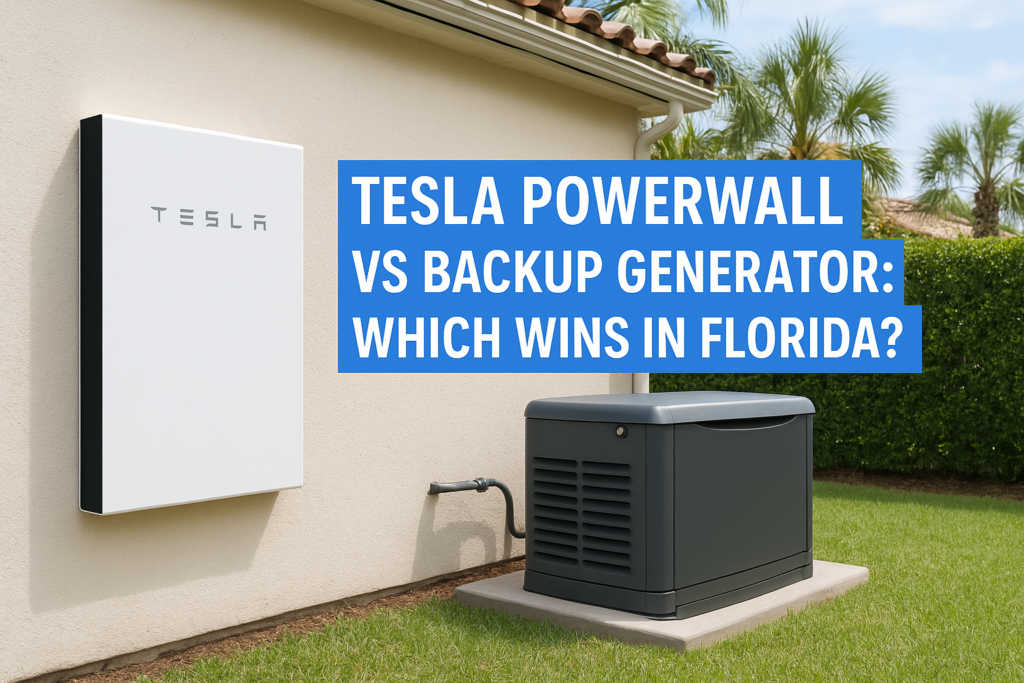
Florida homeowners know the drill: hurricane season rolls in, the power goes out, and suddenly your whole household is at the mercy of the grid. That reality is pushing more people to seriously weigh the Tesla Powerwall vs backup generator debate before the next storm hits. Both options keep your lights on when the grid fails, but they work in fundamentally different ways, and the right choice depends on more than just sticker price.
One runs on gasoline or propane and kicks in when the power drops. The other stores energy from the sun (or the grid) in a compact battery system mounted to your garage wall. The costs, maintenance demands, noise levels, and long-term value of each option vary significantly, especially in a state where solar production is among the highest in the country.
At Advance Solar & Spa, we’ve installed over 50,000 systems across Florida since 1983, and as a Tesla Certified Installer, we work with Powerwall technology daily. This article breaks down both options head-to-head, covering cost, reliability, fuel dependency, and overall performance, so you can make a confident, informed decision for your home.
Why Florida backup power decisions matter
Florida sits in a unique position when it comes to home energy resilience. The state ranks near the top nationally for both solar irradiance and hurricane exposure, which means backup power is not a luxury here, it is a practical necessity for most households. When you are comparing the tesla powerwall vs backup generator, the Florida context shapes every part of your decision.
Hurricane season and grid vulnerability
Atlantic hurricane season runs from June through November, and Florida takes more direct hits than any other state. When a major storm makes landfall, outages can last anywhere from a few hours to several weeks depending on how close you are to the storm’s path. For households with medical equipment, refrigerated medications, or young children, those outages carry real consequences beyond inconvenience.
The Florida Division of Emergency Management consistently reports that residential power outages following major hurricanes extend well beyond the first week in the hardest-hit areas.
Power restoration follows a priority system, so neighborhoods further from substations often wait longer than densely populated areas for repair crews to arrive. If you live in a rural or semi-rural part of Southwest or Southeast Florida, reliable backup power is not optional, it is a baseline requirement.
The financial cost of going without power
A multi-day outage hits your finances faster than most people expect. Food spoilage from a lost refrigerator and freezer alone can run several hundred dollars, and that figure does not include hotel stays, restaurant meals, or lost productivity if you work from home. Florida homeowners often lose $1,000 or more per major outage event when all costs are totaled.
Filing small insurance claims for these losses can raise your premiums over time. Investing in a dependable backup power system converts recurring storm-season losses into a one-time capital expense, which makes much more financial sense across a 10 to 20 year horizon.
Why solar changes the math in Florida
Florida averages around 5.5 peak sun hours per day, putting it among the highest solar-producing states in the country. That fact matters directly when you are evaluating battery storage like the Powerwall, because your system recharges automatically as long as the sun comes out after a storm passes. A generator cannot do that on its own.
This solar advantage gives battery-based backup solutions a meaningful edge in Florida that they simply do not carry in northern or cloudier states. When you compare upfront costs against long-term utility, the calculus looks different here than it does in most other parts of the country, and that difference should guide how you weigh your options.
Tesla Powerwall in Florida: how it works and limits
The Tesla Powerwall is a wall-mounted lithium-ion battery that stores electricity from your solar panels or the utility grid and releases it when the grid goes down. When you compare the tesla powerwall vs backup generator, this automatic, instant switchover is one of the most practical differences. The Powerwall detects an outage and transitions your home to battery power in a fraction of a second, so fast that most appliances and devices never register the interruption.
How the Powerwall stores and delivers energy
Each Powerwall 3 unit holds 13.5 kWh of usable capacity and can deliver up to 11.5 kW of continuous power. In Florida, your solar panels recharge the battery each day the sun is out, which means a post-hurricane recovery period with even partial sunshine can keep your critical loads running for days without any fuel. Tesla’s app gives you real-time visibility into storage levels, solar production, and home consumption, so you always know exactly where you stand.
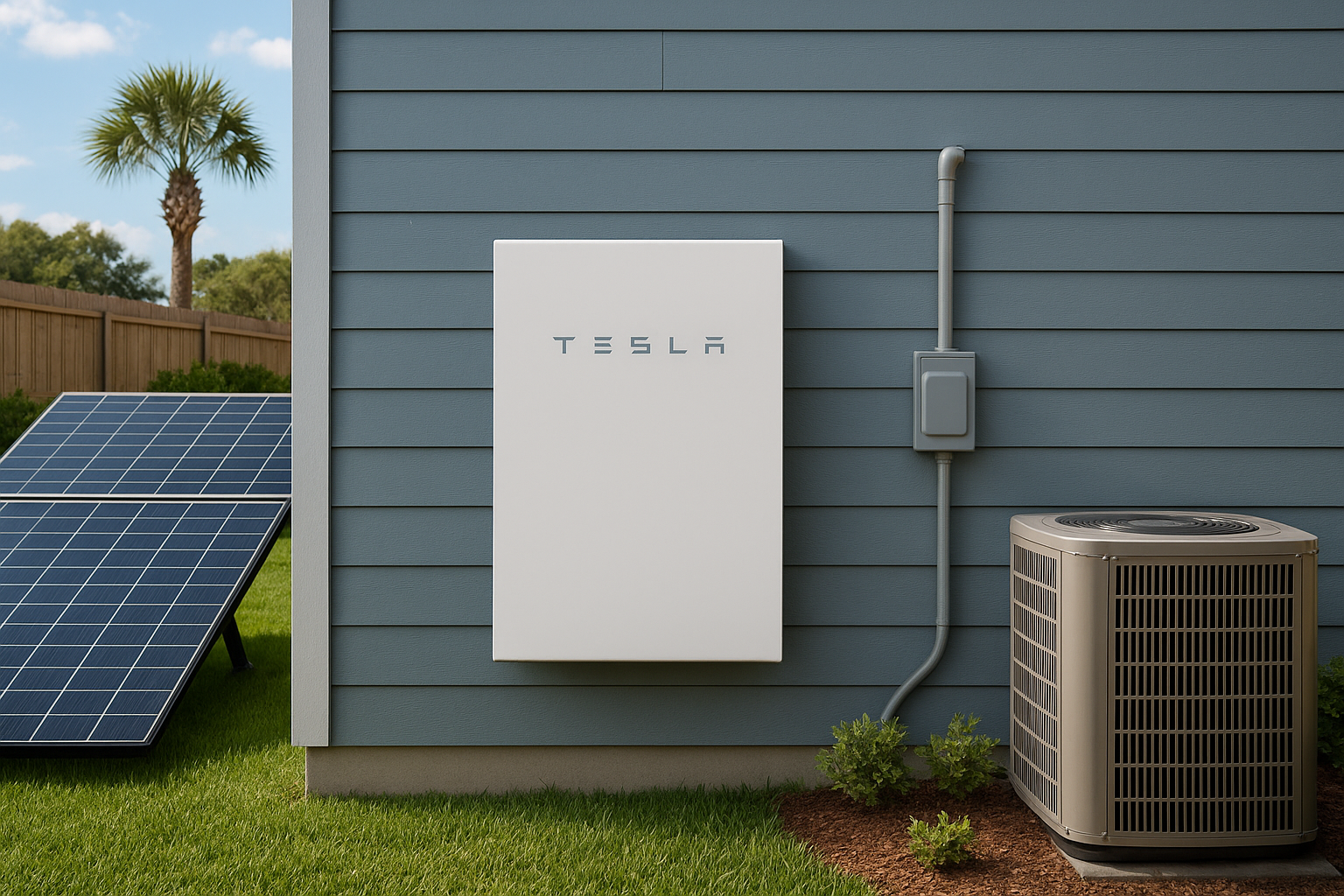
If your solar system produces around 30 kWh per day in Florida, a single Powerwall can cover essentials like the refrigerator, lights, router, and phone charging while your panels continue refilling the battery each morning.
Where the Powerwall has limits
The Powerwall does have real constraints you need to understand before committing. A single unit cannot power high-draw appliances like a central air conditioner, electric water heater, or pool pump simultaneously without draining the battery quickly. Most Florida homeowners who want whole-home coverage during an extended outage install two or three Powerwall units to handle the full load.
Extended cloud cover after a major hurricane compounds this challenge. If your panels produce little to no power for two or three consecutive days, your stored capacity depletes faster than the system can recover, which is exactly when you need it most.
Whole-home backup generators in Florida: how they work
Whole-home standby generators run on natural gas or propane and start automatically when your utility power cuts out. Unlike the battery-based side of the tesla powerwall vs backup generator comparison, a generator creates electricity through an internal combustion engine, which means it burns fuel continuously for as long as you need power. For many Florida households, this continuous output is the main draw.
How a standby generator powers your home
A standby generator connects directly to your home’s electrical panel through an automatic transfer switch. When the grid drops, the transfer switch detects the outage and signals the generator to start, typically within 10 to 30 seconds. That brief gap is noticeable, and appliances, computers, and smart devices will restart after the switch triggers.
For homes with medical equipment like CPAP machines or refrigerated insulin, that 10 to 30 second startup delay matters and is worth factoring into your decision.
Most whole-home units sized for a standard Florida residence fall in the 20 to 22 kW range, which is enough to run central air conditioning, the refrigerator, lighting, and most outlets simultaneously without load management.
Fuel options and Florida-specific considerations
If your home connects to natural gas lines, a standby generator can run indefinitely as long as the gas supply holds. Propane is the more common option in areas of Florida without municipal gas service, but it requires you to maintain an on-site tank and monitor fuel levels before a storm arrives, since post-hurricane propane delivery can take days.
Florida’s hurricane-prone environment introduces a real supply chain risk. When a major storm tracks toward your area, propane and gasoline both sell out quickly at local suppliers. Running out of fuel mid-outage is a practical problem that battery storage systems simply do not share.
Powerwall vs generator in Florida: cost and performance
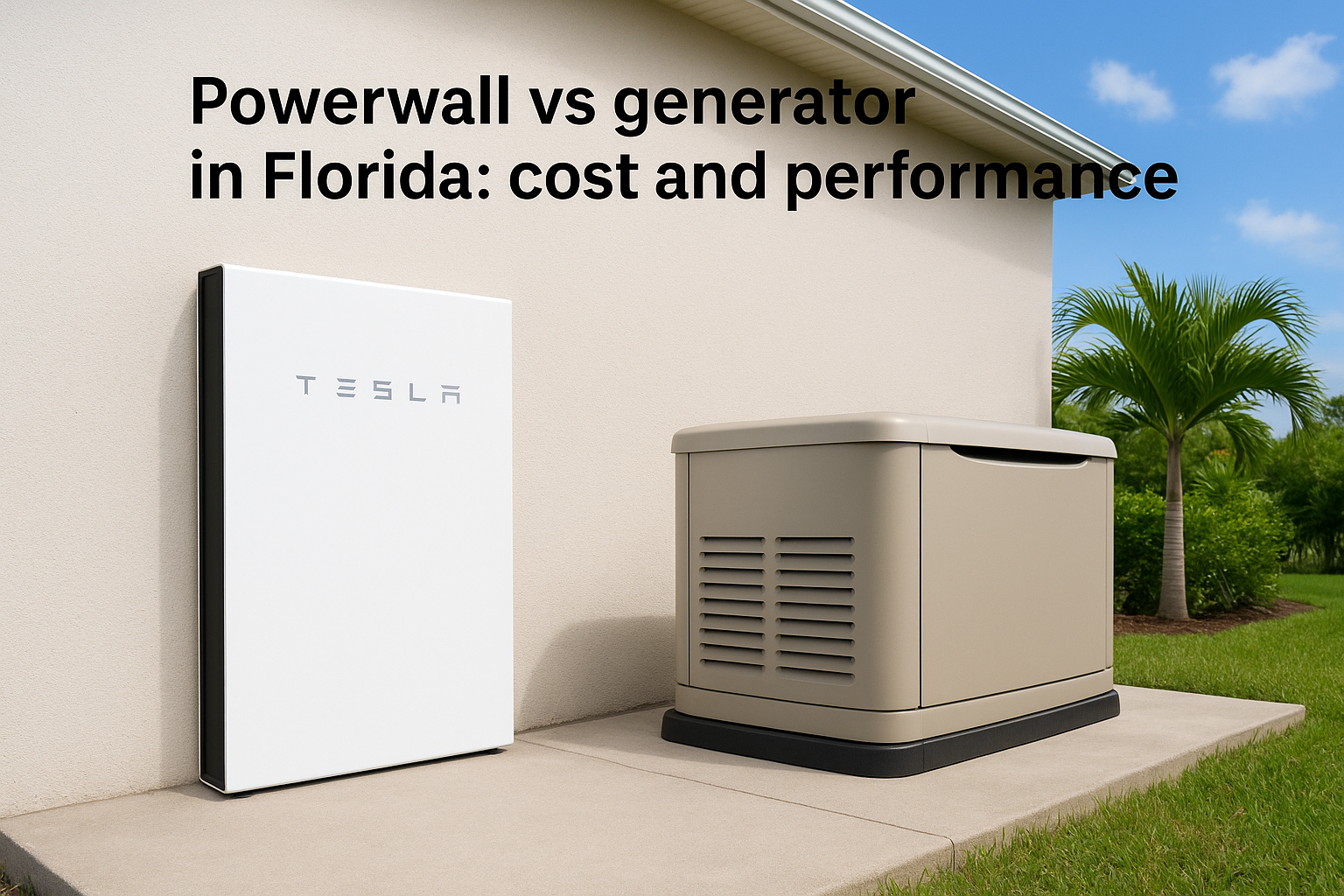
When you break down the tesla powerwall vs backup generator comparison by dollars and real-world output, the differences become concrete and easier to evaluate against your specific situation.
Upfront cost and installation
A single Tesla Powerwall 3 typically costs between $9,500 and $12,000 installed in Florida, including labor and gateway hardware. Most Florida homeowners who want meaningful whole-home coverage install two units, which pushes the total toward $18,000 to $24,000. A whole-home standby generator runs between $7,000 and $15,000 installed, depending on size and whether you need propane tank placement on the property.
If you pair a Powerwall installation with a new solar system, the federal solar tax credit currently covers 30% of the total project cost, which significantly changes the upfront math in your favor.
Long-term operating costs
Generators require regular maintenance, including oil changes, filter replacements, and annual servicing that typically runs $200 to $400 per year. Propane consumption during an extended outage adds up quickly, with a 20 kW generator burning roughly 2 to 3 gallons per hour under full load. A 250-gallon tank can empty in four to five days of heavy use, and post-hurricane propane delivery in Florida is rarely quick.
The Powerwall carries no fuel cost and minimal maintenance requirements across its warranty period. Tesla covers the unit for 10 years and guarantees it retains at least 70% of its original capacity by the end of that term. Over a 10-year window, the total cost of ownership for a Powerwall system often comes out lower than a comparable generator once you factor in fuel, servicing, and the bill savings your solar panels generate during normal grid operation.
How to choose and size the right backup system
Choosing between the tesla powerwall vs backup generator comes down to three practical factors: how much power you need, how long you need it, and what energy sources you can reliably access when a storm hits. Getting those three questions answered before you shop saves you from overspending or buying a system that leaves you short during a real outage.
Assess your critical load requirements
Start by listing every appliance and device you consider non-negotiable during an outage. Refrigerator, lights, router, phone charging, and medical devices form the typical baseline for most Florida households. Central air conditioning is the load that changes the math the most, since a 3-ton AC unit draws 3 to 5 kW and runs in cycles throughout the day.
If you want to run your AC through a multi-day outage, plan on installing at least two Powerwall units or selecting a generator rated at 20 kW or higher.
Use your most recent utility bill to find your average daily kWh usage, then identify which loads you can reduce during an outage and which you cannot. That number gives you a realistic sizing target rather than a rough estimate.
Match the system to your fuel access and storm timeline
If your home connects to natural gas lines, a standby generator becomes significantly more attractive because you never worry about running out of fuel. If you rely on propane or have no gas service, a battery-based system paired with solar panels removes that supply chain problem entirely. Florida’s post-hurricane fuel shortages are well-documented, and that single factor pushes many homeowners toward the Powerwall once they think it through.
Consider how quickly your area typically restores power after a major storm. Outages that clear within 24 to 48 hours favor a smaller battery setup, while week-long outages favor either a larger battery bank or a generator with an abundant fuel supply.
A simple way to decide
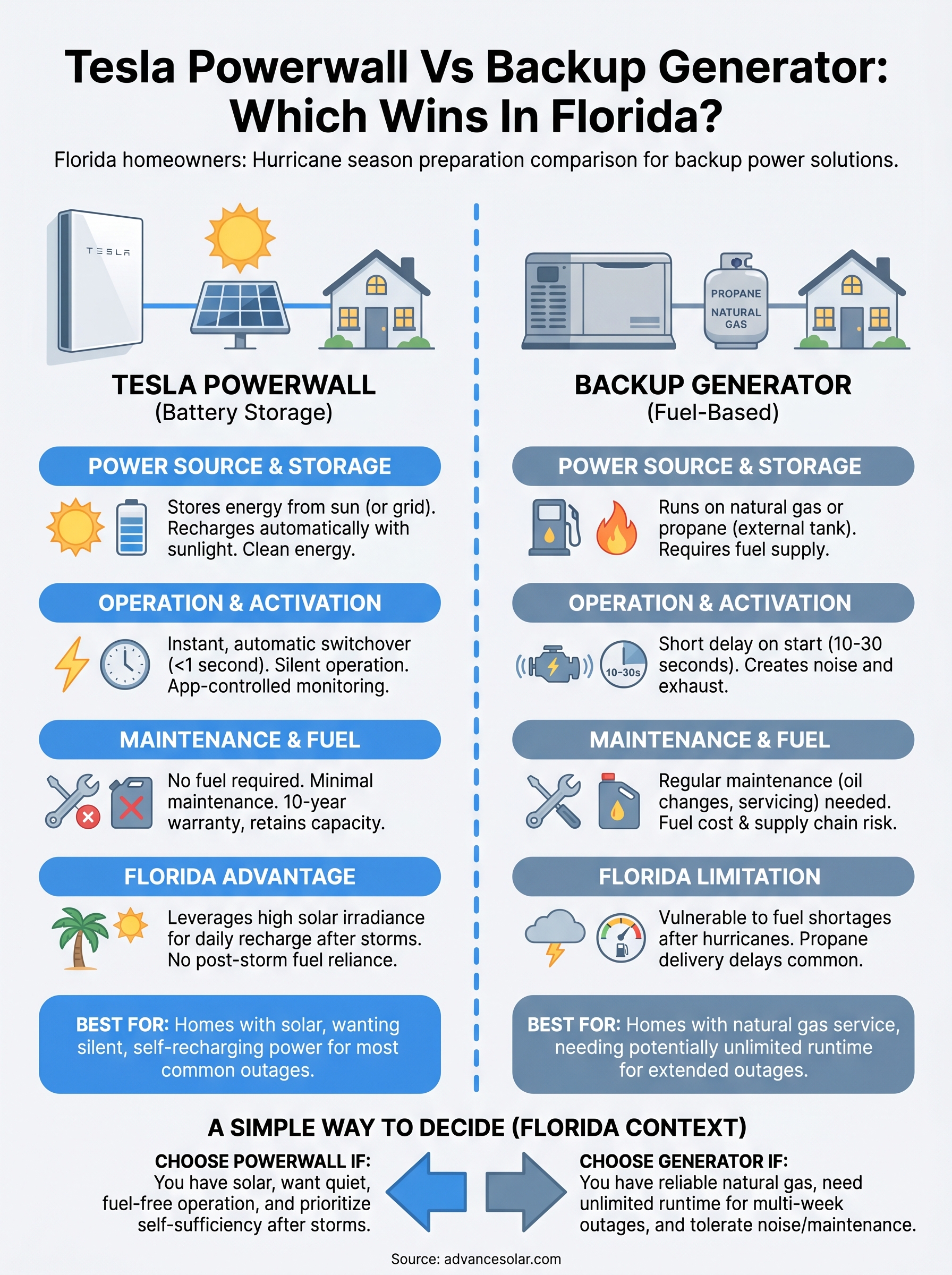
The tesla powerwall vs backup generator decision comes down to one core question: do you want a system that runs silently, recharges from your solar panels, and requires no fuel, or do you want unlimited runtime as long as you keep fuel on hand? If you live in Florida, connect to solar, and your outages typically run less than a week, the Powerwall is the stronger fit. If you have natural gas service and need to power a large home through extended multi-week outages without depending on sunlight, a standby generator earns serious consideration.
Most Florida homeowners we work with find that two Powerwall units paired with a solar system covers everything they actually need during hurricane season, at a lower long-term cost than a generator once fuel and maintenance stack up over time. If you want a clear recommendation tailored to your home and location, contact the team at Advance Solar & Spa and we will walk you through the numbers.