How Often Should Solar Panels Be Inspected In Florida?
-
Share
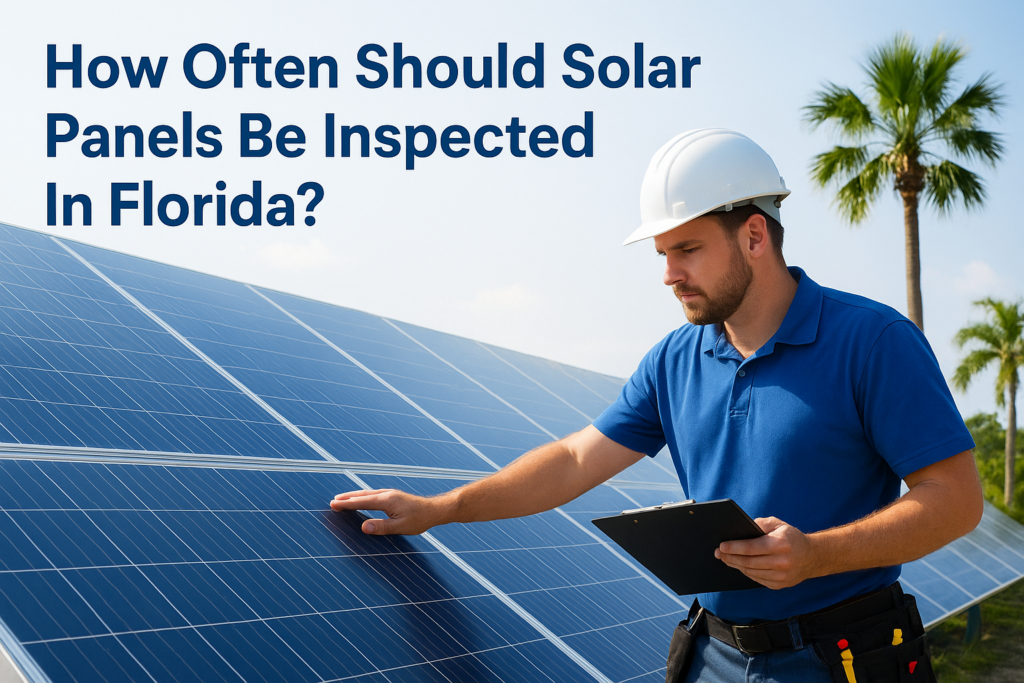
Solar panels are built to last decades, but Florida’s environment doesn’t make it easy on them. Between hurricane seasons, salt air along the coast, intense UV exposure, and the occasional iguana deciding your roof is a nice place to hang out, your system faces conditions that panels in other states simply don’t. So how often should solar panels be inspected to keep them running at peak output? The short answer is at least once a year, but several factors specific to Florida can change that timeline.
At Advance Solar & Spa, we’ve been installing and maintaining solar energy systems across Florida since 1983. With over 50,000 installations behind us and a full in-house service team, we see firsthand what happens when systems go years without a professional set of eyes on them, reduced energy production, undetected damage, and repairs that could have been avoided. Our licensed technicians handle inspections across both coasts of Florida, from Fort Myers and Naples to Fort Lauderdale and Sarasota.
This article breaks down how often your panels actually need inspection, what those inspections should cover, and the warning signs that mean you shouldn’t wait for your next scheduled checkup.
Why solar inspections matter in Florida
Florida’s climate is ideal for solar production, but that same environment accelerates system wear faster than most homeowners expect. High humidity, coastal salt air, and some of the most intense UV radiation in the country all take a toll on panels, wiring, connectors, and mounting hardware. A system that looks fine from the ground can have microcracks, corroded terminals, or loose racking that quietly drains your output every single month.
Florida’s climate creates unique wear patterns
Hurricane season runs from June through November, and even storms that don’t make direct landfall can drive debris into panels, vibrate mounting bolts loose, and coat surfaces with salt film that reduces efficiency. UV degradation also happens faster in Florida than in most of the US because the state receives more solar irradiance annually than nearly anywhere else in the country. That same sun that powers your system degrades anti-reflective coatings faster than standard manufacturer warranty assumptions account for.
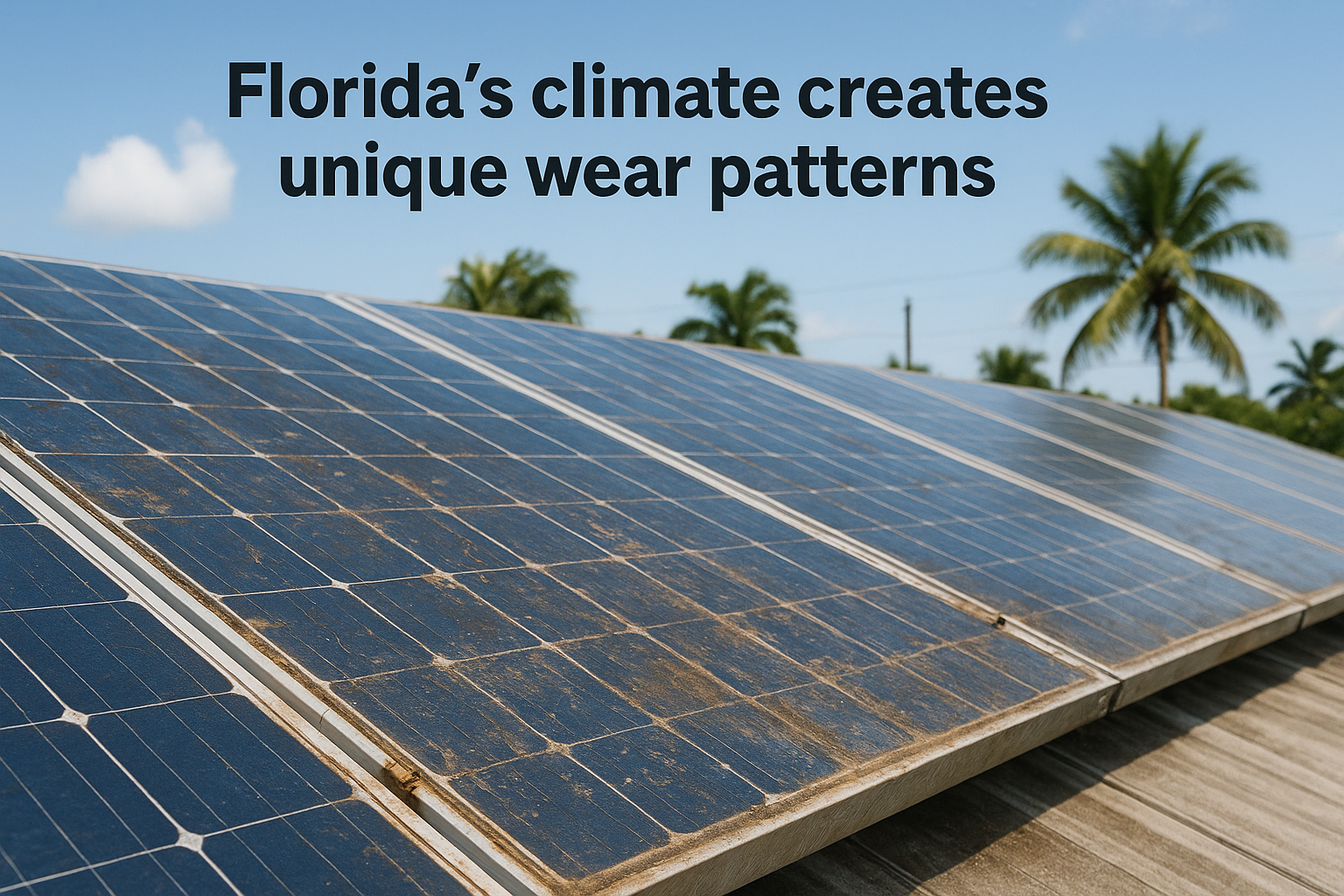
Getting ahead of climate-related damage through annual inspections keeps small problems from turning into expensive repairs after the next storm season.
Beyond the panels, Florida’s heat and humidity invite pest activity. Squirrels, birds, and iguanas frequently nest or burrow under rooftop arrays, and coastal iguanas in particular have been documented chewing through wiring. Algae and mold can also form on the underside of panels in humid conditions and compromise both structure and nearby electrical components.
What neglect actually costs you
Putting off inspections shifts small fixable problems into larger ones. A system running at 15% below its rated output still appears operational, but you absorb that efficiency loss through higher utility bills every month. When thinking about how often should solar panels be inspected from a financial standpoint, the answer becomes straightforward. Inspection costs are a fraction of replacing a failed inverter, repairing damage that deepened due to an undetected weak point, or losing favorable net metering status due to poor system documentation.
Recommended inspection schedule for Florida homes
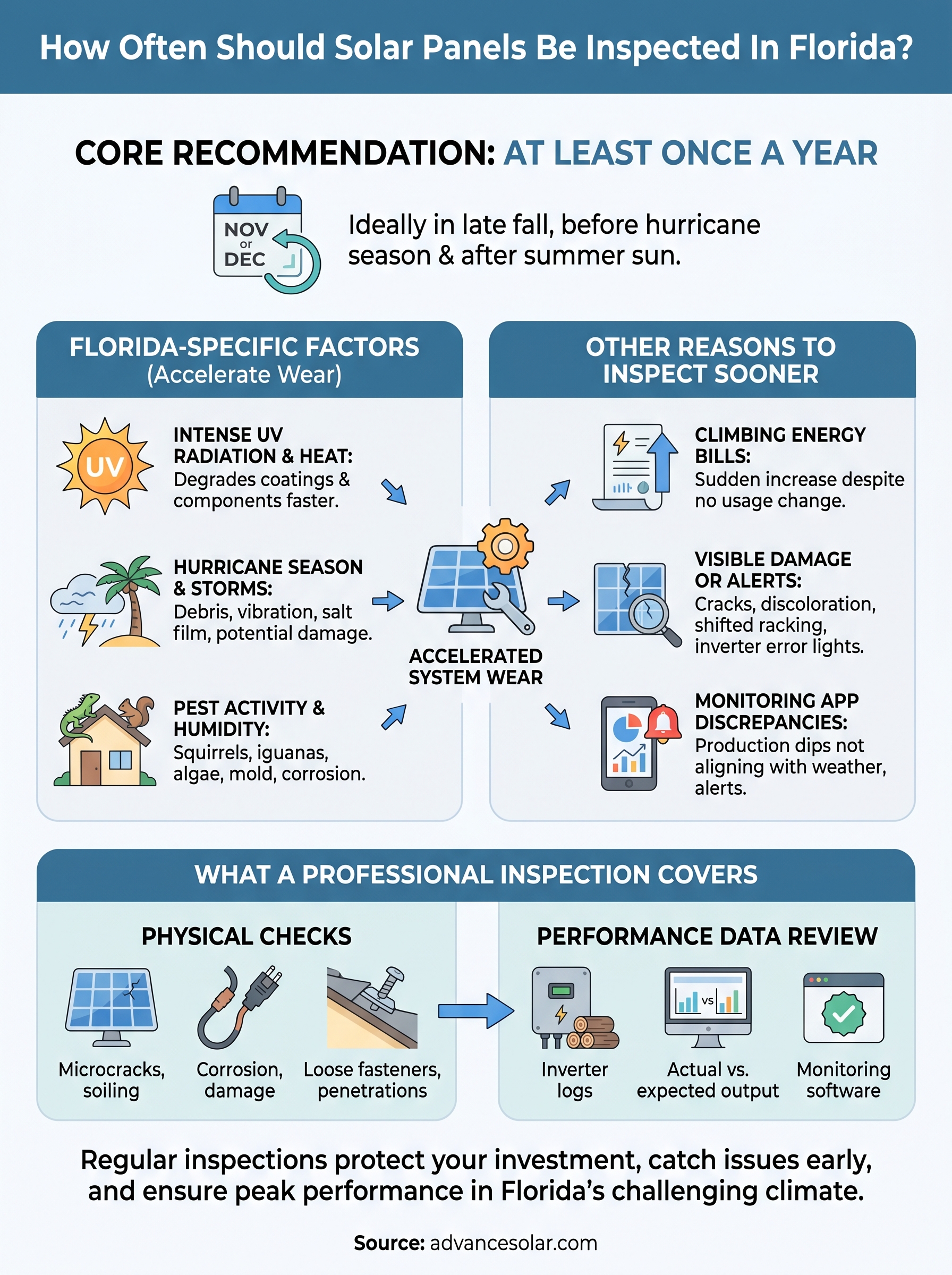
For most Florida homeowners, one professional inspection per year is the baseline recommendation. This aligns with what most manufacturers and installers advise when considering how often should solar panels be inspected in a standard climate. In Florida, scheduling that inspection in late fall means a technician can catch any storm-related damage before it compounds through the winter months.
Annual inspections as the baseline
Your annual inspection should cover the full system: panels, inverter, wiring, mounting hardware, and monitoring data. If your system is older than 10 years, consider bumping to twice yearly because components like inverters and connectors become more prone to failure with age and prolonged UV exposure.
Scheduling your inspection in November or December puts your system in strong condition heading into the new year and before the next hurricane season begins.
After major weather events
Any hurricane, tropical storm, or significant hail event warrants an immediate inspection regardless of where you are in your annual schedule. You should also call for an unplanned visit if a large branch falls near the array or you notice visible panel damage from the ground. Waiting until your next scheduled appointment after storm damage allows moisture intrusion, pest activity, and structural stress to deepen problems that a timely inspection would have resolved quickly.
What happens during a solar inspection
Knowing what a professional inspection covers helps you understand its value. A qualified technician works through every part of your system, not just the panels, to give you an accurate picture of how your investment is holding up.
Physical and electrical checks
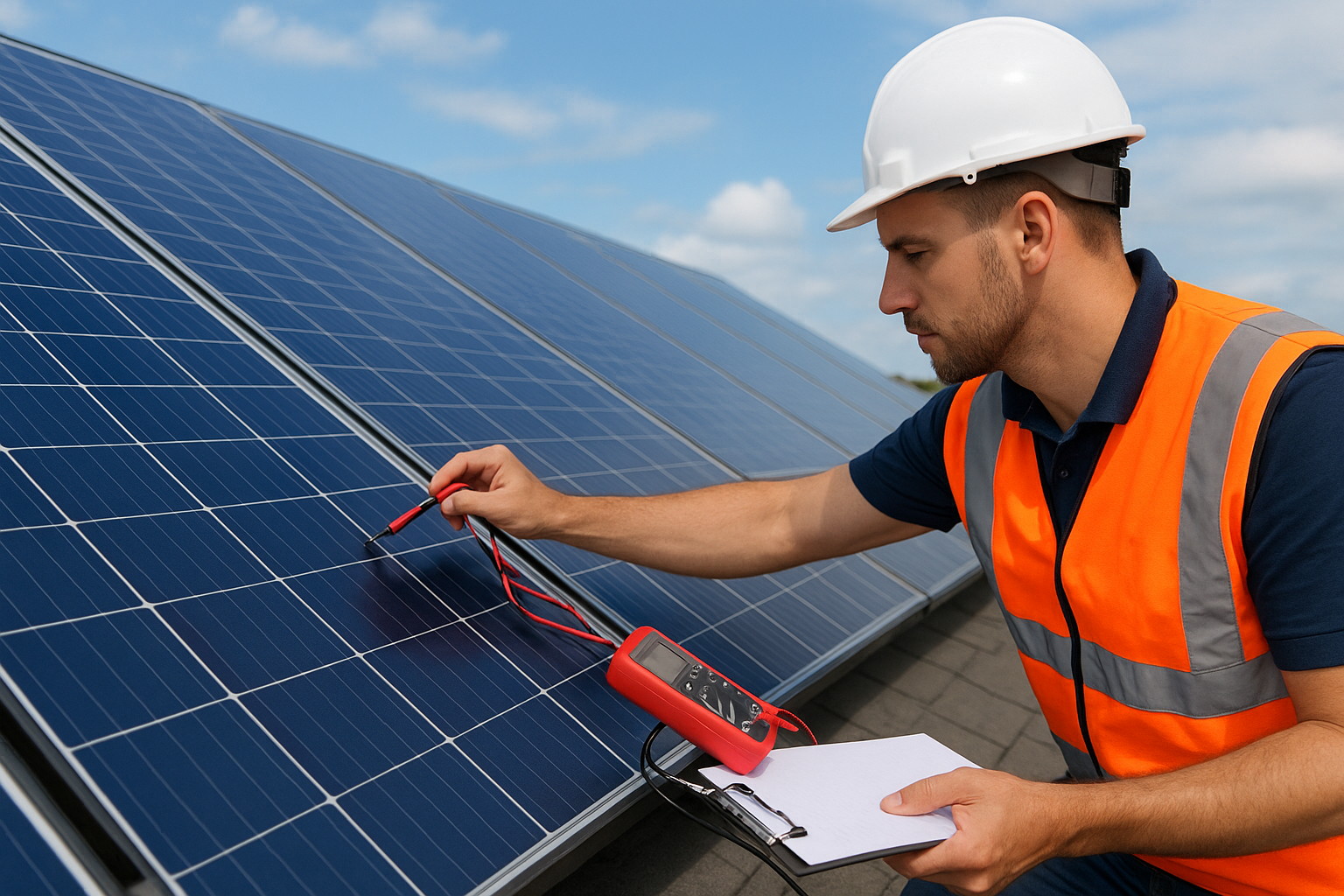
The technician inspects each panel for microcracks, delamination, and soiling that reduces light absorption. Mounting hardware and roof penetrations get checked for corrosion, loose fasteners, and signs of water intrusion. Wiring, connectors, and junction boxes are tested for heat damage, pest activity, and degraded insulation, all common issues in Florida’s humid coastal environment.
Performance data review
Your inverter logs carry the story of how often should solar panels be inspected when it comes to catching hidden problems. Production data is compared against expected output for your system size and location. Any consistent dips that don’t align with weather patterns point to specific underperforming panels or a failing component.
A performance data review can catch a degraded inverter or shading issue months before it becomes a visible failure.
Technicians also confirm that monitoring software is active and reporting correctly so you stay informed between visits. If your system runs on a platform like Enphase or Tesla Energy, the technician can verify the app data matches actual system behavior.
Signs you need an inspection sooner
Your annual schedule works as a baseline, but certain situations mean you shouldn’t wait. Knowing when to call sooner protects your system from damage that compounds quickly in Florida’s conditions. If any of the following issues show up, treat them as a signal to schedule an unplanned visit rather than letting them run until your next routine checkup.
Your energy bills are climbing
A sudden increase in your utility bill without a change in usage habits is one of the clearest signs something is wrong. Your monitoring app may still show production numbers, but if those figures don’t match what you’re actually drawing from the grid, a panel, inverter, or connection issue is likely pulling your output down.
Catching a 10-15% production drop early through an unscheduled inspection often costs far less than diagnosing a cascading failure months later.
Visible damage or system alerts
Physical changes you can see from the ground, such as cracked panel glass, discoloration, or shifted racking, justify an immediate call. Your inverter’s error lights and monitoring platform alerts also fall into this category. Thinking about how often should solar panels be inspected becomes simple when your own system is telling you something is off. Act on those signals quickly.
How to keep tabs between inspections
Professional inspections catch what you can’t see, but your own habits between visits play a real role in protecting your system. Staying engaged with your system’s performance on a regular basis means you’ll spot problems early and give your technician useful context when your next visit comes around.
Use your monitoring platform regularly
Enphase and Tesla Energy systems both include monitoring apps that show daily, weekly, and monthly production data. Check your output at least once a week and compare it against recent weeks with similar weather. A consistent dip across several days without a cloudy spell is worth noting and potentially worth a call.
Logging unusual readings with dates gives your technician a clear starting point and speeds up diagnosis during your next inspection.
Do a visual check from the ground
You don’t need to climb on your roof to stay aware of your system’s condition. Walk the perimeter of your home every month or two and look for cracked glass, shifted panels, or debris that has built up under the array. When thinking about how often should solar panels be inspected, this kind of regular self-monitoring fills the gap between annual visits and helps you act fast when something looks off. Reporting what you see keeps small issues from growing into larger ones.
Next steps
Understanding how often should solar panels be inspected gives you a clear framework for protecting your investment. Florida’s climate demands more attention than most states, and staying on a consistent schedule, combined with your own regular monitoring, keeps your system producing at the output you paid for. Annual inspections are your baseline, post-storm visits are non-negotiable, and paying attention to your monitoring app fills the gaps in between.
At Advance Solar & Spa, our in-house team of licensed technicians has handled solar inspections and maintenance across Florida since 1983. We don’t use subcontractors, and we carry solar, electrical, pool, and HVAC licenses, so when we inspect your system, every part of it gets reviewed by someone qualified to work on it. Whether your system is brand new or has been running for a decade, keeping it inspected on schedule is the single most effective way to protect its long-term value. Schedule a solar inspection with Advance Solar & Spa and get a professional set of eyes on your system before the next storm season.