
If you financed a solar installation through Mosaic, or were planning to, you’ve probably heard that things have changed significantly. Mosaic solar financing was once one of the most popular lending options for residential solar projects, but the company’s recent bankruptcy and acquisition have left thousands of borrowers with questions about their loans, payments, and account management.
At Advance Solar & Spa, we’ve helped over 50,000 Florida homeowners and businesses go solar since 1983. Financing is one of the first conversations we have with every customer, and Mosaic was a lender many of our clients used over the years. When a financing partner goes through a major transition like this, it directly affects the people we serve, so we’ve been tracking these developments closely.
This article breaks down what happened to Mosaic, what it means for existing loan holders, and what the shift to Solar Servicing LLC looks like in practice. We’ll also cover Mosaic’s original loan terms and structure so you can compare them against current alternatives. Whether you’re managing an existing Mosaic loan or shopping for solar financing in 2026, this guide gives you the full picture.
Why Mosaic solar financing matters
Mosaic wasn’t just one option among many. At its peak, it was one of the largest dedicated solar lenders in the country, with billions of dollars in loans originated across hundreds of thousands of homeowners. That scale means the company’s collapse doesn’t just affect a handful of borrowers. It affects a significant portion of the residential solar market, which is why this story matters even if you’ve never heard of Mosaic before.
How Mosaic grew to dominate solar lending
Mosaic built its business by partnering directly with solar installers, which made financing seamless at the point of sale. When a contractor sat down with you to discuss a new system, they could often offer a Mosaic loan on the spot. No separate bank visit, no lengthy independent approval process. That convenience helped Mosaic capture a large share of the market quickly, especially in solar-heavy states like Florida, California, and Texas where residential adoption was already accelerating fast.
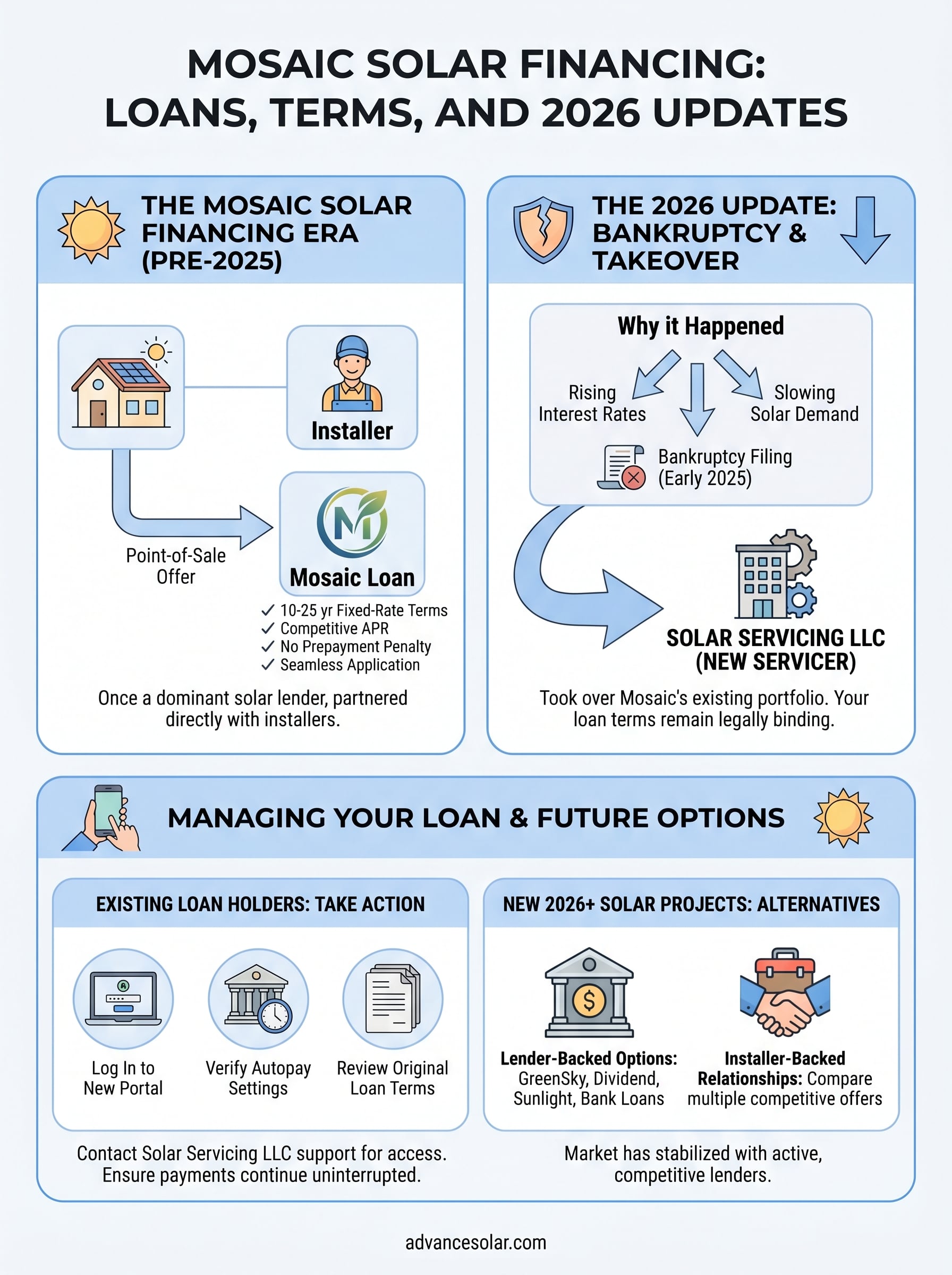
The company also offered competitive interest rates and flexible repayment terms that made solar accessible to middle-income homeowners who couldn’t pay cash upfront. Loan terms ranging from 10 to 25 years, combined with no dealer fees on certain loan products, made mosaic solar financing attractive to both installers and the customers sitting across the table from them. Over time, Mosaic originated loans for projects completed by thousands of contractors nationwide.
When a lender becomes this embedded in an industry, its instability sends ripple effects through every installation company, every borrower, and every homeowner who signed a contract.
Who this affects right now
Your situation depends on where you are in the process. If you already have a Mosaic loan, your loan balance, payment schedule, and interest rate don’t disappear because the company went through bankruptcy. What changes is who holds your loan and how you interact with your account going forward. Thousands of borrowers are now managing their accounts through Solar Servicing LLC, the entity that took over Mosaic’s portfolio after the acquisition closed.
Beyond existing borrowers, this change also affects homeowners who were in the middle of a solar project when the transition happened, as well as anyone who received a financing offer through a contractor that used Mosaic as its primary lending partner. Here’s a quick breakdown of who this situation directly touches:
- Existing Mosaic loan holders now serviced by Solar Servicing LLC
- Homeowners mid-project whose installer used Mosaic as its lending source
- Prospective buyers who had a Mosaic loan offer but haven’t closed yet
- Solar shoppers in 2026 who need to understand what replaced Mosaic in the market
How Mosaic solar loans work and common terms
Understanding how mosaic solar financing was structured helps you read your existing loan documents and compare current alternatives accurately. Mosaic offered unsecured personal loans specifically for solar installations, meaning your home wasn’t used as collateral. You applied through your solar installer at the point of sale, and Mosaic handled the underwriting, approval, and funding directly to the contractor once your system passed inspection.
Loan structure and repayment terms
Mosaic gave borrowers several repayment options depending on creditworthiness and loan size. Loan terms typically ranged from 10 to 25 years, with fixed interest rates that stayed the same for the life of the loan. Some products included an 18-month interest-only period at the start, which reduced your early monthly payments but meant you weren’t paying down the principal right away. Once that introductory window closed, your standard amortized payments kicked in.
If you had an interest-only period and didn’t make extra payments toward the principal, your balance at month 19 looked identical to what you borrowed on day one.
Here are the core terms you’ll see in your Mosaic agreement:
- APR: The true annual cost of borrowing, including interest
- Dealer fee: A percentage charged to the installer, sometimes passed to you in the total loan amount
- Draw schedule: The timeline for when Mosaic released funds to your contractor
- Prepayment penalty: Mosaic’s standard products carried no prepayment penalty, so paying off early cost you nothing extra
What your loan documents show
Your loan agreement states the original principal, your fixed interest rate, and the total number of payments you agreed to. These terms don’t change because of the servicing transfer. Pull your original documents now so you have a clear baseline before contacting Solar Servicing LLC with any questions.
Getting a second copy is straightforward if you can’t locate the original. Solar Servicing LLC maintained access to Mosaic’s borrower records through the transition, so contact their support team with your account number and the email address you used when you first applied.
2026 update: bankruptcy and Solar Servicing takeover
Mosaic filed for bankruptcy in early 2025 after years of rapid expansion left the company overextended. Rising interest rates squeezed the margins on the fixed-rate loans Mosaic had already issued, and slowing solar demand in several key markets made it harder to originate new loans fast enough to sustain the business. The result was a structured bankruptcy process that ended with Mosaic’s loan portfolio being acquired and transferred to a new servicer.
What led to the collapse
Mosaic’s model depended on borrowing money at short-term rates and lending it out at fixed long-term rates, a structure that works well in a low-rate environment and breaks down fast when rates climb. The Federal Reserve’s rate increases between 2022 and 2024 hit Mosaic’s balance sheet hard. Combine that with a drop in installer partnerships as contractors sought more stable financing options, and the company’s position became unsustainable.
When a lender is this deeply embedded in the solar supply chain, a bankruptcy doesn’t just close a business, it disrupts active projects, pending loans, and thousands of existing borrower accounts all at once.
What Solar Servicing LLC took over
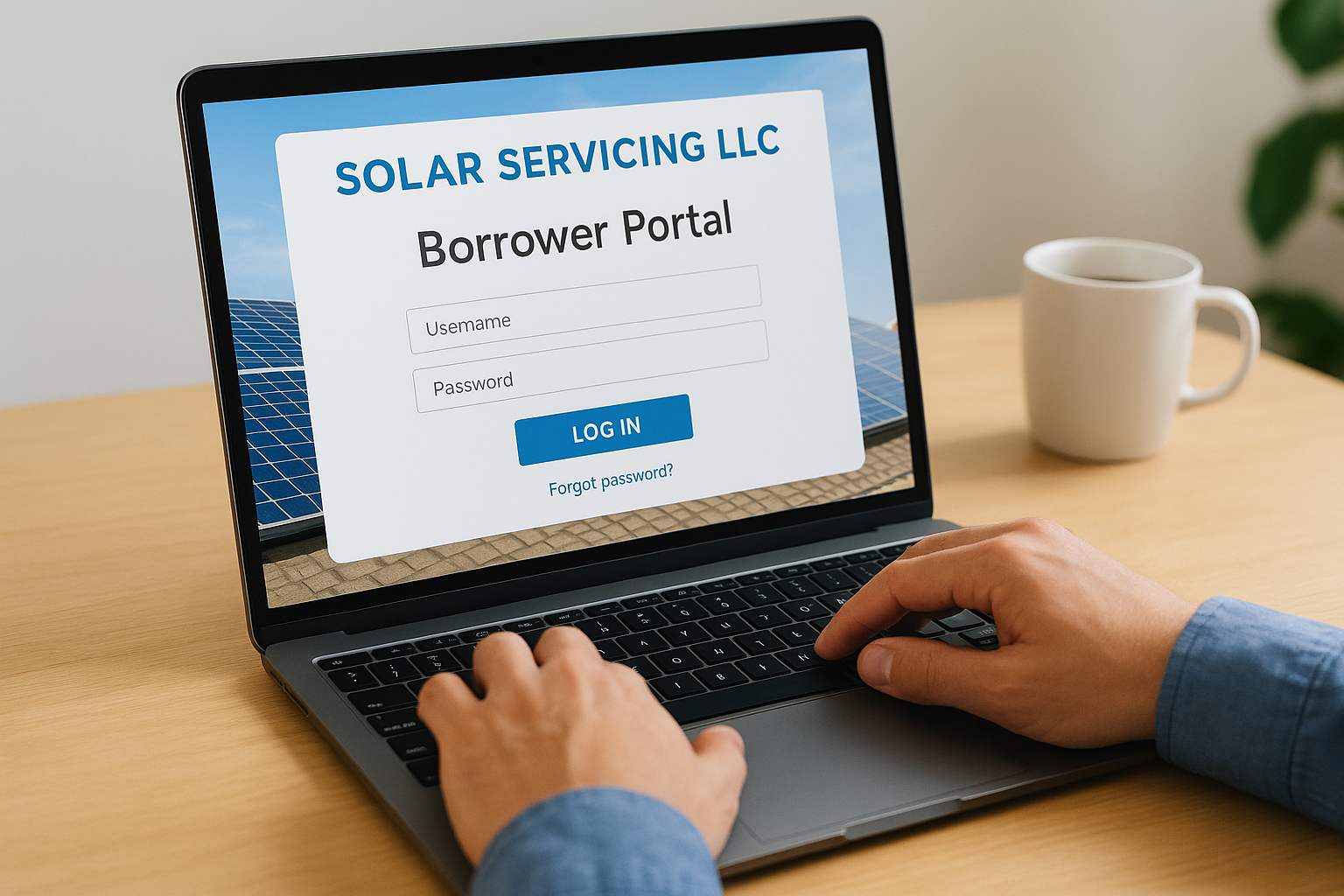
Solar Servicing LLC stepped in as the designated servicer for the existing mosaic solar financing portfolio, which means they now collect your payments, manage your account, and handle any requests tied to your loan. They did not originate new loans. Your original loan terms remain legally binding through this transition, including your interest rate, payment schedule, and any remaining balance. Solar Servicing LLC operates the borrower portal where you can log in, review your statements, and submit support requests. If you haven’t verified your login credentials under the new system yet, do that now before your next payment is due.
How to manage payments and account changes
If you had a mosaic solar financing loan, your first priority right now is confirming your account is active and accessible through Solar Servicing LLC’s borrower portal. Missing a payment during a servicing transition is still a missed payment, and it will affect your credit the same way it would have before the transfer. Log in, verify your balance, and confirm your autopay settings transferred correctly before your next due date arrives.
Setting up your account with Solar Servicing LLC
Solar Servicing LLC maintains the full account history from the original Mosaic platform, so your payment history and remaining balance carried over through the transition. To access your account, visit the Solar Servicing LLC borrower portal and use the email address tied to your original Mosaic account. If you never set up online access or can’t remember your login, their support team can verify your identity using your account number and Social Security number.
If your autopay was linked to a bank account that has since changed, update that information immediately so you don’t miss a payment by accident.
Here’s what to have ready when you contact support:
- Your original Mosaic loan account number
- The email address used when you applied
- Your last four digits of your Social Security number
- A recent bank statement if you need to update payment details
What to do if your payment amount looks wrong
Review your original loan agreement and compare the payment amount listed there against what Solar Servicing LLC shows in your account. Small discrepancies sometimes appear during portfolio transfers. Document the difference with screenshots before you call support, so you have a clear record of what you observed and when you reported it.
Contact Solar Servicing LLC’s support line directly and request a written confirmation of your corrected payment schedule and current balance. Keep that confirmation on file alongside your original Mosaic documents.
Alternatives to Mosaic for new solar projects
If you’re shopping for solar in 2026 and weren’t already locked into mosaic solar financing, you have several solid options available. The market has adjusted since Mosaic’s exit, and lenders still actively competing for solar borrowers offer comparable terms without the uncertainty of a company in transition.
Lender-backed financing options
Your strongest alternatives come from lenders that specialize in home improvement and energy financing. GreenSky, Dividend Finance, and Sunlight Financial all operate in the residential solar space and work with installers the same way Mosaic once did. Credit unions and regional banks also offer home equity loans and personal loans that can cover a solar installation without tying you to a specialized solar lender’s platform.
Spreading your research across at least two or three lenders before signing gives you real leverage on rate and term negotiations.
Here’s a quick comparison of what to look for across financing options:
| Factor | What to check |
|---|---|
| APR | Fixed vs. variable rate structure |
| Loan term | 10, 15, 20, or 25-year options |
| Prepayment penalty | Confirm none before signing |
| Dealer fee | Ask your installer if it’s built into the loan amount |
Using your installer’s financing relationships
Established solar companies maintain direct relationships with multiple lenders, which means they can present you with competing loan offers rather than routing you to a single partner. At Advance Solar & Spa, we work with financing options that reflect current market rates and give you the flexibility to choose terms that match your budget and timeline. Ask your installer which lenders they work with and request written quotes from at least two before you commit.
Final takeaways
Mosaic solar financing served a large portion of the residential solar market for years, and its bankruptcy created real disruption for existing borrowers and new solar shoppers alike. If you hold a Mosaic loan, your original interest rate and payment terms remain unchanged, but you need to confirm your account is accessible through Solar Servicing LLC before your next payment comes due. Log in, verify your autopay details, and pull your original documents so you have a reliable baseline.
For anyone planning a new solar installation in Florida in 2026, the financing landscape has stabilized. Multiple active lenders offer competitive rates and flexible terms that match what Mosaic once provided. Working with an experienced local installer gives you access to vetted financing options without the guesswork. If you’re ready to move forward, talk to the solar team at Advance Solar & Spa and get a clear picture of what a solar installation costs and how to finance it today.