
Dirty solar panels don’t announce themselves with a warning light. They just quietly produce less electricity while you keep paying more. Knowing how often to clean solar panels matters because dust, pollen, bird droppings, and salt air gradually reduce output, sometimes by 15% or more before you even notice a difference on your energy bill.
Florida’s climate makes this question especially relevant. Between heavy pollen seasons, summer storms, and the occasional hurricane aftermath, panels here deal with conditions that panels in Arizona or Colorado simply don’t face. Where you live in the state, what surrounds your roof, and how your panels are tilted all play a role in how quickly grime builds up and how often you should address it.
At Advance Solar & Spa, we’ve installed and maintained solar systems across Florida since 1983, over 50,000 installations and counting. Our service team sees firsthand what neglected panels look like and what routine cleaning does for performance. This guide breaks down a practical cleaning schedule for Florida homeowners, the factors that affect your specific timeline, and how to tell when your panels need attention before your production numbers take a hit.
What affects how often Florida panels get dirty
Florida doesn’t have one uniform set of conditions statewide. Coastal homeowners near Fort Myers or Fort Lauderdale deal with different challenges than those living further inland. Several location-specific factors determine how quickly your panels accumulate grime and, in turn, how often to clean solar panels you need to schedule throughout the year.
Pollen and seasonal debris
Florida’s pollen season runs from late January through May, peaking when oak, pine, and grass pollens coat rooftops across the state. Your panels catch significant pollen drift that rainfall doesn’t fully wash away, especially pine pollen, which leaves a thick yellow film that bonds directly to the glass surface.
Bird droppings add another layer of risk. Concentrated droppings block light on individual solar cells and cause localized underperformance called hot spots. A single dropping left in place for several weeks does more damage to your output than a thin layer of pollen spread across the entire panel surface.
Salt air and coastal exposure
If your home sits within a few miles of the Gulf or Atlantic coast, salt particles in the air settle on your panels constantly. Salt doesn’t only reduce light transmission. It creates a sticky residue that attracts dust and organic debris, making buildup harder to rinse off the longer it stays.
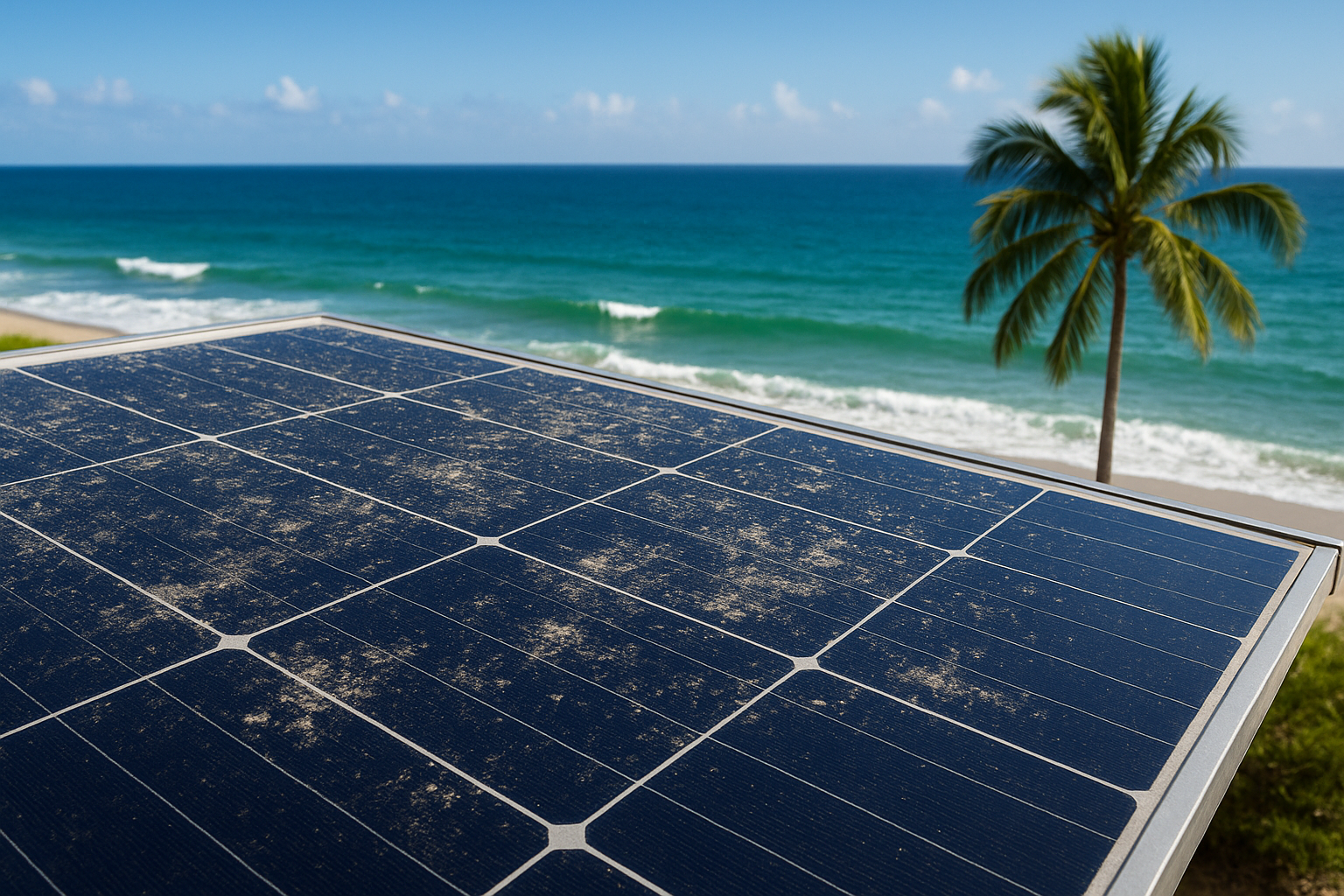
Coastal panels typically require cleaning two to three times more frequently than inland panels under the same rainfall conditions.
Salt deposits also accelerate corrosion on mounting hardware and frame edges. Homeowners in Naples, Sarasota, and Fort Lauderdale should factor this coastal exposure into their maintenance schedule from the moment their system goes live.
Roof pitch and panel tilt
Flat or low-tilt panels installed below 15 degrees collect far more debris than steeply angled ones because rain sheds more aggressively on steeper pitches. Most Florida residential systems sit at 10 to 20 degrees to match common roof designs, which means natural rainfall rarely cleans them adequately on its own.
Low-angle panels also hold water longer after a rain shower, leaving behind mineral deposits and dried organic residue once the water evaporates. Irrigation systems that spray onto the roof make this worse by introducing hard water minerals that build up in layers over time.
Recommended cleaning schedule for Florida homes
Most Florida homeowners benefit from two to four cleanings per year, but your exact schedule depends heavily on where you live in the state. Understanding how often to clean solar panels in your specific situation means treating your location type as the primary variable, then adjusting for what happens around your roof throughout the year.
Inland Florida schedule
If your home sits more than 10 miles from the coast, schedule cleanings in late May and again in late October. The May cleaning handles the pollen and organic debris that accumulates from January through peak season. The October cleaning clears summer buildup before Florida’s drier winter months reduce natural rainfall that might otherwise help rinse light dust.
Homes near citrus groves, farmland, or active construction sites should add a third cleaning in August. Dust from agricultural activity and dry construction zones settles quickly on panel surfaces during dry stretches between summer storms, and a visible film in late summer is a strong signal you need to act before fall.
Coastal Florida schedule
Homeowners near Fort Myers, Naples, Sarasota, or Fort Lauderdale should plan for three to four cleanings spread evenly across the year, roughly every three months. Salt residue hardens on glass if it sits longer than that, requiring more aggressive cleaning that risks scratching the anti-reflective coating your panels depend on for maximum light absorption.
Always schedule a cleaning within two weeks after a major storm, regardless of where you are in your regular cycle.
After any named storm or hurricane, check your panels for debris and dried salt spray before your next scheduled session. Waiting until your regular cleaning date costs you weeks of reduced production that a single rinse and wipe-down could have prevented.
How to tell your panels need cleaning
You don’t need to climb on your roof every week to know when cleaning is overdue. Your solar monitoring app and a visual check from the ground give you most of the information you need to make that call with confidence.
Check your production data first
Most inverter systems from Enphase or Tesla give you daily and monthly output data you can compare against previous periods. Pull up your app and look at production totals from the same month last year or from a recent clean stretch. A drop of 10% or more during a period of similar weather and daylight hours points directly to soiling loss rather than a system fault.
A 10 to 15% output drop that clears up after a cleaning confirms dirty panels were the cause, not equipment failure.
Compare your data on consecutive sunny days where cloud cover was minimal. If your system produced noticeably less on similar days without a clear weather explanation, schedule a cleaning before the gap widens further.
Look at the panels from the ground
Stand back and examine the panel surface on a bright morning when the sun hits it at an angle. A clean panel reflects light evenly. Panels coated in pollen, dust, or bird droppings show uneven patches, streaks, or a yellowish haze that stands out clearly against the dark cell surface.
Knowing how often to clean solar panels matters less if you ignore these signals between scheduled sessions. A quick visual check every four to six weeks takes two minutes and catches problems before they cost you a full month of reduced output.
How to clean solar panels safely
Knowing how often to clean solar panels only helps if you clean them correctly. The wrong tools or technique can scratch the anti-reflective coating on your panels, which permanently reduces light absorption and voids some manufacturer warranties. The right approach is straightforward, low-cost, and takes about 30 minutes for a standard residential system.
What you need before you start
Gather your supplies before you climb on the roof or extend your reach from the ground. Using the wrong cleaning agents is one of the most common mistakes homeowners make, and it causes damage you cannot undo.
- Soft-bristle brush or squeegee with a long extension pole
- Garden hose with a gentle spray nozzle (no pressure washers)
- Mild dish soap diluted in a bucket of water (a few drops per gallon)
- Microfiber cloth for spot cleaning stubborn droppings
Clean panels early in the morning or late afternoon, never midday when glass is hot, since cold water on hot glass can cause thermal cracking.
Step-by-step cleaning process
Start by rinsing the panel surface with plain water to remove loose dust and pollen before any scrubbing. Apply your soapy water with the soft brush using straight, even strokes from top to bottom. Scrubbing in circles creates swirl marks that scatter light instead of transmitting it.
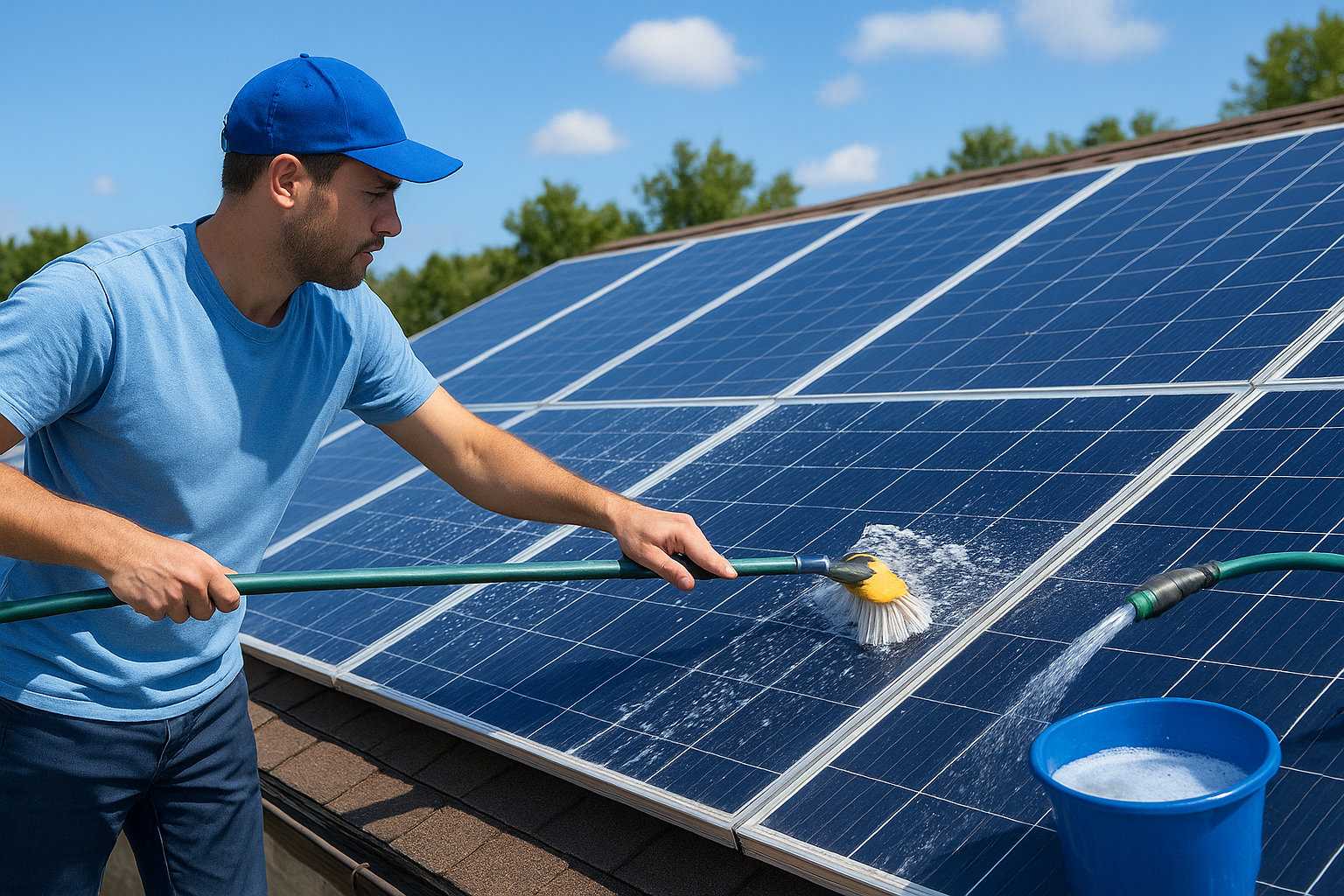
Rinse the soap completely and check for streaks. If bird droppings remain, soak them with a wet cloth for two minutes before wiping, rather than scraping. Finish with a clean rinse and let the panels air dry.
Mistakes that reduce output or risk damage
Even homeowners who understand how often to clean solar panels sometimes damage their systems during the cleaning process itself. A few common errors show up repeatedly during our service calls, and most of them are completely avoidable with the right information before you get started.
Using pressure washers or abrasive materials
Pressure washers strip the anti-reflective coating from your panel glass, and that coating is responsible for a measurable portion of your daily output. Once removed, no amount of cleaning brings it back. Abrasive scrubbers, steel wool, and rough sponges cause the same problem by leaving micro-scratches that scatter incoming light instead of transmitting it into your cells.
Stick to a soft-bristle brush or a microfiber pad on an extension pole, and let the soap solution do the work rather than scrubbing harder.
Cleaning panels at the wrong temperature
Most homeowners underestimate thermal stress on solar glass. Spraying cold water on panels that have been sitting in full Florida sun for several hours creates rapid temperature changes that can cause hairline fractures in the glass or lead to delamination at the panel edges over time. Schedule your cleaning sessions for early morning before panels heat up, or wait until late afternoon when the surface temperature has dropped.
Skipping individual panel checks
Your monitoring app shows whole-system output, but a single underperforming panel can hide inside an otherwise acceptable total. Logging into your Enphase or Tesla app and checking panel-level data monthly catches isolated problems like a cracked cell, a shading issue from debris, or a failing micro-inverter that a general output reading would miss entirely.
A simple plan you can stick to
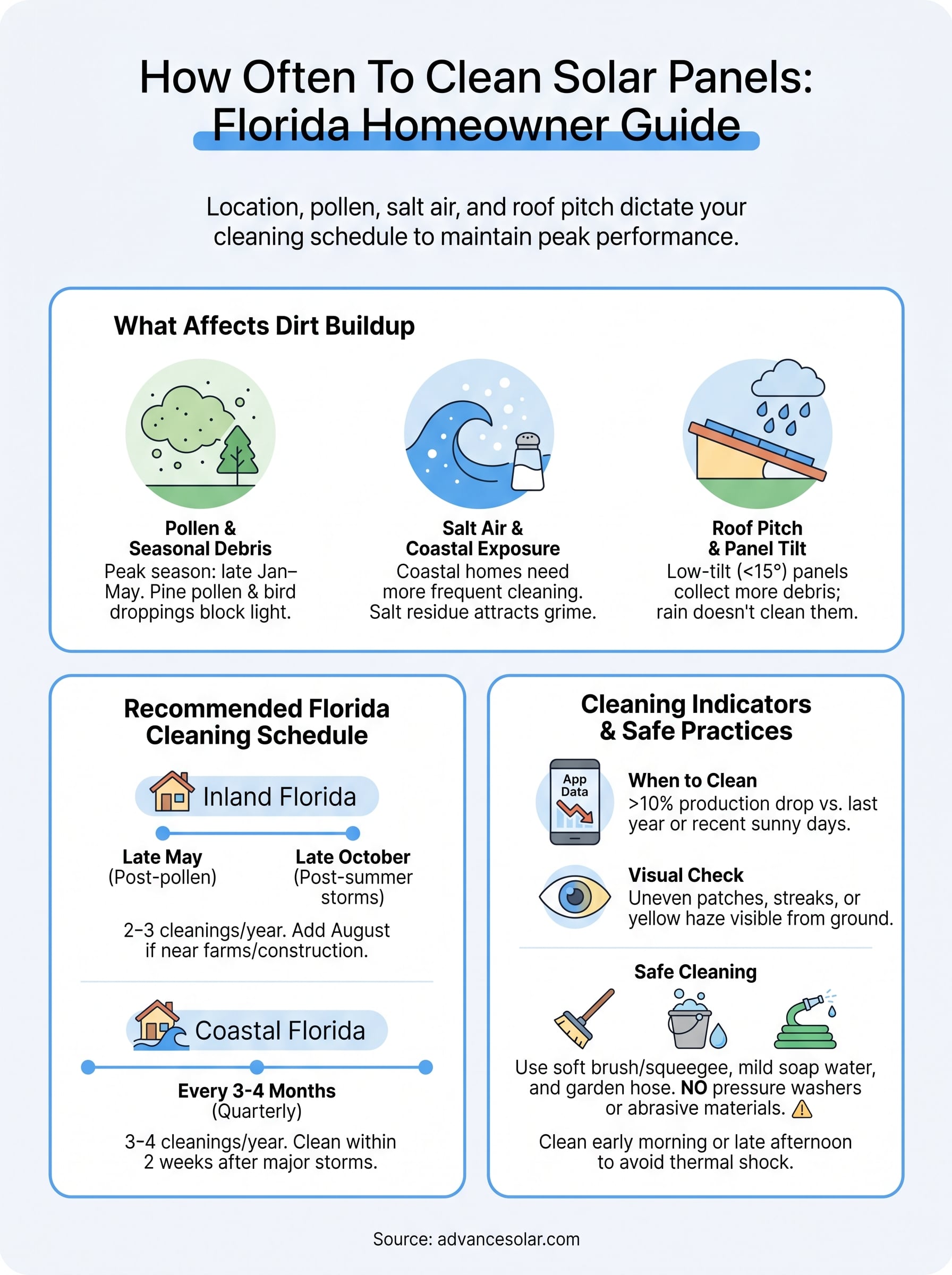
Cleaning schedules only work when they match your actual situation. Coastal Florida homeowners should plan for four cleanings per year, roughly every three months. Inland homeowners can manage well with two to three cleanings, timed around peak pollen season in May and again after summer storm activity clears in October. That basic framework answers how often to clean solar panels for most Florida households without overcomplicating the process.
Your monitoring app does most of the early warning work for you. Check your production data monthly, run a visual inspection from the ground every six weeks, and add an unscheduled cleaning any time you see a 10% or greater output drop that weather doesn’t explain. Keep your tools simple: a soft brush, a garden hose, and diluted dish soap handle the job safely without risking your panel coating.
When you want a professional set of eyes on your system, contact the Advance Solar & Spa team for a service visit.