
If you’re an FPL customer exploring solar, you’ve probably searched for an FPL solar rebate program hoping to find a straightforward discount on panels. Here’s the reality: FPL doesn’t offer a traditional rebate where they cut you a check or knock money off an installation. What they do offer is a subscription program called SolarTogether and a net metering policy for rooftop solar owners, two very different paths with very different implications for your wallet.
We get questions about this constantly. At Advance Solar & Spa, we’ve spent over 40 years installing solar across Florida’s east and west coasts, and the confusion around FPL’s programs is one of the most common things we help homeowners sort through. The distinction between subscribing to FPL’s solar program and owning your own rooftop system matters more than most people realize, especially when it comes to long-term savings and energy independence.
This article breaks down exactly what FPL offers, how net metering works for homeowners who go solar independently, and which option actually puts more money back in your pocket. No fluff, just the information you need to make a confident decision about solar in Florida.
What FPL offers and what it does not
When you search for the FPL solar rebate program, you’re looking for something that, in the traditional sense, simply doesn’t exist. Florida Power & Light does not offer direct cash rebates or upfront discounts on solar panel installation for residential customers. What FPL does provide falls into two categories: a community solar subscription program called SolarTogether, and a net metering policy for customers who install their own rooftop systems. Understanding the difference between these two options shapes every financial decision you’ll make about going solar as an FPL customer.
SolarTogether: FPL’s community solar subscription
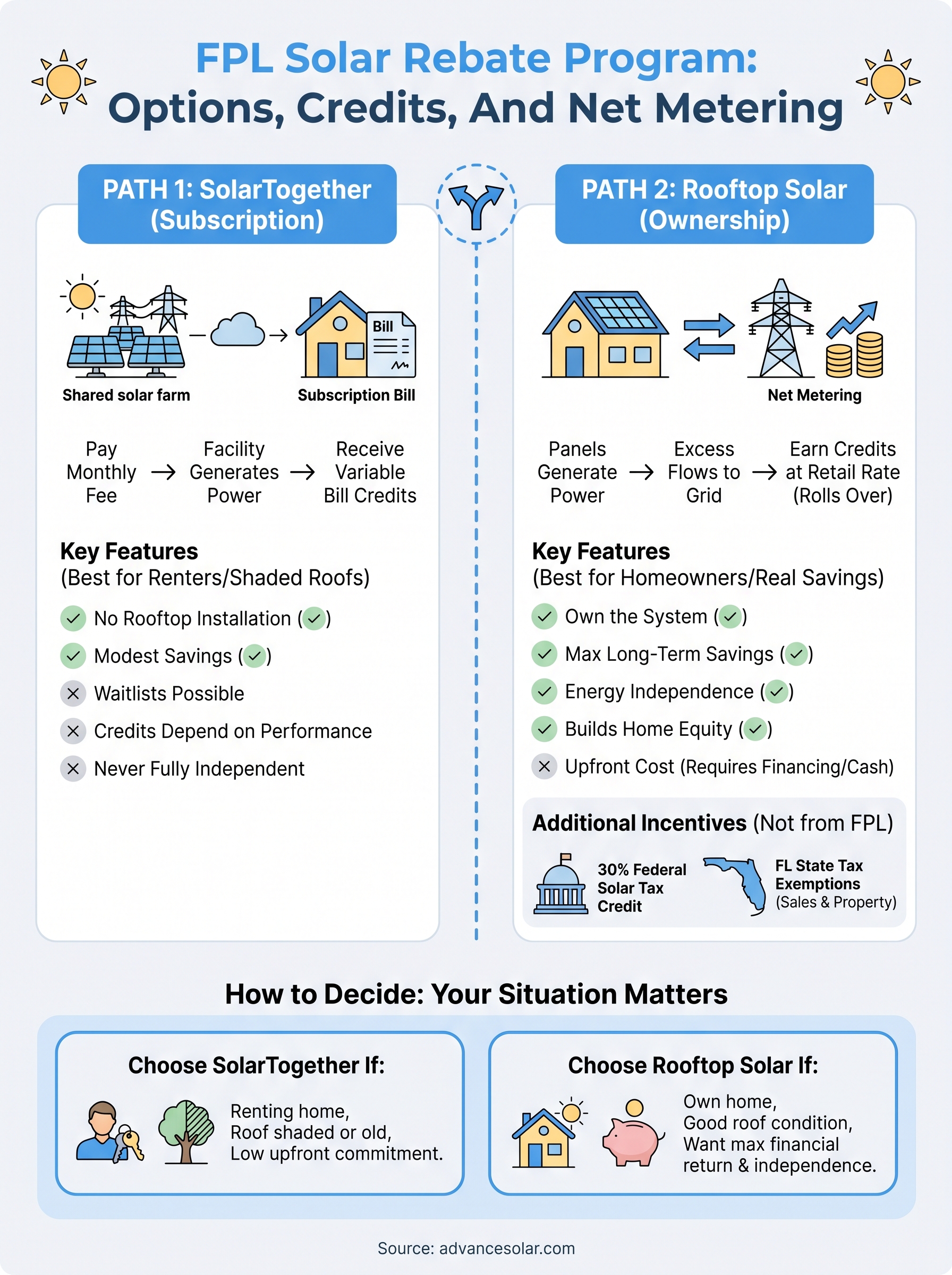
SolarTogether is FPL’s community solar program, and it works very differently from owning panels on your roof. You don’t install anything. Instead, you subscribe to a share of a large FPL-owned solar facility and receive monthly bill credits based on the energy that share produces. There’s a small subscription cost each month, and the credits offset that cost plus potentially reduce your overall bill. FPL markets this as a low-barrier entry point into solar energy for customers who rent, have shaded roofs, or don’t want the commitment of a full installation.
SolarTogether gives you access to solar energy without ownership, which also means you never build equity in the system or fully escape your dependence on FPL’s rates.
The program has waitlists and subscription limits, so availability isn’t guaranteed. Your savings through SolarTogether are modest compared to owning a rooftop system, and you have no control over the size of your credits or how the underlying infrastructure performs over time.
What FPL does not provide
FPL does not offer installation rebates, equipment subsidies, or direct incentive payments for customers who choose to install their own rooftop solar systems. The financial incentives for rooftop solar come from other sources entirely: federal tax credits, Florida’s own tax exemptions, and the value you capture through FPL’s net metering policy. Many homeowners assume FPL funds some portion of a private installation, but that responsibility falls on the customer to research and combine available programs independently. Knowing this upfront prevents costly surprises when you’re budgeting for a system.
How SolarTogether bill credits work
SolarTogether operates on a subscription model, not a rebate. You pay FPL a monthly subscription charge based on the number of kilowatt-hour (kWh) blocks you subscribe to. FPL then applies bill credits to your account each month, calculated from the actual output of the solar facility serving your subscription.
The credits don’t always exceed the subscription cost, so your net savings each month can be slim depending on facility output.
How the subscription cost is calculated
FPL sets your charges and credits based on two key components: a fixed monthly fee per kWh block you hold, and a variable credit rate tied to actual solar production. The more blocks you subscribe to, the higher your potential credit, but your baseline subscription charge rises with it. FPL controls both the block sizes and the rates.
Here’s what makes up your monthly bill impact:
- Subscription charge: fixed cost per block you hold
- Production credit: variable, based on how much the solar facility generates
- Net impact: the difference between the two, which can be positive or very small
What affects your monthly credit
Your credit fluctuates month to month based on seasonal solar production at FPL’s facility. Cloud cover, time of year, and facility performance all shift the number, and you have no ability to adjust your capacity or add panels when production dips.
Those researching the fpl solar rebate program often expect consistent monthly savings, but the reality is more variable. Your net savings stay positive in most months, but the gap between your subscription charge and your credit can narrow significantly during lower-production periods.
How FPL net metering works for rooftop solar
When you install your own solar panels as an FPL customer, net metering becomes the core mechanism that determines your actual savings. Net metering allows your home to stay connected to FPL’s grid, so when your panels produce more electricity than you use, the excess flows back to the grid and FPL credits your account for it. This is the closest thing to a direct financial return that rooftop solar owners receive from FPL.
How credits accumulate on your account
Your meter tracks both the power you pull from the grid and the power you send back. During peak sunny hours, your panels often produce more than your home consumes, and those surplus kilowatt-hours earn you credits at the retail rate applied directly to your bill. At night or on overcast days, you draw from the grid and your accumulated credits offset that consumption automatically.
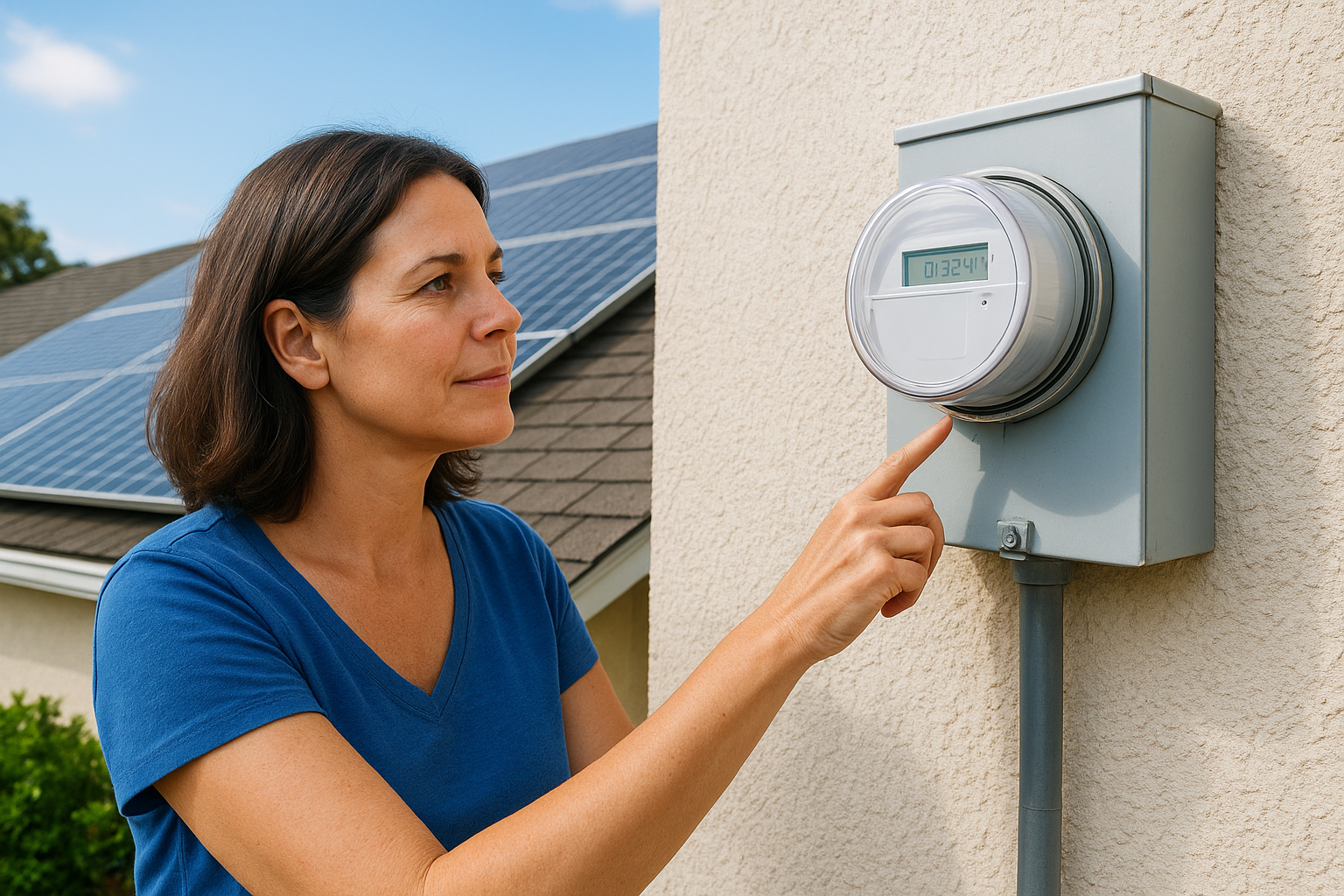
Owning your system means your credits roll forward month to month, so strong summer production can cover leaner winter months.
Why net metering outperforms the fpl solar rebate program
Unlike SolarTogether, net metering rewards you in direct proportion to the size and performance of your own system. You control your output by choosing the right number of panels for your home’s actual energy needs. A properly designed rooftop system in Florida can eliminate most or all of your monthly FPL bill, something a subscription program simply cannot match because you never own the underlying infrastructure.
Incentives that can cut solar costs in Florida
While the fpl solar rebate program doesn’t offer direct installation rebates, rooftop solar owners in Florida can stack several powerful incentives to reduce their upfront costs significantly. These programs come from the federal government and the state of Florida, not from FPL, so you need to pursue them separately when budgeting for a system.
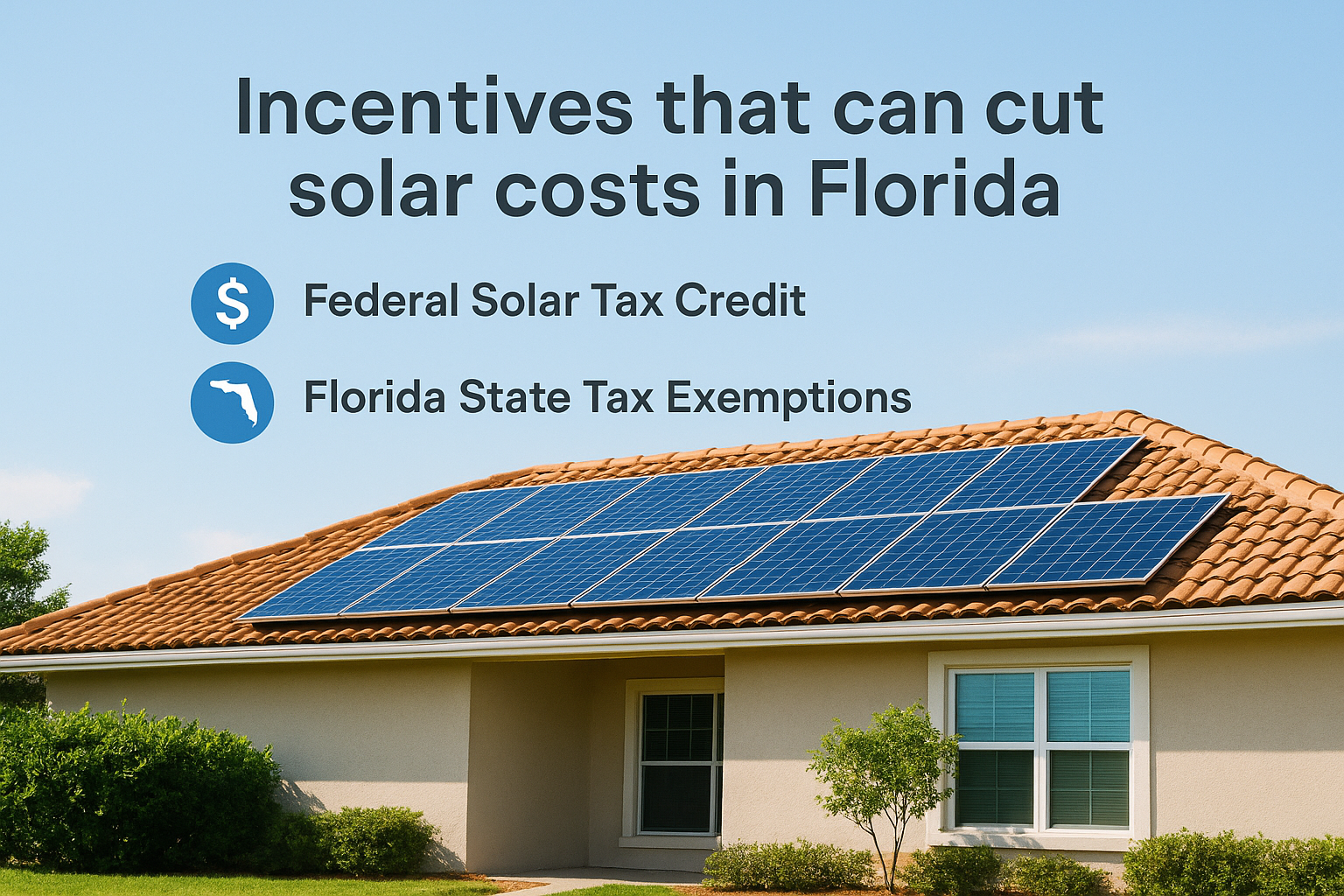
Combining the federal tax credit with Florida’s state exemptions can cut your effective system cost by 30% or more before financing even enters the picture.
Federal Solar Tax Credit
The federal Investment Tax Credit (ITC) currently allows you to deduct 30% of your total solar installation cost from your federal income taxes. This applies to the full system, including panels, inverters, labor, and battery storage. You claim it through IRS Form 5695 when you file your taxes for the year your system is installed. If your tax liability is smaller than the credit in year one, you can carry the remainder forward to future tax years.
Florida State Tax Exemptions
Florida gives rooftop solar owners two additional financial protections that most states don’t offer. First, the state exempts solar equipment from sales tax, so you pay no sales tax on the purchase of panels or related components. Second, Florida excludes the added value a solar system brings to your home from property tax assessments. Your property value rises, but your annual tax bill doesn’t. Together, these exemptions make Florida one of the more financially attractive states for residential solar investment.
How to decide between SolarTogether and rooftop solar
The right choice depends on your living situation, financial goals, and appetite for long-term savings. Most FPL customers who own their home and have a suitable roof will find that rooftop solar delivers far greater returns over time. SolarTogether serves a different, narrower audience, and understanding which category you fall into makes the decision straightforward.
Choose SolarTogether if your situation limits ownership
SolarTogether works best when rooftop installation isn’t practical or possible for your property. You might fall into this category if you rent your home, your roof has significant shading from trees or neighboring buildings, or your roof needs replacement before it can support panels. In those cases, SolarTogether lets you participate in clean energy with no installation commitment and a lower barrier to entry.
- You rent your home or can’t modify the property
- Your roof condition makes installation impractical within the next few years
- You want a small reduction in your bill without managing a system
Choose rooftop solar if you own your home and want real savings
If you own your home and your roof gets consistent sun, rooftop solar almost always wins financially. You capture the full benefit of net metering, stack the federal tax credit and Florida’s state exemptions, and build equity in an asset that adds value to your property. Unlike the fpl solar rebate program pathway through SolarTogether, owning your system means FPL’s rate increases affect you far less over time.
Rooftop solar ownership is the only path that gives you genuine energy independence alongside measurable long-term savings.
Next Steps for Florida Solar Savings
You now know that the fpl solar rebate program isn’t a traditional rebate at all. Your real choice sits between subscribing to FPL’s SolarTogether program and owning your own rooftop system, backed by net metering, the federal tax credit, and Florida’s state exemptions. Most homeowners who own their property and have a workable roof walk away with far greater long-term savings from rooftop solar than from any subscription plan available through FPL.
Getting a personalized estimate from a solar professional who knows Florida’s grid, FPL’s policies, and current incentive timelines is the most important next step you can take. Advance Solar & Spa has completed over 50,000 installations across Florida’s east and west coasts since 1983, and our certified solar consultants can show you exactly what a properly sized system would save you each month. Reach out today and get a clear picture of your actual savings by visiting Advance Solar & Spa.